
Skip to content
  • Home
  • Articles
    • Archaeology & Discoveries
    • Historical Events
    • Artifacts & Treasures
    • Ancient Civilizations
    • Unexplained Phenomena
    • Mythology
  • Subscribe
© Copyright AllThatHistory - 2025
Theme by ThemeinProgress
Proudly powered by WordPress
  • Home
  • Articles
    • Archaeology & Discoveries
    • Historical Events
    • Artifacts & Treasures
    • Ancient Civilizations
    • Unexplained Phenomena
    • Mythology
  • Subscribe
AllThatHistory
  • You are here :
  • Home
  • Artifacts & Treasures
  • Dacian Treasure Horde found in Romania May Hint at Lost Enclave
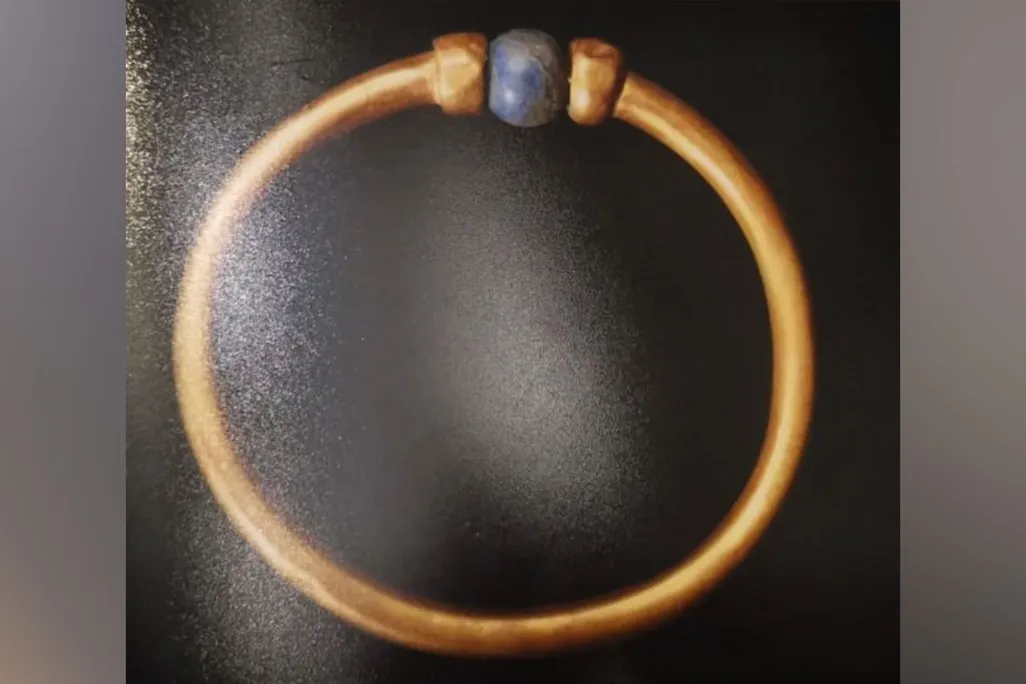
The silver artifacts recovered were far from any known Dacian presence. So, what were they doing here? Source: Breaza Mures Municipality.
Artifacts & Treasures

Dacian Treasure Horde found in Romania May Hint at Lost Enclave

Allthathistory April 14, 2025

Two amateur metal detectorists have found something unexpected in the commune of Breaza in Mureș County, in the heart of Romania. A Dacian treasure trove of silver artifacts has been found, dating back some two thousand years.

The Dacians were skilled metalworkers and this new discovery does not disappoint. The horde, found by detectorists Dionisie-Aurel Moldovan and Sebastian-Adrian Zăhan and reported by the Breaza Mures Municipality, consists of six richly decorated pieces. Three brooches, a bracelet, a neck chain and a belt of interlocking plates are all crafted in the distinctive Dacian style.

What is surprising about these finds however is where they were found. There are no records of Dacian presence in this part of Romania, at any point in history. These finds, according to our current understanding of the Dacians, simply should not be here.

  • Curiouser and Curiouser: Iron Age Hoard found in Britain was Deliberately Burned
  • Carved Stone Age Turtle Reveals Ancient Middle East Religion

Nor were these the trinkets of some passing Dacian merchant. The craftsmanship of the items argues for them belonging to someone very high up in Dacian society. The flared ends of the bracelet in particular, with their intricate and delicately worked leaf designs, look like something only a member of the Dacian ruling class could afford.

Read moreBezoar Stones, the Universal Antidote: More Than a Mistake?

Why, then, are they here, far from any known Dacian settlement? There are two main theories, neither entirely satisfactory but both a possibility given these unexpected finds.

The first possibility is that these were a secret cache of valuables, hidden away to be retrieved by a retreating Dacian in a time of crisis. Were they hidden out here to buy some lost Dacian lord his way to freedom, only to never be recovered?

Or, perhaps even more interestingly, is it our knowledge of the Dacians themselves which is lacking. Are these treasures hidden here because the Dacians did in fact inhabit this region of central Romania, lost to time and unknown for millennia?

If the latter is true, it would suggest that there is much more to be found in the region than was previously thought. Perhaps there is a Dacian settlement in the area, waiting just beneath the surface for some enterprising detectorists to stumble upon it.

Read moreThe Baghdad Battery: History Rewritten or History Misunderstood?

Header Image: The silver artifacts recovered were far from any known Dacian presence. So, what were they doing here? Source: Breaza Mures Municipality.

You may also like

Museum Employee Steals 3,000-Year-Old Egyptian Pharaoh’s Bracelet, Sells for $4,000

Spanish Researchers Create First Complete 3D Map of Historic La Pileta Cave Using Advanced LiDAR

Revolutionary Laser Method Reveals Age of Chinese Dinosaur Eggs for First Time

Egyptian Archaeologists Uncover Historic Hieroglyphic Stone Second Only to Rosetta Stone

Bronze Celtic Warrior Found Among 40,000 Artifacts in Bavarian Excavations

Ancient Tablet Reveals Lost Sumerian Myth: Hero Fox Saving an Anunnaki God

Allthathistory
Written by Allthathistory

Tags: Dacia, horde, jewelry, Romania, silver

Leave a Reply Cancel reply

Your email address will not be published. Required fields are marked *

  • Ancient Rock Carvings Uncovered in Ecuador Point to Shared Amazonian Cultural Traditions
    Archaeologists have identified a panel containing approximately 30 ancient rock carvings in Santiago de Méndez canton, Morona Santiago province, marking
  • Stolen Hercules Fresco Finds Its Home After Decades in U.S. Collection
    Archaeologists at Pompeii have identified the original location of a looted fresco fragment depicting the infant Hercules strangling serpents, solving
  • Maya Medical Systems Used Living Organisms as Precision Surgical Tools
    Maya medical systems deployed living organisms as precision surgical tools centuries before germ theory existed. Recent archaeological evidence shows these
  • Ancient Rock Art in Texas-Mexico Borderlands Endured 4,000 Years
    Hunter-gatherers in what is now southwestern Texas and northern Mexico created rock art for more than 4,000 years, maintaining consistent
  • The Thermal Engineering Behind Tiwanaku’s Agricultural Success
    At nearly 3,850 meters above sea level, frost arrives almost nightly on Bolivia’s Altiplano. Modern visitors struggle to breathe. Yet
The Gnostic Gospels
Encounters at the Heart of the World: A History of the Mandan People
Substack Articles

Latest from AllThatHistory Weekly

A Fragment of the Iliad Found Inside a Mummy Rethinks How Greeks Were Used in Egyptian Burial Magic

A Fragment of the Iliad Found Inside a Mummy Rethinks How Greeks Were Used in Egyptian Burial Magic

A papyrus piece of Homer's Iliad discovered inside a Saqqara mummy reveals how ancient Greeks were used in Egyptian funerary magic.

Read More →
Troy Was Real. Here Is What the Archaeology Actually Shows.

Troy Was Real. Here Is What the Archaeology Actually Shows.

The debate over whether the Trojan War happened has run for centuries.

Read More →
550-Million-Year-Old Soft-Bodied Sponge Fossil Fills Critical Gap in Animal Evolutionary Record

550-Million-Year-Old Soft-Bodied Sponge Fossil Fills Critical Gap in Animal Evolutionary Record

A Precambrian sponge lacking hard skeletal structures suggests the 'missing years' of early animal evolution reflect a preservation gap, not an absence of life.

Read More →
What Sank to the Bottom of a Swiss Lake 2,000 Years Ago

What Sank to the Bottom of a Swiss Lake 2,000 Years Ago

In November 2024, the Cantonal Office of Archaeology of Neuchatel was conducting routine aerial monitoring of the lakebed when a photograph revealed something that did not belong there.

Read More →
13,000 Years Ago, Someone Painted a Bison in the Dark. We Just Found Out When.

13,000 Years Ago, Someone Painted a Bison in the Dark. We Just Found Out When.

The Font-de-Gaume cave sits in a limestone hillside near the town of Les Eyzies in the Dordogne region of southwestern France.

Read More →
The War Horn That Made Roman Soldiers Flinch

The War Horn That Made Roman Soldiers Flinch

In the summer of 2025, during a routine archaeological excavation ahead of a housing development in West Norfolk, England, a construction site turned up something unexpected.

Read More →
❮
❯

Subscribe to receive our newest archaeology articles, long-form investigations, and historical insights directly in your inbox.

© Copyright AllThatHistory - 2025