
Skip to content
  • Home
  • Articles
    • Archaeology & Discoveries
    • Historical Events
    • Artifacts & Treasures
    • Ancient Civilizations
    • Unexplained Phenomena
    • Mythology
  • Subscribe
© Copyright AllThatHistory - 2025
Theme by ThemeinProgress
Proudly powered by WordPress
  • Home
  • Articles
    • Archaeology & Discoveries
    • Historical Events
    • Artifacts & Treasures
    • Ancient Civilizations
    • Unexplained Phenomena
    • Mythology
  • Subscribe
AllThatHistory
  • You are here :
  • Home
  • Artifacts & Treasures ,
  • Mythology
  • Ancient Tablet Reveals Lost Sumerian Myth: Hero Fox Saving an Anunnaki God
Arabian red foxes (Vulpes vulpes arabica) are a fox species found in Southern Iraq. Source: CC BY 4.0. Taken by Alahamali70. Statue of Hadad (another name of the Anunnaki god Ishkur) presented by Felix von Luschan et al. Source: Public Domain.
Artifacts & Treasures . Mythology

Ancient Tablet Reveals Lost Sumerian Myth: Hero Fox Saving an Anunnaki God

Zeffs Amman August 6, 2025

For 4,400 years, a small clay tablet lay hidden inside the ruins of the Ancient Sumerian city of Nippur (in what’s now southern Iraq). This tablet may be miniscule but it reveals a forgotten myth that expands Mespotamian storytelling.

Today, this ancient tablet (labeled Ni 12501) rests in Turkey’s Istanbul Archaeological Museums, where University of Chicago’s Sumerologist Jana Matuszak decoded its secrets this year. Published in the journal Iraq, her work unveils a tale of a cunning fox undergoing a daring rescue mission to save the Anunnaki storm god Ishkur.

The problem: the storm god’s trapped in Kur (the Mesopotamian underworld) of all places, where the fox must navigate through its perils lest the world collapses into chaos. This discovery sheds new light on the beliefs of one of humanity’s earliest civilizations, and we’ll explore below on how this story stands out from other Mesopotamian legends.

Lost & Found From Nippur

Dug up in the 19th century from Nippur’s ancient ruins, the Ni 12501 tablet is no larger than a smartphone, with a forgotten story to tell. Nippur once stood as the spiritual heart of Sumer and was home to Enlil; once the revered king of the Anunnaki gods. Crafted around 2540–2350 BCE, the tablet’s cuneiform script lay unread for decades with its broken fragments barely a third surviving tucked away in obscurity.

Read moreBezoar Stones, the Universal Antidote: More Than a Mistake?

Then during the 1950s, Assyriologist Samuel Noah Kramer gave the tablet a nod; having featured its image in his book From the Tablets of Sumer. The tablet remained a puzzle, however, that was until Jana Matuszak’s ingenious 2025 work finally unraveled its secrets.
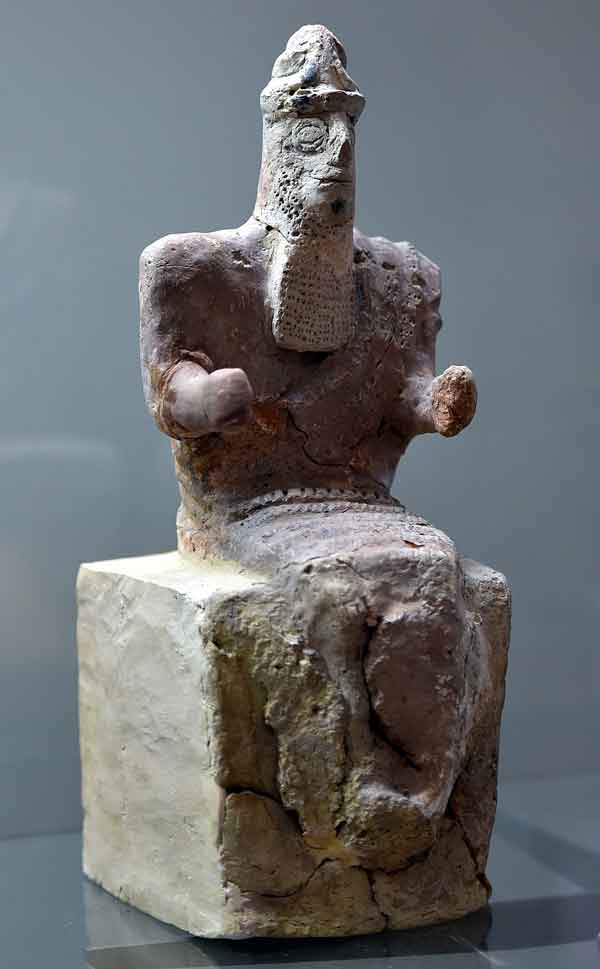
Sculpture of Enlil, chief of the Anunnaki gods. Also found in Nippur. By Dr. Osama Shukir Muhammed Amin. Source: CC BY-SA 4.0.

Using high-tech imaging and linguistic skill, Matuszak decoded the faint script. Her study shows Nippur’s role as a hub for sacred stories where tales of gods explained life’s highs and lows such as floods to crop failures. This tablet’s revival adds a new chapter to Sumerian lore, proving that there’s still much to learn from ancient archives.

A Myth of a Trapped God and a Bold Fox

The myth centers on the storm god Ishkur whose power over rains fed Mesopotamia’s fields, before being mysteriously trapped in Kur—Sumer’s grim underworld of shadows and monsters. As of 2025, it is not yet known why or how the Anunnaki got himself imprisoned in the underworld. However, Ishkur’s absence sparks chaos in the mortal realm: rivers dry up and harvests fail. Ishkur’s father Enlil then gathers a divine council in Nippur to find a rescuer that could save the trapped god and bring back the rains.

None of the Anunnaki stepped up, as many of them were wary and uneasy of the underworld’s dangers. Then, unexpected help came forth in the form of a sly fox who offered to volunteer in saving the Anunnaki king’s son. The cunning fox manages to dodge the underworld’s traps by hiding ritual offerings; a trick seen in other Sumerian stories… but the tablet breaks off leaving us wondering if the fox ever freed Ishkur.

Read moreThe Baghdad Battery: History Rewritten or History Misunderstood?

It would appear that foxes held a special place in Mesopotamian tales, in which they’re recognized back then as crafty intermediary agents in the world of gods and humans. The fox’s symbolism as a trickster figure is older than previously thought, and its role survives all the way in present day in peoples’ memories through classic fables, children’s tales and even cartoons.

This lone furry hero’s boldness may suggest that Sumerians cheered for clever underdogs, whilst it’s also a theme that echoes across world folklore involving trickster figures (often in the guise of similar animals) that outsmart powerful entities or environments.

The fox has long been a symbol of cunning from Sumerian myths to classic cartoons, like the 1942 Merrie Melodies animated film “Fox Pop”. Source: Public Domain.

Pitting the Fox’s Wits Against The Underworld

This myth reveals glimpses of Sumerian life where city-states like Nippur, Ur, and Uruk flourished from 4000 to 2000 BCE, shaping early writing and religion. Tales like this bound Mesopotamian communities to their land, especially when peoples’ fields and crops are reliant on rain. Unlike the divine rescues in myths like Enki and Ninhursag or Inanna’s Descent where gods or humanoid figures are at the center of the narrative, this story marks a rare animal hero with the fox’s cunning taking the spotlight. Perhaps this narrative is a local Nippur specialty, though it’s not confirmed. 

Jana Matuszak’s decipherment of Ni 12501 opens a door to the vast treasures of cuneiform collections, where numerous clay tablets lie untranslated in museums waiting to be revived. Advanced digital imaging now breathes life into these faded scripts, letting scholars like Matuszak piece together tales lost for millennia. One can hope that new finds in Iraq or archives might complete this tale; perhaps revealing extra scenes from this myth or unveiling new sagas of Sumer’s vibrant world. 

Though the story’s ending fades into mystery, the fox’s bold wits against divine chaos shows how even an ordinary animal can challenge primal cosmic forces by just using mere cleverness. This 4,400-year-old tablet may be fragile and having endured the tests of time, but it still whispers ancient wisdom that animates our modern imaginations. Much like how the fox is able to outsmart the perils of the underworld using wits, this lost Anunnaki myth may inspire our own journeys in outsmarting challenges in an ever-changing world.

Top image: Arabian red foxes (Vulpes vulpes arabica) are a fox species found in Southern Iraq. Source: CC BY 4.0. Taken by Alahamali70. Statue of Hadad (another name of the Anunnaki god Ishkur) presented by Felix von Luschan et al. Source: Public Domain.

References:

  1. Matuszak J. OF CAPTIVE STORM GODS AND CUNNING FOXES: NEW INSIGHTS INTO EARLY SUMERIAN MYTHOLOGY, WITH AN EDITION OF NI 12501. Iraq. 2024;86:79-108. doi:10.1017/irq.2024.19
  1. Radley, Dario. “Ancient Sumerian Tablet Reveals Forgotten Myth of Storm God Iškur’s Captivity in the Netherworld.” Archaeology News Online Magazine, 23 July 2025, www.archaeologymag.com/2025/07/forgotten-sumerian-myth-of-storm-god-iskur/.
  1. Sövegjártó, S. (2021). Chapter 9 – The fox in ancient Mesopotamia: from physical characteristics to anthropomorphized literary figure (Fierce lions, angry mice and fat-tailed sheep: Animal encounters in the ancient Near East). McDonald Institute for Archaeological Research. https://doi.org/10.17863/CAM.76170

You may also like

Monumental Uruk-Period Building Unearthed in Iraqi Kurdistan

Museum Employee Steals 3,000-Year-Old Egyptian Pharaoh’s Bracelet, Sells for $4,000

Spanish Researchers Create First Complete 3D Map of Historic La Pileta Cave Using Advanced LiDAR

Revolutionary Laser Method Reveals Age of Chinese Dinosaur Eggs for First Time

Egyptian Archaeologists Uncover Historic Hieroglyphic Stone Second Only to Rosetta Stone

World Mythology Warnings for TODAY #2: Icarus’s Flight & Dangerous Ambitions

Zeffs Amman
Written by Zeffs Amman

Zeffs Amman, our resident writer and globetrotter at AllThatHistory! Having grown up in five different cultural landscapes and lived in multiple countries, Zeffs brings forth a wide collection of intercontinental knowledge to activate readers' minds. His treasure trove of experiences spans roles as a historian, herbalist, perfumer, critic, entrepreneur and even mythographer to better grasp the supernatural world. Zeff's journey across the planet has equipped him with the ability to bridge gaps between different people, ideas, generations, and religions. His hands-on approach to learning through in-depth insights offers readers the tools to better perceive the complex, interconnected world we live in. At AllThatHistory, Zeffs brings the world to you — inspiring a deeper understanding of our shared planet.

Tags: ancient, Anunnaki, fox, god, Mesopotamia, mythology, Sumerian, tablet, wisdom

Leave a Reply Cancel reply

Your email address will not be published. Required fields are marked *

  • Ancient Rock Carvings Uncovered in Ecuador Point to Shared Amazonian Cultural Traditions
    Archaeologists have identified a panel containing approximately 30 ancient rock carvings in Santiago de Méndez canton, Morona Santiago province, marking
  • Stolen Hercules Fresco Finds Its Home After Decades in U.S. Collection
    Archaeologists at Pompeii have identified the original location of a looted fresco fragment depicting the infant Hercules strangling serpents, solving
  • Maya Medical Systems Used Living Organisms as Precision Surgical Tools
    Maya medical systems deployed living organisms as precision surgical tools centuries before germ theory existed. Recent archaeological evidence shows these
  • Ancient Rock Art in Texas-Mexico Borderlands Endured 4,000 Years
    Hunter-gatherers in what is now southwestern Texas and northern Mexico created rock art for more than 4,000 years, maintaining consistent
  • The Thermal Engineering Behind Tiwanaku’s Agricultural Success
    At nearly 3,850 meters above sea level, frost arrives almost nightly on Bolivia’s Altiplano. Modern visitors struggle to breathe. Yet
The Gnostic Gospels
Encounters at the Heart of the World: A History of the Mandan People
Substack Articles

Latest from AllThatHistory Weekly

Was Atlantis a Real Place?

Was Atlantis a Real Place?

One source. That’s all there is. Plato wrote about Atlantis in two dialogues around 360 BC: a powerful naval civilization beyond the Strait of Gibraltar, swallowed by the ocean in a single day and night around 9,600 BC.

Read More →
Otzi the Iceman’s Last Meal and What It Tells Us About His Murder

Otzi the Iceman’s Last Meal and What It Tells Us About His Murder

Otzi the Iceman ate a large meal red deer, ibex, bone marrow about 30 minutes before someone shot him in the back with an arrow. He had defensive wounds from a fight days earlier. Blood from four different people was on his clothing. A 2023 DNA study completely changed what he looked like. This is the most detailed forensic file…

Read More →
The Silk Road’s Forgotten Travelers: Women, Merchants, and Diplomats History Ignored

The Silk Road’s Forgotten Travelers: Women, Merchants, and Diplomats History Ignored

The standard image of the Silk Road is male adventurers hauling silk and spices across deserts. New DNA and isotope analysis of Central Asian cemeteries is telling a different story: women traveled these routes in comparable numbers to men, traded independently, wrote letters from foreign cities, and served as diplomatic intermediaries between empires. A 1,700 year old letter from a…

Read More →
Did Aliens Build the Pyramids?

Did Aliens Build the Pyramids?

At 481 feet tall and built from roughly 2.3 million stone blocks, some weighing 80 tons, the Great Pyramid held the record as the tallest structure on Earth for nearly 4,000 years.

Read More →
The Phaistos Disk: The Undeciphered Message Nobody Can Agree On

The Phaistos Disk: The Undeciphered Message Nobody Can Agree On

In 1908, an Italian archaeologist named Luigi Pernier was excavating the Bronze Age palace of Phaistos on the island of Crete when he found something that has baffled researchers ever since.

Read More →
Why Did the Bronze Age Collapse? The Theory That Changes Everything

Why Did the Bronze Age Collapse? The Theory That Changes Everything

Around 1200 BCE, nearly every civilization in the Mediterranean collapsed within a generation. The Sea Peoples get the blame but new research points to something more interesting, and more unsettling.

Read More →
❮
❯

Subscribe to receive our newest archaeology articles, long-form investigations, and historical insights directly in your inbox.

© Copyright AllThatHistory - 2025