Ancient Rock Art in Texas-Mexico Borderlands Endured 4,000 Years
Hunter-gatherers created Pecos River style rock art for 4,000 years in Texas-Mexico borderlands, maintaining consistent imagery depicting their universe conception across 175 generations.

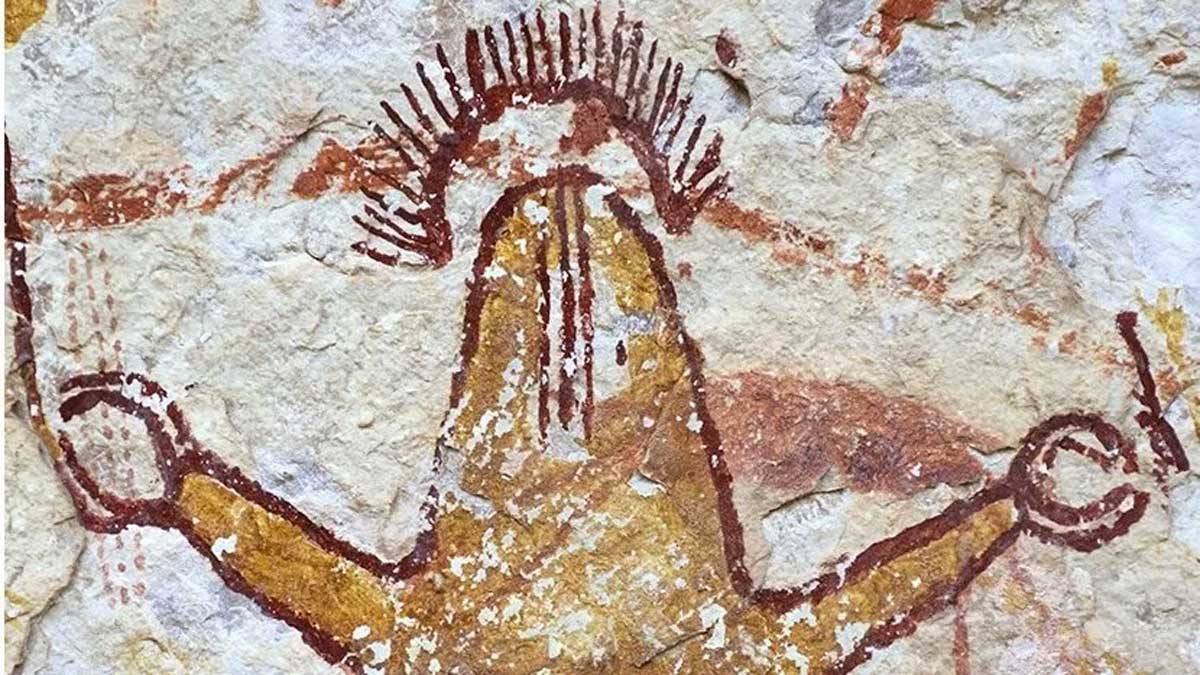
Hunter-gatherers in what is now southwestern Texas and northern Mexico created rock art for more than 4,000 years, maintaining consistent imagery and techniques that depicted their conception of the universe. The tradition, known as the Pecos River style, first appeared almost 6,000 years ago in the Lower Pecos Canyonlands and persisted until roughly 1,400 to 1,000 years ago, spanning approximately 175 generations.
Innovative radiocarbon dating techniques revealed the extraordinary longevity of this artistic tradition. Researchers used two independent radiocarbon methods at 12 mural sites, an approach that ensured consistent and reliable results. Karen Steelman, a chemist and science director at the Shumla Archaeological Research and Education Center in Texas, explained that combining these methods allowed the team to confirm their findings with confidence.
The ancient murals span limestone rock faces throughout the canyonlands, featuring elaborate multicolored paintings of animal- and human-like figures alongside enigmatic symbols. Many of the 200-plus murals are monumental in scale. Some stretch over 100 feet long and 20 feet tall, containing hundreds of skillfully painted images. The visual narratives relate myths and prescribe rituals, creating what Carolyn Boyd, a professor of anthropology at Texas State University, describes as an “ancient library containing hundreds of books authored by 175 generations of painters.”
Analysis of the murals’ iconography and compositional makeup revealed that artists adhered to strict technical rules and established stylistic conventions throughout the 4,000-year period. The creators generally followed the same sequence when applying colored paints to their artworks, a practice transmitted across multiple generations. “Frankly, we were stunned to discover that the murals remained in production for over 4,000 years and that the rule-bound painting sequence persisted throughout that period as well,” Boyd said.
The painters were nomadic hunter-gatherers whose specific identity remains unknown. Boyd characterizes them as highly skilled problem solvers with a sophisticated cosmology and a robust iconographic system to communicate their worldview. The consistency these complex murals display over millennia, despite major environmental and technological changes in stone tools and fiber crafts, indicates the persistence of an enduring cosmovision that held profound significance for these communities.

This sophisticated cosmovision encompasses creation stories, concepts of cyclical time, and complex calendrical systems. Researchers have identified elements of this belief system in later Mesoamerican civilizations, including the Aztecs, and among modern Indigenous American communities like the Huichol of Mexico.
The paintings may represent the oldest surviving visual record of the core cosmology that later shaped Mesoamerican civilizations and continues to manifest throughout Indigenous America today. Modern Indigenous people view the murals as living, sentient ancestral deities still engaged in creation and maintaining the cosmos. “The stories they tell are still being told today,” Boyd noted.