Skip to content
  • Home
  • Articles
    • Archaeology & Discoveries
    • Historical Events
    • Artifacts & Treasures
    • Ancient Civilizations
    • Unexplained Phenomena
    • Mythology
  • Subscribe
© Copyright AllThatHistory - 2025
Theme by ThemeinProgress
Proudly powered by WordPress
  • Home
  • Articles
    • Archaeology & Discoveries
    • Historical Events
    • Artifacts & Treasures
    • Ancient Civilizations
    • Unexplained Phenomena
    • Mythology
  • Subscribe
AllThatHistory
  • You are here :
  • Home
  • Archaeology & Discoveries ,
  • Artifacts & Treasures
  • Museum Employee Steals 3,000-Year-Old Egyptian Pharaoh’s Bracelet, Sells for $4,000
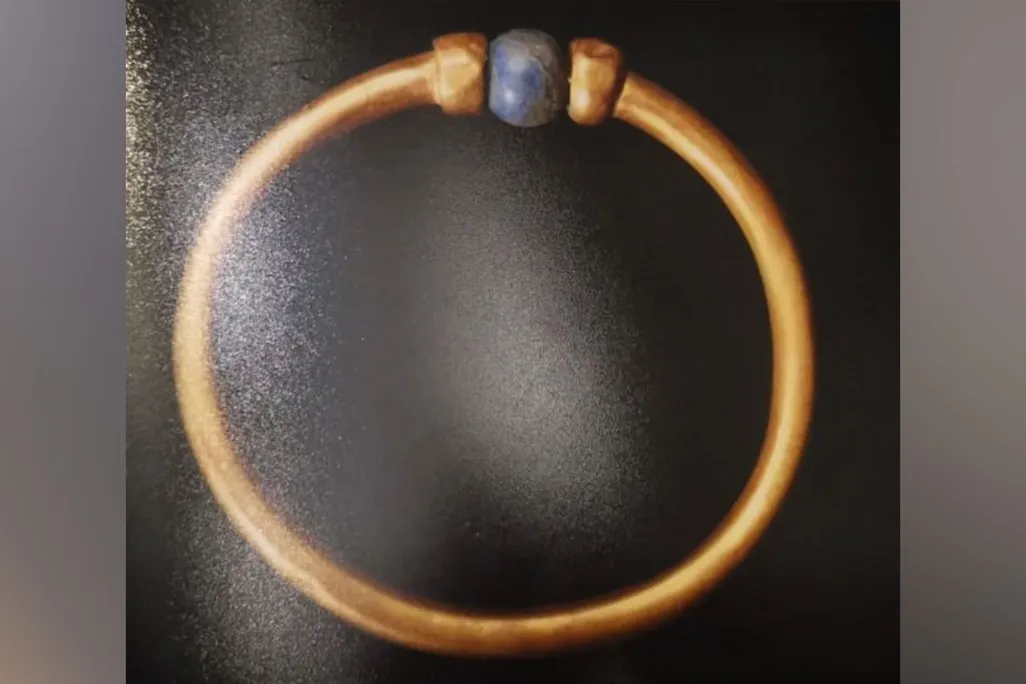
The bracelet was taken by a staffer at the Egyptian Museum in Cairo. Egyptian Ministry of Tourism and Antiquities
Archaeology & Discoveries . Artifacts & Treasures

Museum Employee Steals 3,000-Year-Old Egyptian Pharaoh’s Bracelet, Sells for $4,000

Allthathistory September 22, 2025

A 3,000-year-old gold bracelet belonging to an ancient Egyptian pharaoh has been stolen from Cairo’s Egyptian Museum, sold for less than $4,000, and melted down by a gold smelter. Egyptian authorities have arrested four suspects in connection with the theft of the artifact once owned by Pharaoh Amenemope.

Museum staff discovered the bracelet missing during an inventory for artifacts scheduled for international shipment last week. The simple gold band, decorated with a single spherical lapis lazuli bead, had belonged to Amenemope, who ruled from Tanis in the Nile Delta during Egypt’s 21st Dynasty of the Third Intermediate Period.

Egypt’s Interior Ministry announced the investigation results on September 18, revealing the artifact’s journey from museum to scrap metal. A museum restoration specialist initially stole the bracelet, then sold it to a silver trader. The piece passed to a jewelry workshop owner, who sold it to a gold smelter for melting.

The Ministry of Tourism and Antiquities launched an immediate response after the theft, circulating photographs among law enforcement and archaeological authorities. Officials established a special committee to conduct a complete inventory of the conservation laboratory where the bracelet had been stored.

Read moreBezoar Stones, the Universal Antidote: More Than a Mistake?

Forensic archaeologist Christos Tsirogiannis had warned CNN that stolen artifacts typically follow three paths: smuggling to auction houses with forged documentation, sale to private collectors, or melting for raw materials. While melting yields less profit, it makes crimes nearly impossible to trace.

Amenemope’s gilded wooden coffin (CC BY 2.0)

Despite its modest appearance, the bracelet held significant cultural and scientific value. Egyptologist Jean Guillaume Olette-Pelletier explained that ancient Egyptians considered gold the “flesh of the gods” while viewing lapis lazuli as representing divine hair. The combination made even simple pieces spiritually meaningful.

“The stolen bracelet was not the most beautiful, but scientifically, it’s one of the most interesting,” Olette-Pelletier told AFP, emphasizing the research value lost when the artifact was destroyed.

The case highlights ongoing challenges facing Egyptian cultural institutions as they balance public access, international exhibitions, and security for irreplaceable artifacts. The theft occurred in a restoration lab, typically considered among the most secure areas within museum facilities.

Read moreThe Baghdad Battery: History Rewritten or History Misunderstood?

All four suspects remain in custody as authorities continue investigating the theft and destruction of the 3,000-year-old royal artifact.

Featured image: The bracelet was taken by a staffer at the Egyptian Museum in Cairo. Egyptian Ministry of Tourism and Antiquities

You may also like

Ancient Rock Carvings Uncovered in Ecuador Point to Shared Amazonian Cultural Traditions

Stolen Hercules Fresco Finds Its Home After Decades in U.S. Collection

Maya Medical Systems Used Living Organisms as Precision Surgical Tools

Ancient Rock Art in Texas-Mexico Borderlands Endured 4,000 Years

Were Wolves Kept and Nursed by Ancient Seal Hunters?

Ancient Peruvians Survived Climate Catastrophe Through Adaptation, Not War

Allthathistory
Written by Allthathistory

Tags: Amenemope, ancient, archaeology, artifact, Cairo, Egypt, museum, theft

Leave a Reply Cancel reply

Your email address will not be published. Required fields are marked *

  • Ancient Rock Carvings Uncovered in Ecuador Point to Shared Amazonian Cultural Traditions
    Archaeologists have identified a panel containing approximately 30 ancient rock carvings in Santiago de Méndez canton, Morona Santiago province, marking
  • Stolen Hercules Fresco Finds Its Home After Decades in U.S. Collection
    Archaeologists at Pompeii have identified the original location of a looted fresco fragment depicting the infant Hercules strangling serpents, solving
  • Maya Medical Systems Used Living Organisms as Precision Surgical Tools
    Maya medical systems deployed living organisms as precision surgical tools centuries before germ theory existed. Recent archaeological evidence shows these
  • Ancient Rock Art in Texas-Mexico Borderlands Endured 4,000 Years
    Hunter-gatherers in what is now southwestern Texas and northern Mexico created rock art for more than 4,000 years, maintaining consistent
  • The Thermal Engineering Behind Tiwanaku’s Agricultural Success
    At nearly 3,850 meters above sea level, frost arrives almost nightly on Bolivia’s Altiplano. Modern visitors struggle to breathe. Yet
The Gnostic Gospels
Encounters at the Heart of the World: A History of the Mandan People
Substack Articles

Latest from AllThatHistory Weekly

The Underwater Port That Could Finally Solve the Mystery of Cleopatra’s Tomb

The Underwater Port That Could Finally Solve the Mystery of Cleopatra’s Tomb

Forty feet beneath the Mediterranean Sea, divers found stone columns rising more than 20 feet from the seafloor.

Read More →
The 60,000-Year Chemistry Lab: What Poison Arrows Tell Us About Stone Age Intelligence

The 60,000-Year Chemistry Lab: What Poison Arrows Tell Us About Stone Age Intelligence

Five quartz arrowheads sat in a museum collection for 39 years.

Read More →
This Week in Archaeology: From 60,000-Year-Old Poison Arrows to Iron Age War Trumpets

This Week in Archaeology: From 60,000-Year-Old Poison Arrows to Iron Age War Trumpets

This month genuinely surprised me.

Read More →
Why Prisons Rarely Existed in the Ancient World

Why Prisons Rarely Existed in the Ancient World

What archaeology reveals about punishment before prisons existed

Read More →
Why the “Mad Artistic Genius” Myth Doesn’t Hold Up to Science

Why the “Mad Artistic Genius” Myth Doesn’t Hold Up to Science

By Daisy Fancourt

Read More →
Charlie Chaplin: The Man Who Inspired Mickey Mouse

Charlie Chaplin: The Man Who Inspired Mickey Mouse

Walt Disney and cartoonist Ub Iwerks introduced Mickey Mouse to the world through the animated short Steamboat Willie in 1928.

Read More →
❮
❯

Subscribe to receive our newest archaeology articles, long-form investigations, and historical insights directly in your inbox.

© Copyright AllThatHistory - 2025