
Skip to content
  • Home
  • Articles
    • Archaeology & Discoveries
    • Historical Events
    • Artifacts & Treasures
    • Ancient Civilizations
    • Unexplained Phenomena
    • Mythology
  • Subscribe
© Copyright AllThatHistory - 2025
Theme by ThemeinProgress
Proudly powered by WordPress
  • Home
  • Articles
    • Archaeology & Discoveries
    • Historical Events
    • Artifacts & Treasures
    • Ancient Civilizations
    • Unexplained Phenomena
    • Mythology
  • Subscribe
AllThatHistory
  • You are here :
  • Home
  • Artifacts & Treasures
  • Ancient Crab Amulet found in Turkey was a Ward Against Cancer
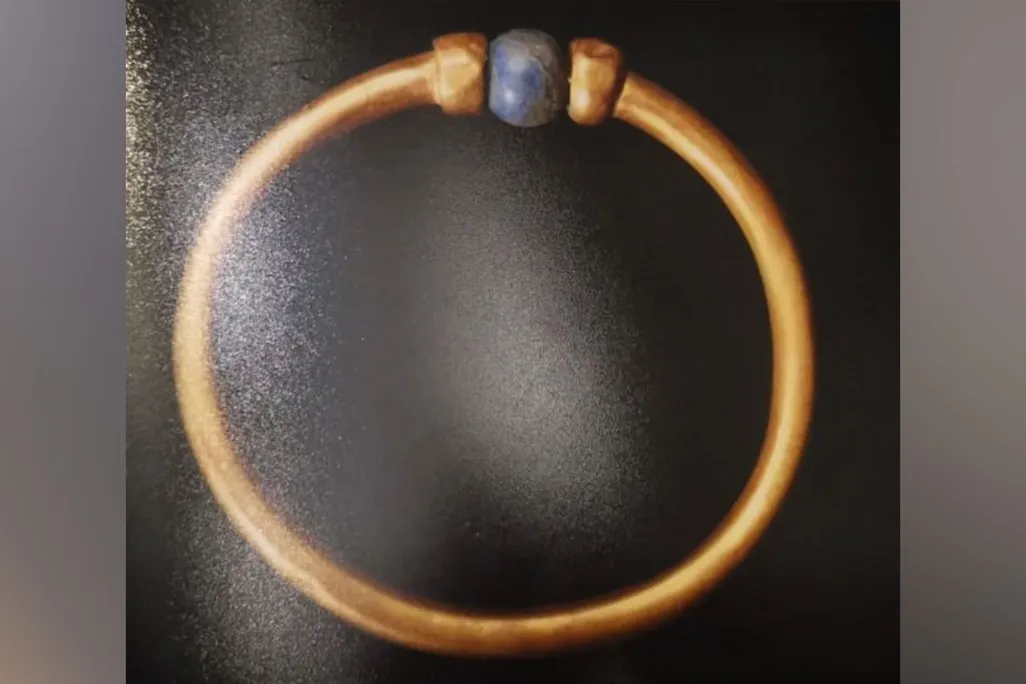
The crab symbol on the amulet and the inscription suggest that it was sued to treat cancer. Source: https://www.hurriyetdailynews.com/ancient-cancer-treating-amulet-discovered-in-pisidia-antioch-204149.
Artifacts & Treasures

Ancient Crab Amulet found in Turkey was a Ward Against Cancer

Allthathistory January 2, 2025

Archaeologists working to excavate the ancient Anatolian city of Pisidia Antioch have found something special. An amulet has been unearthed which the team believes was used to treat cancer in ancient Turkey.

The amulet, worked in a black and red stone known as “gemma,” contains inscriptions for healing, as well as the design of a crab. The symbology comes from the Greek word for cancer, “karkinos” which also means crab, a link which survives in modern astrology.

The link between crabs and cancer is believed to date back to the 2nd century philosopher and physician Galen, considered to be amongst the greatest medical researchers of antiquity. Galen saw the shape of a crab’s legs in the blood vessels which surrounded tumorous growths on cancer sufferers. 

  • The Shakespeare Authorship Question: Snobbery and Wishful Thinking
  • A Cut Above: Agoge, the Ancient Spartan Entry Test

As reported in Hurriyet Daily News the amulet was discovered in an area of Pisidia Antioch known as Aedilicus Hill, near the site’s church, but is believed to predate it. Such amulets, generally made of gemma and in this fashion, are believed to have been common in the Hellenistic period of ancient Greece, with examples being known up to the 4th century AD.

Read moreBezoar Stones, the Universal Antidote: More Than a Mistake?

Cancer was known throughout the ancient world, appearing in ancient Egyptian papyri a millennia and a half before this amulet was crafted and possibly being known for a thousand years before that. It was Hippocrates, writing several hundred years before Galen, who recommended the ancient treatment: a specific diet, regular drawing of blood, and strong laxatives.

Hippocrates was basing his treatment on the theory that the human body was made up of four competing “humors” and that cancer, as with all maladies, represented an imbalance of these humors. Although such theories seem facile today we had no better answer than this for treating cancer until the 19th century.

Nor can Hippocrates’s approach have been very successful, hence the advent of such magical amulets to ward off the “emperor of all maladies.” But let us hope that there was a little magic in this newly discovered amulet, and that whoever needed it was protected as they so clearly hoped.

Original Story: https://www.hurriyetdailynews.com/ancient-cancer-treating-amulet-discovered-in-pisidia-antioch-204149.

Read moreThe Baghdad Battery: History Rewritten or History Misunderstood?

Header Image: The crab symbol on the amulet and the inscription suggest that it was sued to treat cancer. Source: https://www.hurriyetdailynews.com/ancient-cancer-treating-amulet-discovered-in-pisidia-antioch-204149.

You may also like

Museum Employee Steals 3,000-Year-Old Egyptian Pharaoh’s Bracelet, Sells for $4,000

Spanish Researchers Create First Complete 3D Map of Historic La Pileta Cave Using Advanced LiDAR

Revolutionary Laser Method Reveals Age of Chinese Dinosaur Eggs for First Time

Egyptian Archaeologists Uncover Historic Hieroglyphic Stone Second Only to Rosetta Stone

Bronze Celtic Warrior Found Among 40,000 Artifacts in Bavarian Excavations

Ancient Tablet Reveals Lost Sumerian Myth: Hero Fox Saving an Anunnaki God

Allthathistory
Written by Allthathistory

Tags: disease, doctor, illness, magic, physician, Turkey

Leave a Reply Cancel reply

Your email address will not be published. Required fields are marked *

  • Ancient Rock Carvings Uncovered in Ecuador Point to Shared Amazonian Cultural Traditions
    Archaeologists have identified a panel containing approximately 30 ancient rock carvings in Santiago de Méndez canton, Morona Santiago province, marking
  • Stolen Hercules Fresco Finds Its Home After Decades in U.S. Collection
    Archaeologists at Pompeii have identified the original location of a looted fresco fragment depicting the infant Hercules strangling serpents, solving
  • Maya Medical Systems Used Living Organisms as Precision Surgical Tools
    Maya medical systems deployed living organisms as precision surgical tools centuries before germ theory existed. Recent archaeological evidence shows these
  • Ancient Rock Art in Texas-Mexico Borderlands Endured 4,000 Years
    Hunter-gatherers in what is now southwestern Texas and northern Mexico created rock art for more than 4,000 years, maintaining consistent
  • The Thermal Engineering Behind Tiwanaku’s Agricultural Success
    At nearly 3,850 meters above sea level, frost arrives almost nightly on Bolivia’s Altiplano. Modern visitors struggle to breathe. Yet
The Gnostic Gospels
Encounters at the Heart of the World: A History of the Mandan People
Substack Articles

Latest from AllThatHistory Weekly

Who Was Cleopatra?

Who Was Cleopatra?

Most of what people know about Cleopatra came from her enemies.

Read More →
Stonehenge’s Bones: The Burial Site That Rewrites What We Thought We Knew

Stonehenge’s Bones: The Burial Site That Rewrites What We Thought We Knew

New isotope analysis of human remains at Stonehenge shows that many of the people buried there in its earliest phase came from Wales the same place as the bluestones. Some of them may have been descendants of the communities that quarried and transported the stones 300 kilometers to Salisbury Plain. The stones and the dead may have been making the…

Read More →
Who Built Gobekli Tepe and Why Did They Bury It?

Who Built Gobekli Tepe and Why Did They Bury It?

Gobekli Tepe was built 12,000 years ago at least 1,000 years before the first evidence of agriculture anywhere in the world. It required coordinating hundreds of workers, quarrying 20-ton limestone pillars, and sustaining organized construction over generations. The people who built it were hunter gatherers. Then they deliberately buried the entire site. This is one of archaeology’s most important unsolved…

Read More →
What Happened to the Maya Civilization?

What Happened to the Maya Civilization?

Between 800 and 1000 AD, dozens of major Maya cities in the southern lowlands went quiet.

Read More →
Italian Teenagers Found a 1,800-Year-Old Roman Villa Under Their School Gym

Italian Teenagers Found a 1,800-Year-Old Roman Villa Under Their School Gym

Rome keeps hiding its history in plain sight, and it keeps taking curious teenagers to find it.

Read More →
The Lost Library of Alexandria: Did It Actually Burn, or Was That a Myth?

The Lost Library of Alexandria: Did It Actually Burn, or Was That a Myth?

The Library of Alexandria did not burn in one catastrophic fire. Caesar probably destroyed a warehouse, not the library. The Arab general who supposedly burned it centuries later is almost certainly a fabrication. What actually happened a slow institutional decline across 300 years is less dramatic but more disturbing. Most ancient knowledge was not destroyed. It was simply never copied…

Read More →
❮
❯

Subscribe to receive our newest archaeology articles, long-form investigations, and historical insights directly in your inbox.

© Copyright AllThatHistory - 2025