Roman private bath found inside palace tower at Vrelo–Šarkamen
Archaeologists found a circular private Roman bath inside a palace tower at Vrelo–Šarkamen, Serbia—no known Empire parallel—with an unusually intact hypocaust.

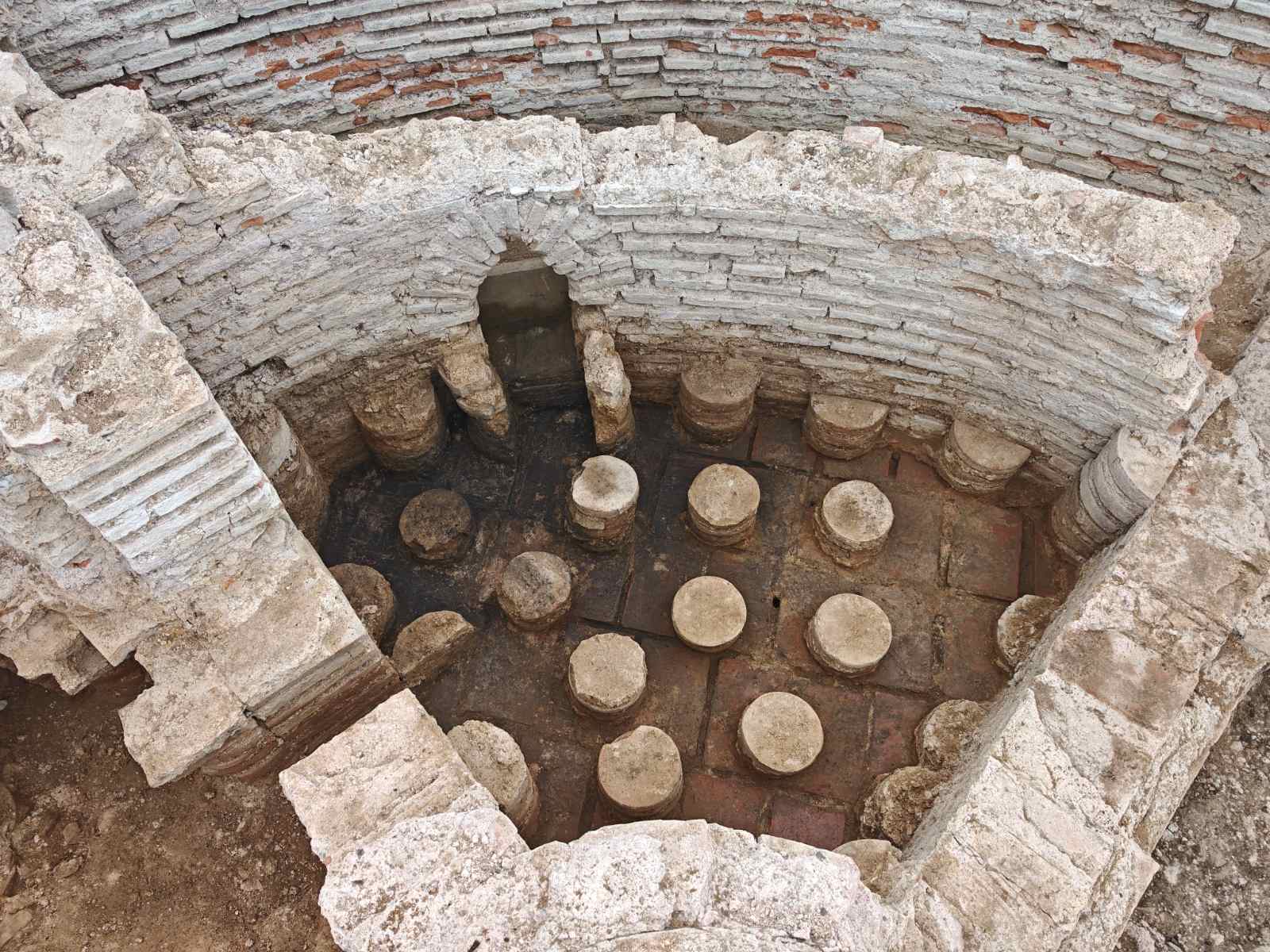
Archaeologists excavating the fortified imperialRoman private bath found inside palace tower at Vrelo–Šarkamen residence at Vrelo–Šarkamen in eastern Serbia have uncovered a circular private Roman bath — a balneum — built into the lowest level of a monumental palace corner tower, with heated floors, three bathing pools, a steam room and a furnace.
The excavation team says it currently knows of no direct architectural parallel for a bath arranged this way inside a monumental palace corner tower. The find was reported in early September 2026, including coverage by Live Science and Greek Reporter, with a detailed team account also via Arkeonews.
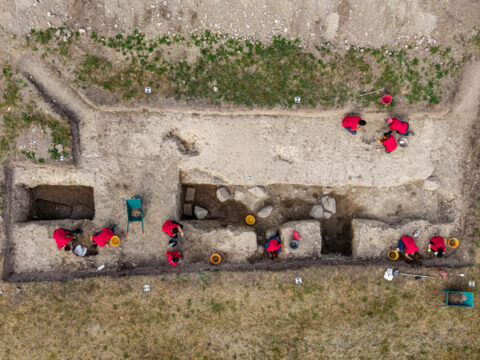
The work is a collaboration between Serbia’s Institute of Archaeology and the Museum of Krajina, with support from the Ministry of Culture of the Republic of Serbia. Excavations are directed by Dr Marija Jović, research associate at the Institute of Archaeology, and Gordan Janjić, museum advisor at the Museum of Krajina.
The balneum occupied the south-western corner tower of a fortified residence associated with the early fourth-century tetrarch Maximinus Daia (also known as Maximinus Daza; r. 310–313). Archaeologists identified three pools or tubs, a sudatorium (steam room), a praefurnium (furnace), a well-preserved hypocaust underfloor heating system on circular pilae, and the emplacement that once held a copper vessel for heating water. The boiler itself did not survive — copper was often recycled — but its setting still shows how the system worked.
Rather than sitting in a separate palace wing, the bath was fitted to the tower’s interior on a circular plan beneath a dome pierced by six window openings. The team reads that lighting scheme as a demanding piece of construction, not a last-minute squeeze of plumbing into a defensive shell. Service and leisure were kept apart: the technical rooms, reached through a monumental western entrance for staff, fed heat and hot water into spaces reserved for bathing and rest.
Vrelo–Šarkamen is not an ordinary Roman town. The complex is a fortified high-status residence with monumental architecture and an associated imperial mausoleum, already known for an extraordinary gold jewellery assemblage found about thirty years ago. The new bath adds another marker of elite life: engineering and private comfort built into a structure that also served security and display.
One major question remains open. An eastern entrance links the bath to a paved corridor of the residence, but the difference between palace floor levels and the bath has not yet been explained. The western approach and the function of several rooms are still under study. The team’s claim of “no known direct parallel” is their current assessment from the latest campaign — not a closed catalogue of every Roman bath.