Giant Ramesses II Statues Discovered in Egypt After Local Resident Finds Inscribed Stone
Two enormous royal statues believed to depict Ramesses II have been uncovered in Egypt, along with granite bearing royal inscriptions.

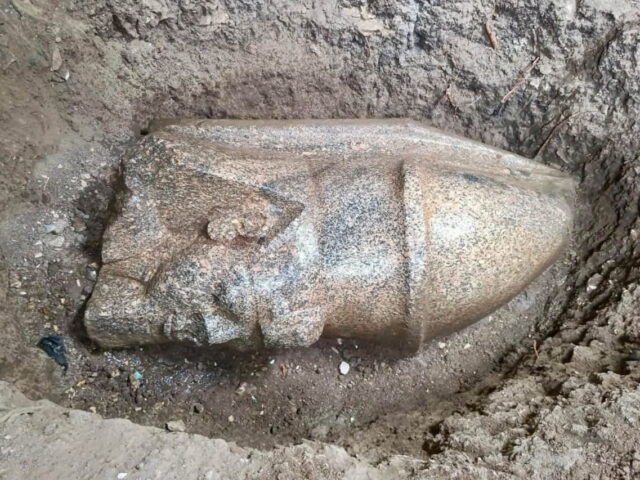
A carved stone found on a plot of land in Egypt has led archaeologists to the remains of two enormous royal statues believed to depict Pharaoh Ramesses II. The discovery took place in Behbeit El-Hagar, a village in the Nile Delta, where a local resident reported the inscribed stone to archaeological authorities. Subsequent excavations uncovered the statue remains and a block of pink granite bearing hieroglyphic inscriptions linked to the ancient Egyptian king.
A Chance Discovery Leads to Two Royal Statues
According to Egypt’s Supreme Council of Antiquities, the investigation began after the resident found a carved stone while working on land in front of his home. He notified the local antiquities inspectorate, which examined the object and confirmed its archaeological significance. A specialist team then carried out rescue excavations at the site. The work uncovered the remains of two royal statues and the inscribed granite block.
The first statue is represented by a massive stone head measuring approximately 1.60 meters tall. It depicts Ramesses II wearing the double crown, which symbolized his rule over Upper and Lower Egypt. Archaeologists also recovered part of the statue’s back pillar. An inscription on this section contains the king’s Horus name, “Hor-ka-nakht-mery-maat.” Based on the size of the surviving head, researchers estimate that the complete statue, including its base, may have stood about 8.5 meters tall. This is an estimate of its original dimensions, not the height of the remains found during excavation.
A Second Statue May Also Depict Ramesses II
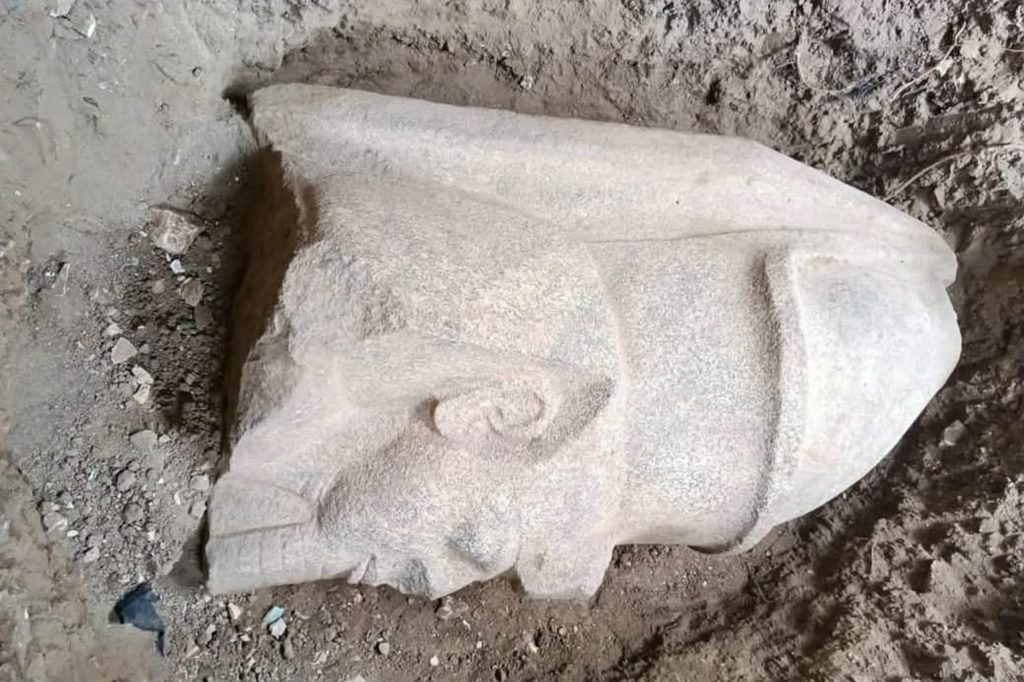
The excavation uncovered a second, substantial portion of a royal statue measuring approximately 2.40 meters long. The figure wears a traditional royal nemes headdress, although part of its upper section is missing. Its legs and base have not survived. However, archaeologists also recovered the statue’s head, whose facial features remain clearly visible.
Researchers believe the second statue may also depict Ramesses II because its facial features resemble those of the first statue. That identification remains preliminary, and further study is needed to establish the relationship between the two sculptures. The discoveries provide new material for researchers studying royal monuments in the Nile Delta. However, the excavation team has not yet established where the statues originally stood or how they related to the surrounding buildings.
Hieroglyphs Provide Evidence of the King’s Presence
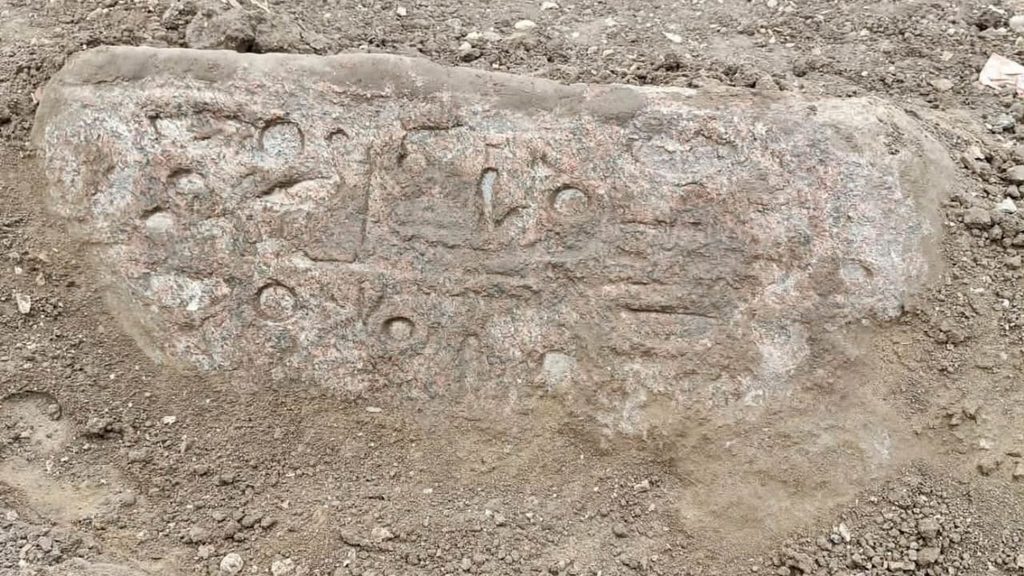
Archaeologists also found a block of pink granite measuring approximately 1.30 meters long. It lay about one meter north of the second statue. The surviving hieroglyphic inscriptions contain two royal titles associated with Ramesses II: “Nesu Beti,” meaning King of Upper and Lower Egypt, and “Sa Ra,” meaning Son of Ra.
These inscriptions strengthen the connection between the finds and the pharaoh. Researchers still need to investigate the block’s original position and its relationship to the statues before drawing firmer conclusions about the arrangement of the site. Ramesses II, often called Ramesses the Great, ruled Egypt from approximately 1279 to 1213 BC. He is known for his long reign and extensive building projects, which included monumental temples and royal statues.
An Important Site in the Nile Delta
Behbeit El-Hagar is already known for the remains of a large temple dedicated to Isis, one of ancient Egypt’s major goddesses. The site contains granite blocks and other architectural remains that reflect its religious and architectural importance. The newly discovered statues add to the archaeological evidence from the area. Their precise original setting and purpose, however, remain under investigation.
Egyptian officials say excavations and archaeological studies are continuing. Researchers hope that further work will reveal additional remains and clarify how the statues, the inscribed granite block and the surrounding site fit together. For now, the discovery offers a new piece of evidence for understanding the ancient landscape of the Nile Delta, while leaving important questions about the statues’ original placement unanswered.