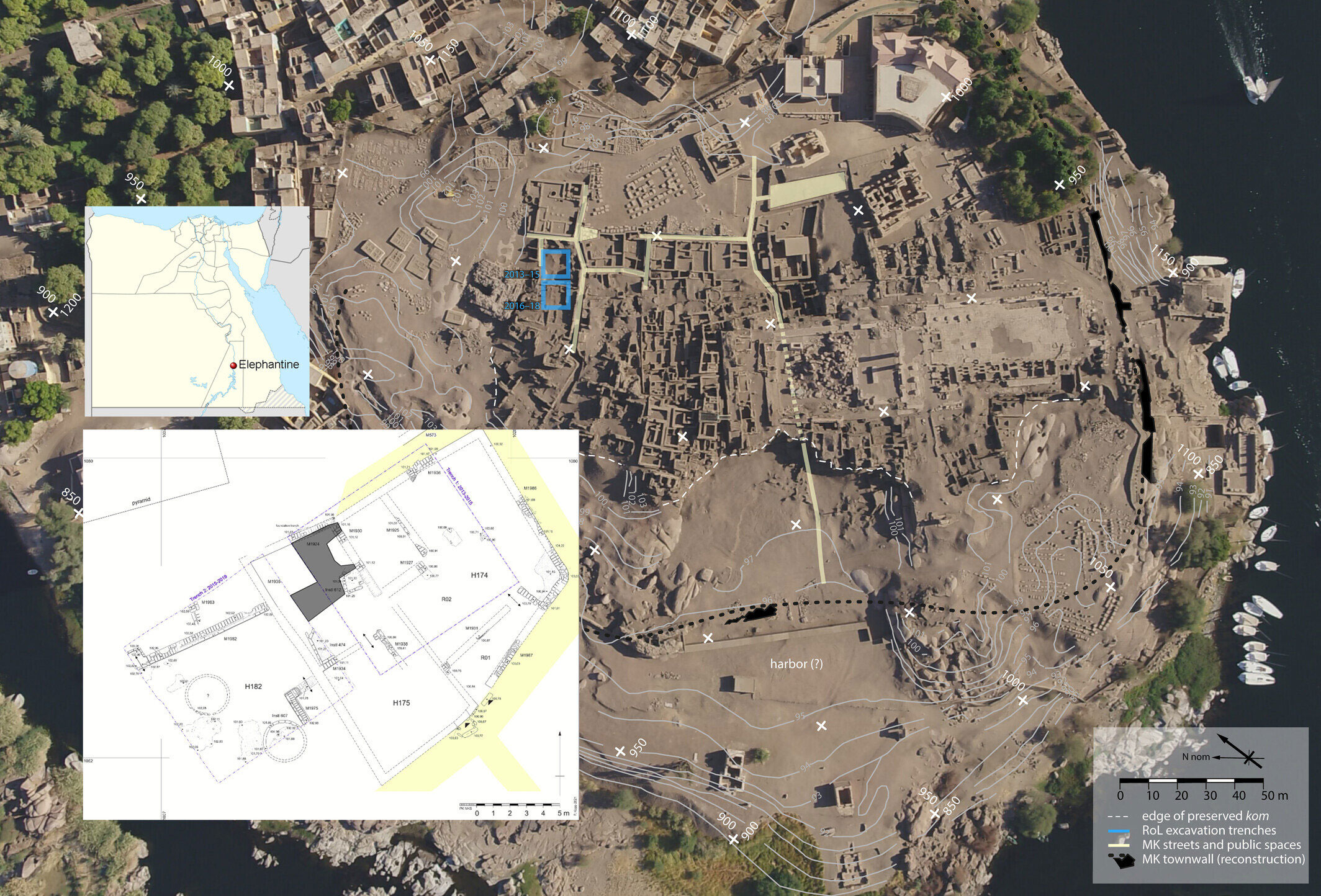
The background shows an aerial orthophotograph of the southern part of Elephantine Island with the Realities of life excavation squares highlighted in blue, south-east of the Dynasty 3 granite pyramid. Credit: Archaeometry (2025). DOI: 10.1111/arcm.70008

Ancient Egyptians Deliberately Produced Arsenical Bronze 4,000 Years Ago on Elephantine Island

Metalworkers on Elephantine Island near Aswan were deliberately producing arsenical bronze nearly 4,000 years ago using sophisticated alloying techniques, according to new research published in Archaeometry. The discovery overturns long-held assumptions about ancient Egyptian metallurgy and reveals technological innovation far ahead of what scholars previously credited to Middle Kingdom craftsmen. The study, led by Ing.

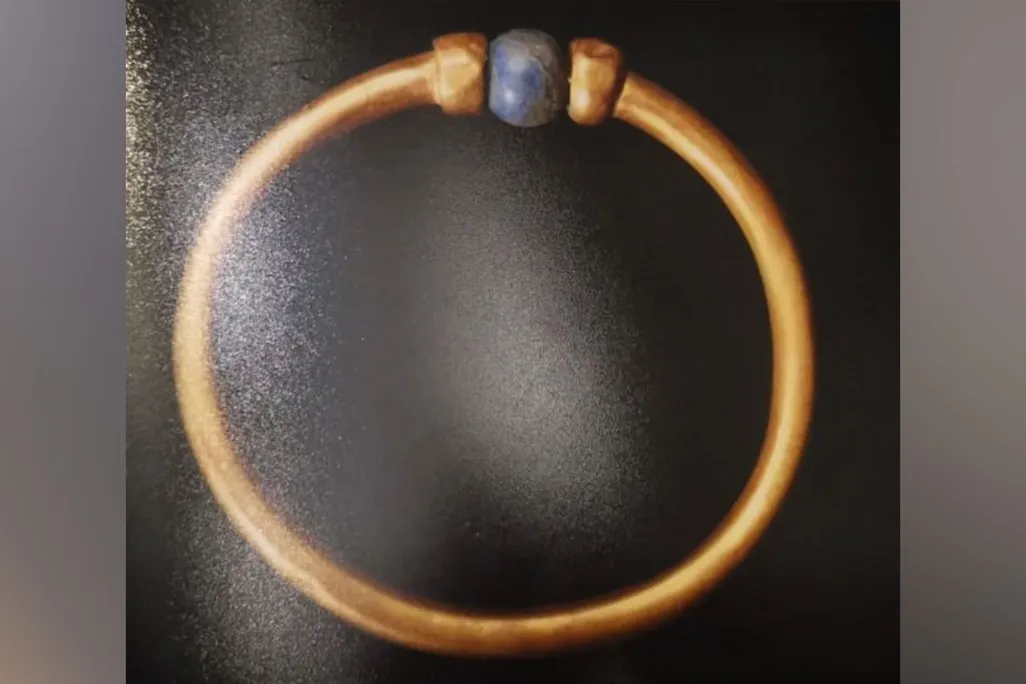
The bracelet was taken by a staffer at the Egyptian Museum in Cairo. Egyptian Ministry of Tourism and Antiquities

Museum Employee Steals 3,000-Year-Old Egyptian Pharaoh’s Bracelet, Sells for $4,000

A 3,000-year-old gold bracelet belonging to an ancient Egyptian pharaoh has been stolen from Cairo’s Egyptian Museum, sold for less than $4,000, and melted down by a gold smelter. Egyptian authorities have arrested four suspects in connection with the theft of the artifact once owned by Pharaoh Amenemope. Museum staff discovered the bracelet missing during

New finds a Ramesses II’s memorial temple show it was used for centuries. Among them is a “House of Life,” an Egyptian religious center for education.

Ancient Egyptian “House of Life” Discovered in Luxor

In the grand necropolis of ancient Thebes on the west bank of the Nile stands a sprawling mortuary complex to one of ancient Egypt’s greatest pharaohs. Known as the Ramesseum, this mortuary temple was a place of worship to the dead Pharaoh Ramesses II, also known as Ramesses the Great. Great columns rise in lines

What megastructures lie under the Great Pyramid of Giza? Feels like none, could it be none? Source: Unknown Author / CC BY-SA 2.5.

What’s All This About Hidden Megastructures Under the Great Pyramid?

Recently there has been a bit of a kerfuffle around ancient Egypt. Three new royal tombs have been uncovered in as many weeks, and that’s something of a big deal when the last one we found was Tutankhamun’s in 1922. The latest news comes from a group of three researchers, Corrado Malanga, Armando Mei and

The excavated royal tomb at Abydos, and (inset) the burial chamber). Source: Egyptian Ministry of Tourism and Antiquities.

Mysterious Egyptian Tomb May Be From Lost “Abydos” Dynasty

It never rains but it pours when it comes to the tombs of ancient Egyptian pharaohs, said nobody ever, but the metaphor certainly seems appropriate at the moment. A month ago we reported on the first discovery of an Egyptian Royal tomb (from a period of united Egypt) in a century, then a hoped-for second

Although the empires may have survived, much of the old world of the Bronze Age was lost in the Collapse. Source: John William Waterhouse / Public Domain.

The Bronze Age Collapse: A Sudden, Violent Plunge into Darkness (Part Three)

The Bronze Age Collapse was, definitively, the end of the Bronze Age. By the time the ancient civilizations had picked up the pieces and rediscovered how to write and interact with each other again they had an entirely new and exciting discovery to work with: iron. Iron can be made into harder and more durable

1 2 3 4