Neanderthals Made Wooden Spears, Containers and a Possible Club 60,000 Years Ago
Discover how 60,000-year-old wooden tools reveal the skills and daily lives of Neanderthals at an archaeological site in Spain.

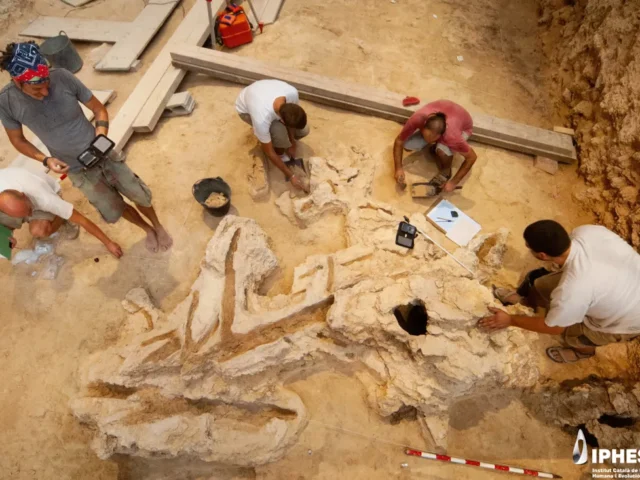
Neanderthals are often remembered for their stone tools, but a remarkable collection of ancient wooden remains from Spain is revealing another side of their technology. Tens of thousands of years ago, these early humans were shaping wood into tools, weapons and objects that may have helped them organize their living spaces.
The evidence comes from Abric Romaní, a rock shelter near Capellades, about 50 kilometers west of Barcelona. A new study published in Science Advances on October 7 examines 597 wooden remains and imprints recovered from 16 archaeological layers dating between approximately 62,000 and 40,000 years ago.
Among the finds are two spears, possible digging sticks, bark containers, long structural poles and an unusual club-shaped object. Together, they offer a rare glimpse into the practical skills Neanderthals used in their everyday lives.
How the Wooden Objects Survived
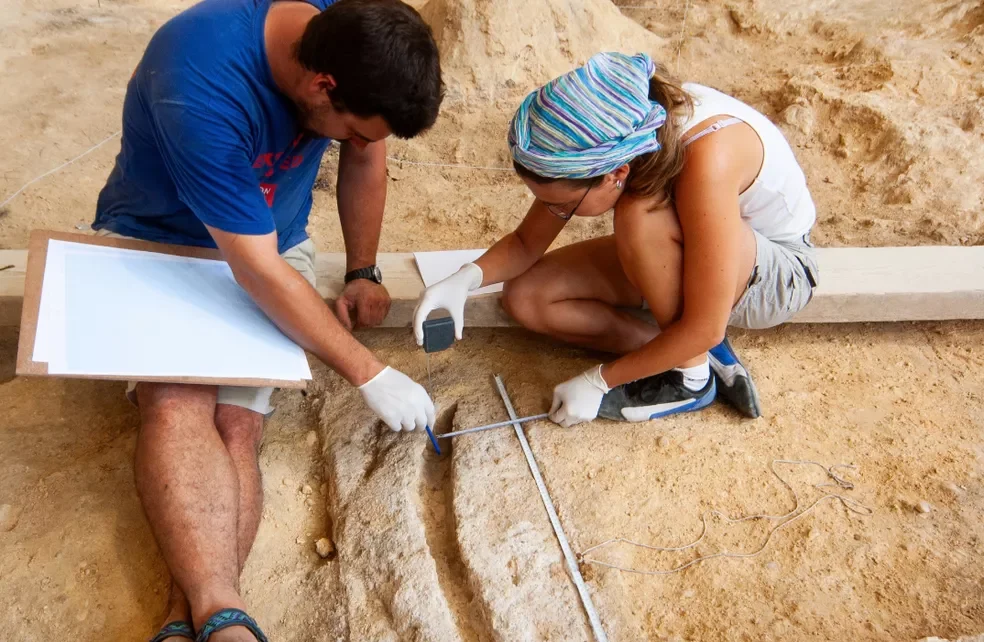
Wood rarely survives for tens of thousands of years. Unlike stone, it breaks down as it rots, leaving archaeologists with little direct evidence of how prehistoric people used it. At Abric Romaní, however, mineral-rich water helped preserve the shapes of wooden objects. Calcium carbonate accumulated around wood lying on the shelter floor, gradually forming a hard crust. As the wood decayed, it left hollow impressions behind. These molds preserved details that would normally have disappeared, allowing researchers to reconstruct the shapes of objects used by Neanderthals.
The site has been excavated for more than four decades, but identifying and studying the wooden remains has taken considerable time. Of the 597 specimens examined in the new study, researchers identified 13 objects that had been deliberately modified by Neanderthals. The rest included natural branches, tree trunks and firewood. The distinction matters. Finding a piece of ancient wood does not necessarily mean someone turned it into a tool. The shapes and characteristics of the 13 modified objects provided evidence that they had been worked by human hands.
Spears, Bark Containers and a Mysterious Club
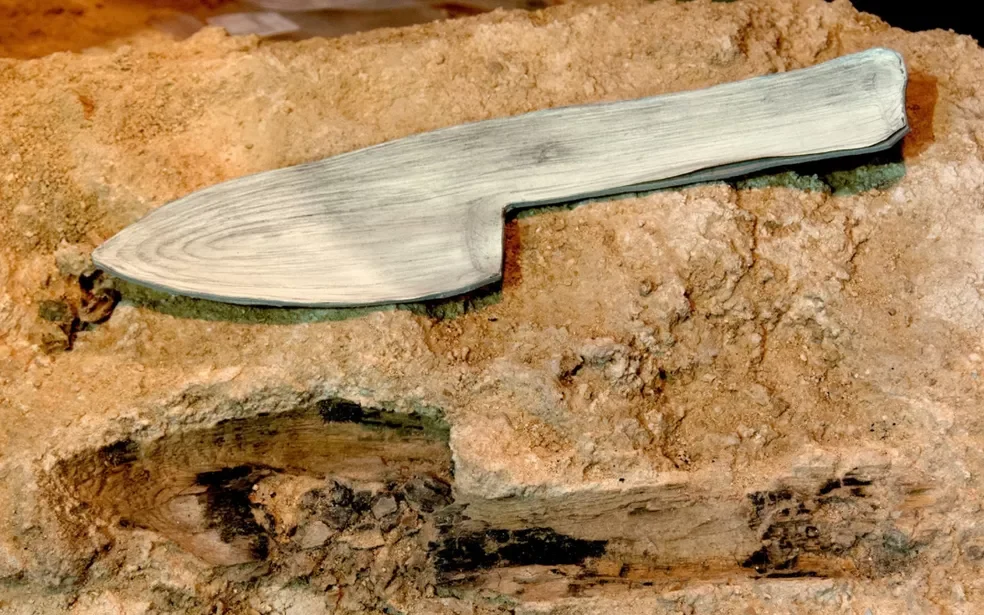
Some of the most striking discoveries suggest that Neanderthals used wood for much more than hunting. Researchers identified two spears, including one measuring approximately 2.45 meters long. Other pointed objects may have served as digging sticks, although their precise functions remain uncertain. The team also documented four shallow objects made from juniper bark. These may have functioned as containers or trays, potentially used to carry food or move ashes around a fire. Their exact purpose has not been established, but they suggest that Neanderthals were making practical items for everyday activities.
Another discovery stood out from the collection: a club-shaped wooden object with a distinct handle and a roughly triangular head. Its form suggests it was deliberately shaped, but archaeologists cannot yet say exactly how it was used. It may have served as a weapon or a heavy-duty tool. Because it was found in a living area alongside animal bones, stone tools and a hearth, researchers have suggested that it could have been part of ordinary domestic life rather than a ceremonial object. The possibilities remain open, but the find adds to the evidence that Neanderthals made wooden objects for a range of purposes.
Did Neanderthals Build Their Own Shelters?
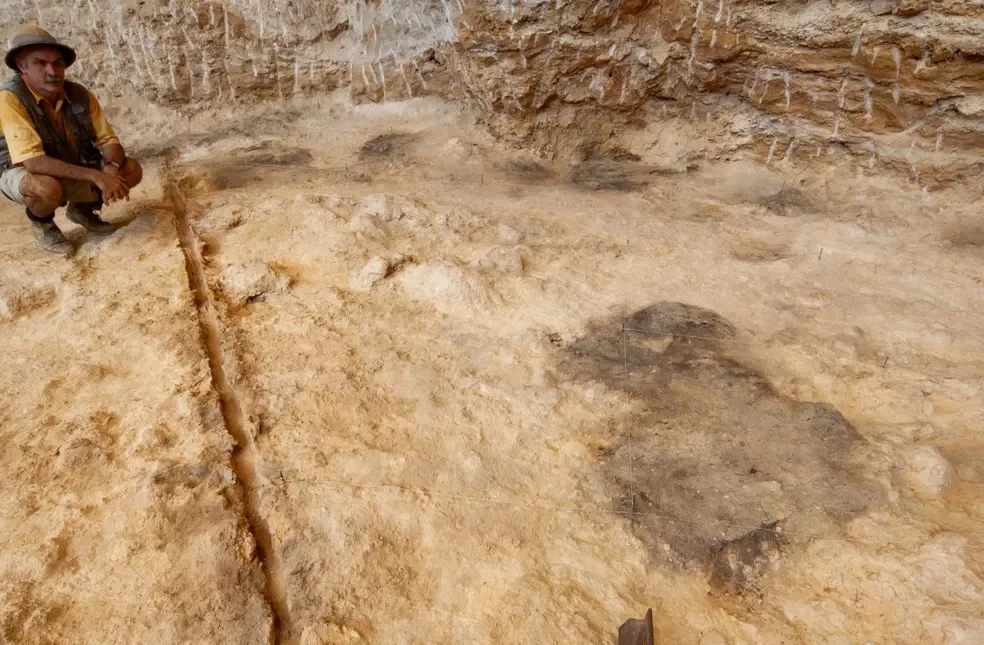
The remains may also reveal how Neanderthals arranged the spaces where they lived. Archaeologists identified long wooden poles that could have been used to support simple shelters or create barriers against the wind. One pole measured more than five meters long. The arrangement of hearths inside the rock shelter offers additional clues. Small fires were positioned along the back wall, while a more active area contained larger hearths, animal bones, stoneworking debris and firewood.
Researchers believe these patterns may reflect different activities taking place within the same space. The smaller hearths could have provided warmth and light near sleeping areas, while the larger ones were used for food preparation and toolmaking. Some of the interpretations remain tentative. The surviving impressions cannot always establish exactly how an object was positioned or what it was used for. Nevertheless, the combination of wooden remains, hearths and other archaeological evidence allows researchers to reconstruct parts of a living environment that would otherwise be difficult to understand.
A Missing Part of Neanderthal Technology
For decades, stone tools have played a major role in how archaeologists describe Neanderthal technology. They survive well, are relatively easy to recognize and can reveal how objects were manufactured. Wood presents a different problem. It was widely available and often easier to shape than stone, but its poor preservation means that much of its history has disappeared. The Abric Romaní findings help fill that gap. The range of objects suggests that Neanderthals selected different materials for different tasks, using wood for weapons, possible containers and structures as well as fuel. The study also provides evidence across multiple archaeological layers spanning roughly 22,000 years. Rather than documenting a single unusual object, it reveals repeated woodworking activity at the same location over a long period.
That does not mean every Neanderthal group used wood in exactly the same way, or that every object has a known purpose. The findings come from one site, and many of the proposed functions still need further investigation. What they do show is that stone tools represent only part of the technology these people used. Much of their practical knowledge was built around materials that rarely survive long enough for archaeologists to find them. The wooden remains at Abric Romaní offer an unusually detailed look at that missing part of prehistoric life, revealing a level of material knowledge that the surviving stone tools alone could never fully explain.