Possible Stone Age Boat Anchor Discovered Underwater Off Norway
A grooved stone found underwater off Norway may be a Stone Age anchor, offering new clues about prehistoric boats and coastal travel.


A Stone Age anchor in Norway may offer a rare clue to how people traveled by water thousands of years ago. Archaeologists recovered a heavy, grooved stone from the seabed near a prehistoric quarry. They believe it may have helped secure boats, although its age and original purpose remain unconfirmed.
The stone came from waters near Hespriholmen, a small island off western Norway. People visited the island between 5,000 and 9,000 years ago to quarry greenstone, a rock they used to make axes. The site lies about five kilometers from the mainland, in waters known for strong currents and rough conditions.
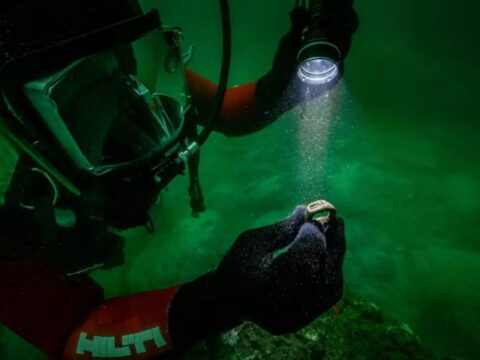
Researchers found the stone underwater last year, resting on a pile of waste from the ancient quarry. It sat at a depth of around 20 meters. During a later expedition, archaeologists attached a rope to the groove that circles the stone and brought it to the surface. The object weighs more than 30 kilograms, or about 66 pounds. Its size rules out some possible uses, including a simple fishing-net weight. Archaeologists now suspect the groove once held a rope that helped secure a boat.
Stone Age Anchor in Norway: A Possible First
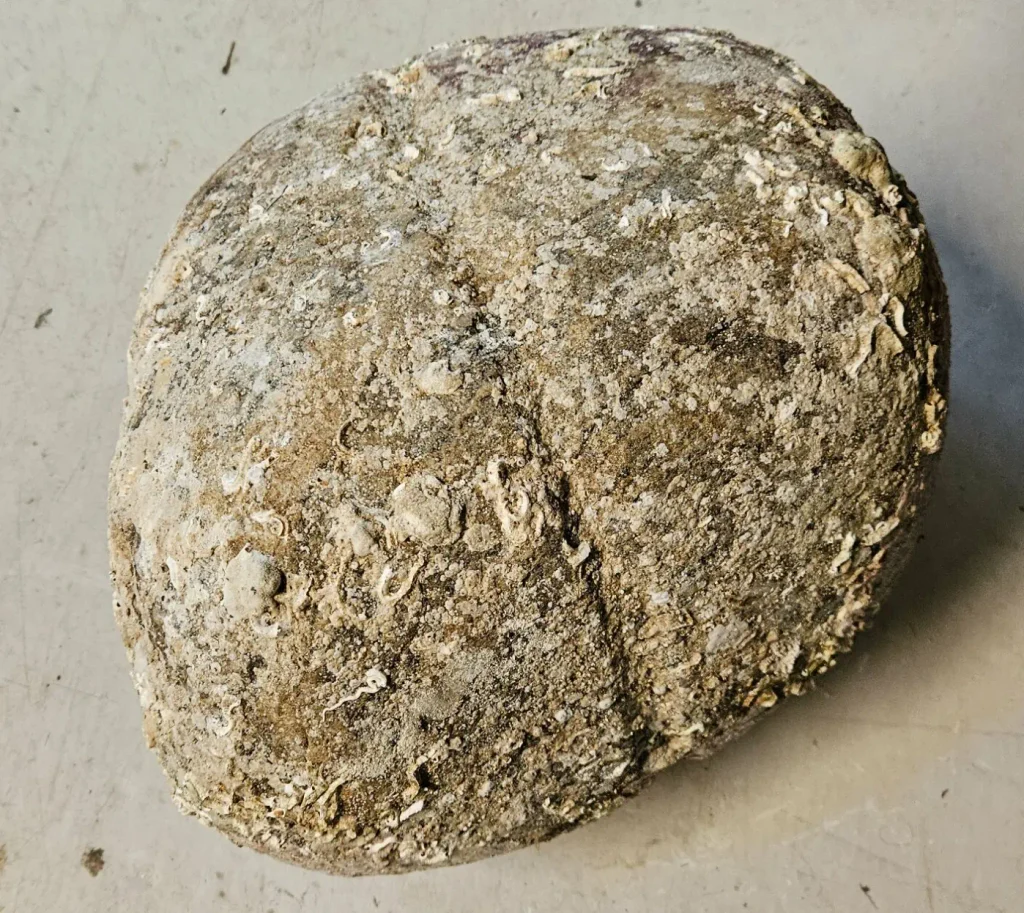
(Photo: E. Samuelsen / Bergen Maritime Museum)
If researchers confirm its purpose, the Stone Age anchor in Norway could provide rare evidence of early boat travel. The stone’s shape and location have caught researchers’ attention. Leif Inge Åstveit of the University Museum of Bergen believes it served as an anchor. Hein Bjerck, a maritime archaeologist who examined photographs of the object, also considers that explanation plausible. An anchor would have been useful at Hespriholmen. Ancient quarry workers had to reach the island, break greenstone from the rock and transport heavy loads back to the mainland. A boat secured against the pull of currents could have made loading safer.
Still, the interpretation remains provisional. Researchers have not yet established the stone’s exact age or confirmed its original purpose through a peer-reviewed study. The quarry operated over a long period, but that fact alone cannot date this particular object. If archaeologists confirm that the stone served as an anchor during the Stone Age, it could represent one of the earliest known examples. Researchers have found securely dated stone anchors from much later periods, including the Bronze Age. The Norwegian find may offer an unusually early glimpse of how people handled boats in difficult coastal waters.
A Dangerous Journey for Greenstone
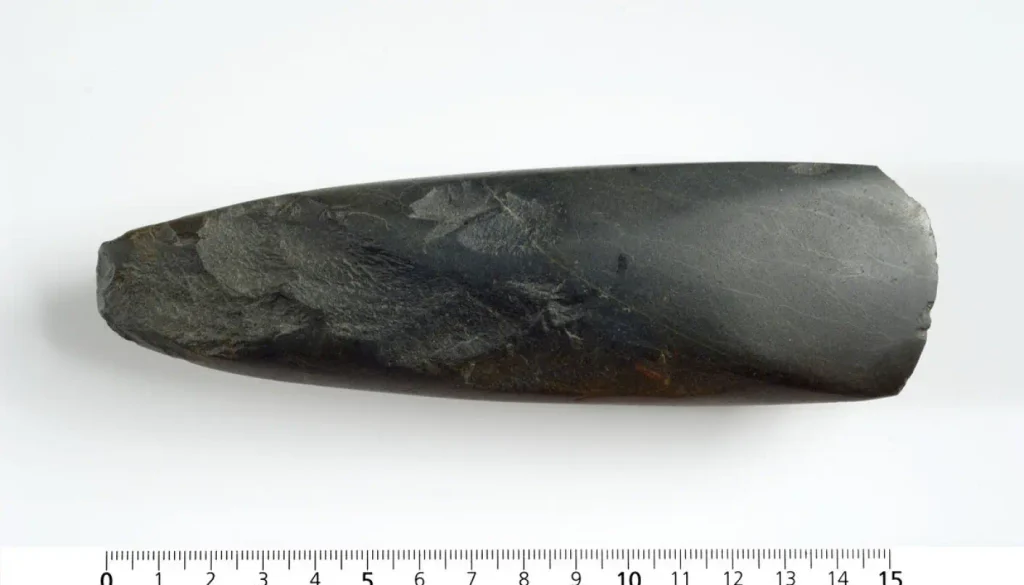
(Photo: University Museum of Bergen)
Hespriholmen was more than a place to collect raw material. Its location made reaching the quarry a serious undertaking. The island sits offshore among strong currents and waves, and archaeologists say people could visit safely only when conditions allowed. Despite those risks, people returned to the island over many generations. They extracted greenstone and shaped it into axes that later appeared at settlements across parts of Norway. These tools served practical purposes, but archaeologists also think some may have carried social value as gifts or symbols of status.
The latest underwater work has revealed more evidence of the quarry’s scale. Researchers found large hammerstones that people likely used to break apart the greenstone. Some were made from heavy rock transported to the island from the mainland. Moving these tools, extracting stone and carrying the finished material away would have required careful planning. The possible anchor adds another piece to that picture. It raises questions about how people kept their boats steady while loading cargo and what kinds of vessels they used to reach the island.
What Kind of Boats Did They Use?
Archaeologists have found few direct traces of boats from this period in Norway. That makes objects connected to travel and transport especially valuable. Researchers believe people may have used skin-covered boats, similar in principle to craft used by Arctic communities, to navigate the coastal waters. Others suggest they could have used rafts.
The grooved stone cannot settle that debate on its own. However, if it functioned as an anchor, it would provide evidence that people developed ways to secure boats during demanding journeys. At Hespriholmen, workers needed to bring tools to the quarry and carry heavy stone back across the water. The research team is also mapping the quarry with modern surveying technology. Three-dimensional models should help researchers estimate how much greenstone people removed. An earlier estimate put the amount at about 430 cubic meters, but the team suspects the total may be considerably larger.
A New Clue to Prehistoric Seafaring

(Photo: Pål Nymoen / Norwegian Maritime Museum)
The stone’s true significance depends on further analysis. Researchers must establish its age and test the anchor interpretation before they can draw firm conclusions. For now, its shape and the place where archaeologists found it make it a compelling candidate. Even without a final answer, the discovery highlights the skill and effort behind Stone Age quarrying. People repeatedly crossed challenging waters to obtain valuable stone, transported heavy equipment and moved their products back to the mainland.
If the grooved stone really helped secure their boats, it could reveal one practical solution that made those journeys possible. A simple object recovered from an underwater waste pile may eventually help researchers better understand how prehistoric communities traveled, worked and connected with one another along Norway’s coast. Further research may establish whether the Stone Age anchor in Norway really helped prehistoric quarry workers secure their boats.