Humanity’s Timeless Search for Alien Life
Are we truly alone, or are the stars hiding secrets we're only beginning to unlock? Dive in to our latest article to explore for our quest of Alien life.


In the immense reaches of outer space with its billions of galaxies, stars, and planets, the question of whether we’re alone has captivated humanity for centuries. The timeless search for alien life is a pursuit of curiosity that challenges our understanding of life itself. One that pushes the boundaries of science, philosophy and technology.
As we gaze up at the night sky, we’re compelled to wonder: Is there life out there, and if so, what does it look like? This article delves into the ongoing search for extraterrestrial life as we explore the scientific endeavors, historical theories, possible challenges as well as the massive implications of discovering life beyond Earth.
The Fermi Paradox: Where Is Everybody?
One of the most intriguing questions in the search for extraterrestrial life is encapsulated in the Fermi Paradox, named after the Italian-American physicist Enrico Fermi. The paradox arises from the contrast between the high probability of extraterrestrial civilizations existing in the vast universe and the lack of evidence or contact with such civilizations. It is named after Enrico Fermi because he famously posed the question, “Where is everybody?” during a casual conversation in 1950, highlighting the apparent contradiction.
Given the age of the universe and the sheer number of potentially habitable planets, it seems statistically unlikely that Earth would be the only planet to develop intelligent life. Yet, despite decades of searching, we have found no definitive proof of extraterrestrial life as of 2025.

The Fermi Paradox has led to various hypotheses. Some have stated that advanced alien civilizations are just too far away for us to identify. Others propose that intelligent life tends to self-destruct before it can establish interstellar communication or travel. Another compelling theory is the “Dark Forest Hypothesis,” which suggests that civilizations remain silent and hidden out of fear. In this scenario, the universe is likened to a dark forest, where every civilization is a hunter with a loaded gun, choosing to stay silent to avoid detection by others who may pose a threat. This chilling perspective posits that any contact between civilizations could be inherently dangerous, leading to mutual destruction. Consequently, this could be the reason why we haven’t encountered any other civilizations—they might be intentionally avoiding contact in order to survive.
There are also theories that we ourselves may be deliberately avoiding contact, or that extraterrestrial life may be so different from us that we are simply unable to recognize it. This paradox fuels our search, driving scientists to explore every possibility from the most conventional to the most speculative.
The Habitable Zone: Earth-Like Planets and Beyond
The search for extraterrestrial life begins with finding planets that could potentially support life. These planets are often located in what is known as the “habitable zone” or the “Goldilocks zone“—a region around a star where the temperature is just right for liquid water to exist. Liquid water is considered essential for life as we know it, thus making these zones prime targets for exploration.
In recent times, the revelation of exoplanets (planets that are found outside our solar system) has reshaped our understanding of the cosmos. The Kepler Space Telescope, launched in 2009, has identified thousands of exoplanets. Many of which reside in the habitable zones of their stars. Among these, some Earth-sized planets have been discovered which has sparked excitement about the possibility of finding life. However, the existence of water alone does not guarantee life; other factors, such as atmospheric composition and geological activity, also play essential roles.
Yet, the focus on Earth-like conditions may be limiting our search. Life on Earth has shown incredible adaptability, thriving in extreme environments like deep-sea hydrothermal vents, acidic lakes and frozen tundras. This suggests that life elsewhere could exist in forms and under conditions very different from what we expect. As a result, astrobiologists are broadening their search criteria, considering the possibility of life in subsurface oceans on moons like Europa and Enceladus or even in the methane lakes of Titan.
The Role of SETI: Listening to the Stars
The Search for Extraterrestrial Intelligence (SETI) represents one of the most iconic efforts to detect alien life. SETI focuses on identifying signals or communications from intelligent civilizations. Using powerful radio telescopes, scientists listen for patterns in the noise of the universe that could indicate the presence of an advanced alien civilization.
Since its inception in the 1960s, SETI has scanned countless stars and frequencies, yet it has not found a clear signal that can be attributed to extraterrestrial intelligence. Despite this, the search continues, driven by the possibility that intelligent alien civilizations might use radio waves to communicate across the vast distances of space. The lack of success so far does not deter scientists; instead, it motivates them to refine their techniques and consider new possibilities, such as the detection of laser signals or other non-radio forms of communication.
SETI also faces significant challenges. The sheer vastness of space means that the chances of our instruments being pointed in the right direction at the right time are incredibly slim. Furthermore, the signals we are searching for might be incredibly weak or distorted by cosmic interference. Despite these obstacles, SETI remains a symbol of our collective hope that we are not alone in the universe.
Life on Mars: A Neighborly Search
Mars has long been a focal point in the search for extraterrestrial life, largely due to its proximity and similarities to Earth. Early observations of Mars revealed features that some believed to be artificial canals, leading to speculation about intelligent life on the planet. While these canals turned out to be optical illusions, the interest in Mars as a potential home for life has never waned.
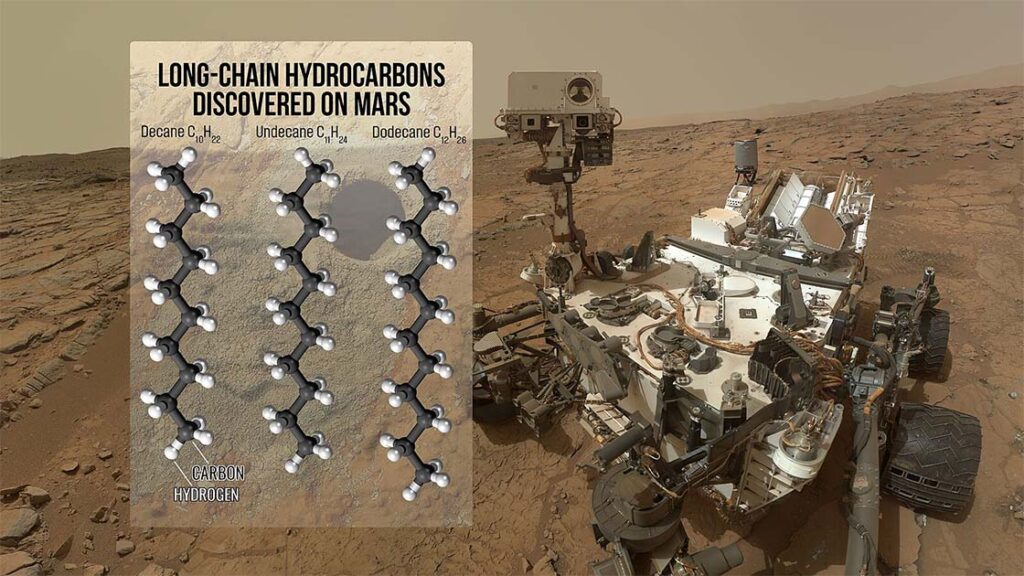
In recent decades, robotic missions to Mars have provided valuable data about the planet’s history and environment. The discovery of ancient riverbeds, polar ice caps, and seasonal methane emissions suggest that Mars may have once had conditions suitable for life. Today, missions like NASA’s Perseverance Rover are actively searching for signs of past life such as fossilized microbes in the Martian soil. While definitive evidence of life on Mars has yet to be found, the possibility remains tantalizingly close, with each mission bringing us one step closer to an answer.
The Future of the Search: New Frontiers
The search for extraterrestrial life is entering a new era, fueled by high-tech advancements in technology combined with a deeper understanding of the cosmos. Future missions, such as the James Webb Space Telescope, are expected to provide unprecedented views of distant exoplanets, allowing scientists to analyze their atmospheres for potential biosignatures—indicators of life, such as oxygen or methane.
Beyond telescopes and rovers, the search for life is also expanding to include the study of extremophiles—organisms that thrive in Earth’s most extreme environments. By understanding how life can survive under harsh conditions, scientists can better hypothesize where and how life might exist elsewhere in the universe. Additionally, advances in synthetic biology may one day allow us to engineer life forms capable of surviving in extraterrestrial environments, providing new insights into the possibilities of life beyond Earth.
The Philosophical Implications: Are We Ready?
The discovery of extraterrestrial life would have profound implications for humanity, challenging our understanding of life, our place in the universe, and even our religious or philosophical beliefs. If we were to find even the simplest form of life elsewhere, it would suggest that life is not unique to Earth and could be common throughout the cosmos. This would raise questions about the origins of life, the potential for intelligent civilizations and the future of humanity’s exploration of space.
Conversely, if we continue to search and find nothing, we may need to confront the possibility that we are truly alone—a realization that could be equally unsettling. The search for extraterrestrial life is as much a journey of self-discovery as it is a scientific endeavor. It forces us to confront our assumptions, expand our horizons and consider our place in a universe that is both vast and mysterious.

The Quest Continues
The search for extraterrestrial life is a quest that unites humanity in a shared pursuit of knowledge. It is a journey that combines the rigor of science with the wonder of exploration, driven by the possibility that we are not alone. Whether we find life on a distant planet, a moon within our solar system, or in the signals of the stars, the search itself is a testament to our innate curiosity and our desire to understand the cosmos. As we continue to explore, we may one day find that the answer to whether we are alone in the universe lies not just in the stars, but within ourselves too.
Top Image: An alleged UFO sighting taken by the USA National Archives and Records Administration. Source: Public Domain.
References:
- Cooper, Keith. “SETI Searches for Alien Life in Over 1,000 Galaxies Using Unexplored Radio Frequencies.” Space.com, 29 Aug. 2024, www.space.com/seti-alien-signals-low-radio-frequencies.
- Thompson, Mark. “Giant Low-Frequency Scan Searches for Aliens in 2,800 Galaxies.” Universe Today, 29 Aug. 2024, www.universetoday.com/168282/giant-low-frequency-scan-searches-for-aliens-in-2800-galaxies/.
- Turner, Ben. “James Webb Telescope Spots 6 Enormous ‘Rogue Planets’ Tumbling through Space without a Star.” LiveScience, 29 Aug. 2024, www.livescience.com/space/astronomy/james-webb-telescope-spots-6-enormous-rogue-planets-tumbling-through-space-without-a-star.
- Marshall, Michael. “The Earth’s Deepest Living Organisms May Hold Clues to Alien Life on Mars.” BBC, 22 Aug. 2024, www.bbc.com/future/article/20240821-could-alien-life-survive-in-deep-lakes-below-mars-surface.
- NASA. “Are We Alone?” NASA.gov, 22 Apr. 2024, science.nasa.gov/exoplanets/search-for-life/.