1,500-Year-Old Haniwa Figure Found in Japan Depicts a Female Ritual Figure
A 1,500-year-old haniwa figure found in Japan depicts a woman holding a possible ritual object, with red pigment still visible.

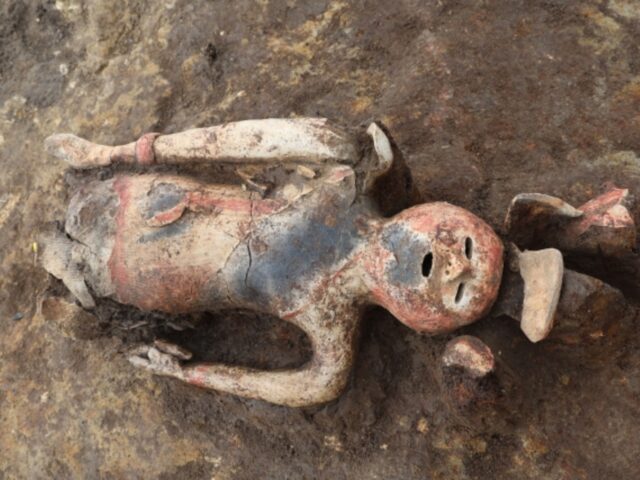
A haniwa figure found in Japan during archaeological excavations in Gunma Prefecture dates back around 1,500 years. The clay figure depicts a woman wearing a sash, and traces of red pigment remain on parts of the object. Researchers have identified it as a miko, a woman associated with religious rituals.
The figure comes from the Nishikaminomiya archaeological site in Isesaki, where excavations began in 2020 as part of a project connected to improvements along the Tone River. Gunma Prefecture announced the discovery on October 21, 2026.
Researchers identify the figure as a miko, a woman associated with religious ceremonies. Its clothing, hairstyle and the object in its hand provide clues to that interpretation, although the exact ceremony it may represent remains unknown.
Haniwa Figure Found in Japan Retains Red Pigment
The haniwa figure found in Japan preserves details that help researchers examine how people created and decorated clay figures during the fifth century. People placed these figures on and around burial mounds during the Kofun period, which lasted from approximately the third to seventh centuries AD. This example dates to the second half of the fifth century. Its head and upper body survive, while its original cylindrical base is missing. The remaining sculpture measures about 41 centimeters tall.
The figure wears a sash across its body and a bracelet on its right wrist. Its maker carefully shaped the hairstyle, facial features, fingers and other details. Traces of red pigment remain on the face, sash and bracelet. The woman’s left hand holds a narrow, rod-shaped object. Researchers believe it may have served a ceremonial purpose, but they have not established its exact function.
What the Haniwa Figure Found in Japan Reveals About Ancient Rituals
The figure’s hairstyle and clothing helped researchers identify it as a miko, a woman associated with religious or ritual activities in Japan. Some reports describe the sculpture as a female shaman. That label reflects an interpretation of the figure rather than a confirmed identity. Archaeologists have not established whether it represents a specific person or a symbolic participant in a ceremony.
Even with that uncertainty, the sculpture preserves details that researchers can study directly. Its hairstyle, jewelry, clothing and remaining pigment show how an artisan represented a woman in fifth-century Japan. Haniwa figures took many forms. Early examples often consisted of simple cylinders, while later examples represented people, animals, buildings and objects. Human-shaped figures provide evidence of how ancient communities depicted individuals and activities connected with burial mounds.
The Burial Mound Where the Haniwa Figure Was Found
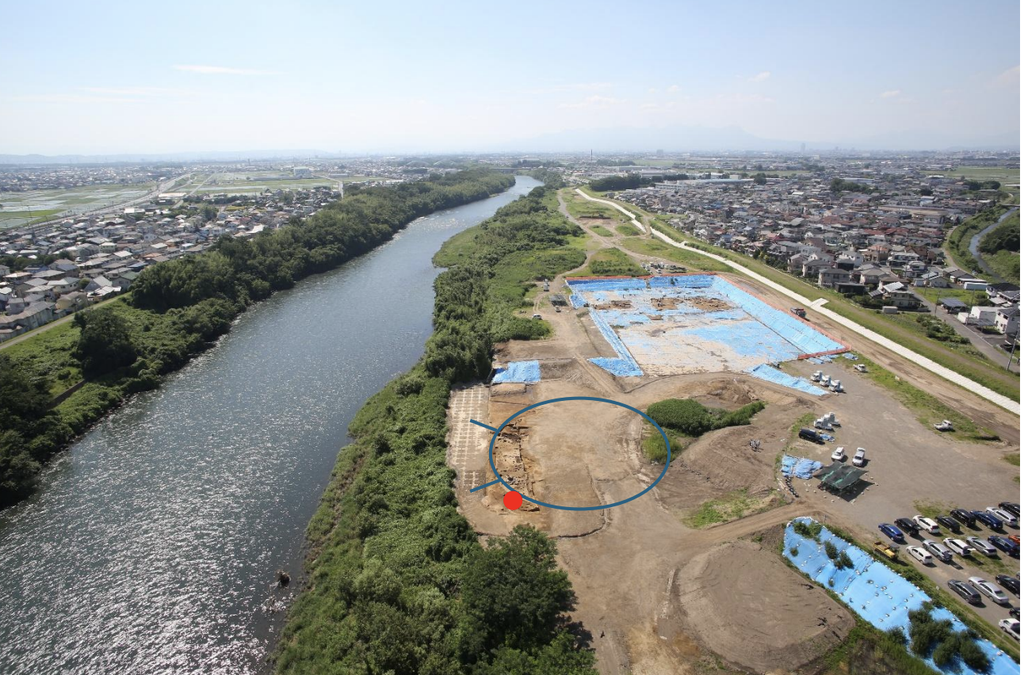
Archaeologists found the sculpture in a ditch surrounding Tumulus No. 1 at Nishikaminomiya. The figure had fallen from a projecting section of the mound into the ditch. Researchers have identified 11 burial mounds at the site since excavations began in 2020. Tumulus No. 1 measures approximately 49 meters long and has a surrounding moat about 18 meters wide.
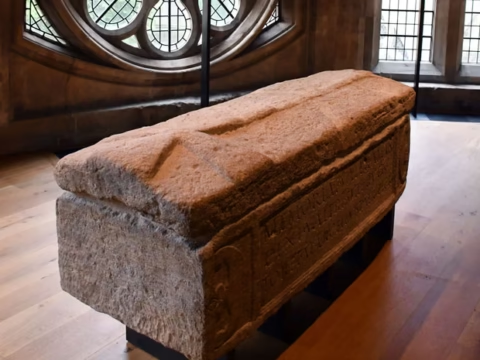
Archaeologists have also recovered part of a boat-shaped stone coffin from this mound. The coffin fragment and the newly discovered figure provide separate pieces of evidence about the monument and its funerary setting. The sculpture’s position in the ditch helps researchers understand where it ended up, but it does not establish every detail of how people originally arranged the figure around the mound.
Where to See the Newly Discovered Haniwa
Gunma Prefecture announced that the figure would go on public display beginning October 28, 2026, at the Gunma Prefectural Archaeological Research Center’s Archaeological Information Museum. The planned exhibition runs for about one month. The excavation project has now finished, according to the published reports. The figure’s first public display will give visitors an opportunity to see its surviving details, including the traces of red pigment.
For archaeologists, the find adds another example to the relatively early group of human-shaped haniwa discovered in Gunma Prefecture. Its preserved features offer a closer look at how artisans represented women and possible ritual activities during the fifth century.