Skip to content
  • Home
  • Articles
    • Archaeology & Discoveries
    • Historical Events
    • Artifacts & Treasures
    • Ancient Civilizations
    • Unexplained Phenomena
    • Mythology
  • Subscribe
© Copyright AllThatHistory - 2025
Theme by ThemeinProgress
Proudly powered by WordPress
  • Home
  • Articles
    • Archaeology & Discoveries
    • Historical Events
    • Artifacts & Treasures
    • Ancient Civilizations
    • Unexplained Phenomena
    • Mythology
  • Subscribe
AllThatHistory
  • You are here :
  • Home
  • Archaeology & Discoveries
  • Has the Tomb of Saint Nicholas, the Inspiration for Santa, Been Found in Turkey?
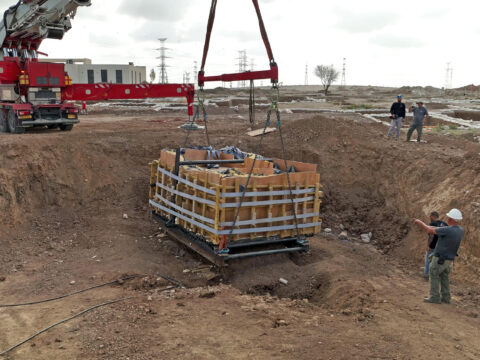
The newly discovered sarcophagus which may hold the remains of Saint Nicholas. Source: Turkiye Today / AA Photo.
Archaeology & Discoveries

Has the Tomb of Saint Nicholas, the Inspiration for Santa, Been Found in Turkey?

Allthathistory December 10, 2024

This is a big one, especially at this time of year: excavations at the Church of St. Nicholas in Demre, on the southern Mediterranean coast of Turkey, have found a sarcophagus. And they have reason to believe it might be the final resting place of the church’s namesake, Saint Nicholas of Myra, better known as Santa Claus.

Saint Nicholas was a 4th century Greek bishop of the early Christian church within the Roman Empire, known as Nicholas the Wonderworker for the sheer number of miracles he performed. However he is best remembered today for his famous giving of secret gifts.

His name, Saint Nick, was altered in Dutch to Sint-Nicolaas and then Sinterklaas, ultimately giving us Santa Claus. Sadly we know very little else about the life of Saint Nick, with most sources written centuries after his death, but we do know that within 200 years he had amassed a sizeable following, enough for a Roman Emperor to order a church built in his name.

The sarcophagus under excavation (Turkiye Today / AA Photo)

It is this ancient church which contains the newly discovered sarcophagus. The excavation, led by Associate Professor Ebru Fatma Findik from Hatay Mustafa Kemal University, is part of the “Legacy for the Future Project” from the Ministry of Culture and Tourism. This area of the building has been under excavation since 1989.

Read moreThe Cave of Hebron: Tomb of the Patriarchs?

The latest excavation has been underway for some two years and the team believed they were dealing with a burial site because of the animal bones and fragmented clap lamps they had found. The sarcophagus is typical for the region, some 2 meters long, made of limestone and with a pitched lid.

As of this moment only a small section of the sarcophagus has been uncovered, and the team hope for an inscription somewhere on its surface to confirm the identity of the deceased. All they are prepared to say for now is that it could be Saint Nicholas.

The interior of the Church of Saint Nicholas, Myra (Sinan Şahin / CC BY 3.0)

For there is a problem with this identification: we already know where the body of Saint Nick is, at least within church tradition. His remains were said to have been removed from Myra during the Catholic Great Schism of 1054 and taken to Bari in southern Italy. There is a church there, the Basilica di San Nicola, in his name and holding his remains.

Perhaps this later story will turn out to be wrong, and perhaps Saint Nicholas is indeed in this new sarcophagus in Turkey. If it is true, we will finally and definitively found the final resting place of the original Santa Claus.

The sarcophagus under excavation (Turkiye Today / AA Photo)
Read more3,000 Year Old Sword of a Pharoah Discovered in Egypt

Original report from Turkiye Today: https://www.turkiyetoday.com/culture/could-sarcophagus-in-turkiyes-antalya-hold-remains-of-st-nicholas-known-as-santa-claus-89539/.

Header Image: The newly discovered sarcophagus which may hold the remains of Saint Nicholas. Source: Turkiye Today / AA Photo.
You may also like

Ancient Rock Carvings Uncovered in Ecuador Point to Shared Amazonian Cultural Traditions

Stolen Hercules Fresco Finds Its Home After Decades in U.S. Collection

Ancient Rock Art in Texas-Mexico Borderlands Endured 4,000 Years

Were Wolves Kept and Nursed by Ancient Seal Hunters?

Ancient Peruvians Survived Climate Catastrophe Through Adaptation, Not War

Peru’s Mysterious “Band of Holes” May Have Been Ancient Marketplace and Accounting System

Allthathistory
Written by Allthathistory

Tags: Christmas, church, Santa Claus, sarcophagus, tomb, Turkey

Leave a Reply Cancel reply

Your email address will not be published. Required fields are marked *

  • Ancient Rock Carvings Uncovered in Ecuador Point to Shared Amazonian Cultural Traditions
    Archaeologists have identified a panel containing approximately 30 ancient rock carvings in Santiago de Méndez canton, Morona Santiago province, marking
  • Stolen Hercules Fresco Finds Its Home After Decades in U.S. Collection
    Archaeologists at Pompeii have identified the original location of a looted fresco fragment depicting the infant Hercules strangling serpents, solving
  • Maya Medical Systems Used Living Organisms as Precision Surgical Tools
    Maya medical systems deployed living organisms as precision surgical tools centuries before germ theory existed. Recent archaeological evidence shows these
  • Ancient Rock Art in Texas-Mexico Borderlands Endured 4,000 Years
    Hunter-gatherers in what is now southwestern Texas and northern Mexico created rock art for more than 4,000 years, maintaining consistent
  • The Thermal Engineering Behind Tiwanaku’s Agricultural Success
    At nearly 3,850 meters above sea level, frost arrives almost nightly on Bolivia’s Altiplano. Modern visitors struggle to breathe. Yet
The Gnostic Gospels
Encounters at the Heart of the World: A History of the Mandan People
Substack Articles

Latest from AllThatHistory Weekly

The Ancient Board Game That Predates Chess by 2,000 Years

The Ancient Board Game That Predates Chess by 2,000 Years

In 1926, Leonard Woolley was excavating the Royal Cemetery of Ur in what is now southern Iraq when his team uncovered something that had no obvious parallel in the ancient world.

Read More →
The Viking Myth: How 19th Century Romantics Invented the Horned Helmet and Everything Else

The Viking Myth: How 19th Century Romantics Invented the Horned Helmet and Everything Else

No Viking warrior ever wore a horned helmet in battle. The image was invented by a Swedish illustrator in 1820 and popularized by a Wagner opera costume designer in 1876. The Viking identity most people carry fierce pagan warriors, racially pure northerners is almost entirely a 19th century nationalist construction. The most famous Viking ship burial ever found contains two…

Read More →
What Are the Nazca Lines and Why Were They Made?

What Are the Nazca Lines and Why Were They Made?

Etched into the desert of southern Peru, the Nazca Lines cover around 450 square kilometers and include hundreds of straight lines, geometric shapes, and large animal figures: a hummingbird, a spider, a condor, a monkey with a curled tail.

Read More →
The Plague of Justinian: The Pandemic That Ended the Ancient World

The Plague of Justinian: The Pandemic That Ended the Ancient World

In 541 CE, bubonic plague arrived at an Egyptian port and spread across the known world. It killed perhaps a quarter of the Byzantine Empire’s population, ended Justinian’s reconquest of Rome, and created the conditions for the Arab conquests a century later. Ancient DNA confirmed the pathogen in 2013. This is the pandemic that built the medieval world.

Read More →
Saudi Arabia’s Hegra: The Ancient City That Outlasted Every Conqueror Until the Tourists Arrived

Saudi Arabia’s Hegra: The Ancient City That Outlasted Every Conqueror Until the Tourists Arrived

Petra’s twin city survived two thousand years almost untouched, and not just because it was remote.

Read More →
The Real Nazca Lines: What Mainstream Archaeology Won’t Commit To

The Real Nazca Lines: What Mainstream Archaeology Won’t Commit To

Everyone has heard of the Nazca Lines. Most people know the alien explanation is nonsense. But the real academic debate three competing theories, none of them fully supported by the evidence is far more interesting than the alternative history crowd wants you to know. The truth is messier, and better.

Read More →
❮
❯

Subscribe to receive our newest archaeology articles, long-form investigations, and historical insights directly in your inbox.

© Copyright AllThatHistory - 2025