
Skip to content
  • Home
  • Articles
    • Archaeology & Discoveries
    • Historical Events
    • Artifacts & Treasures
    • Ancient Civilizations
    • Unexplained Phenomena
    • Mythology
  • Subscribe
© Copyright AllThatHistory - 2025
Theme by ThemeinProgress
Proudly powered by WordPress
  • Home
  • Articles
    • Archaeology & Discoveries
    • Historical Events
    • Artifacts & Treasures
    • Ancient Civilizations
    • Unexplained Phenomena
    • Mythology
  • Subscribe
AllThatHistory
  • You are here :
  • Home
  • Archaeology & Discoveries
  • Hungarian Archaeologists Uncover 1,300-Year-Old Avar Warrior Burial with Intact Sabre
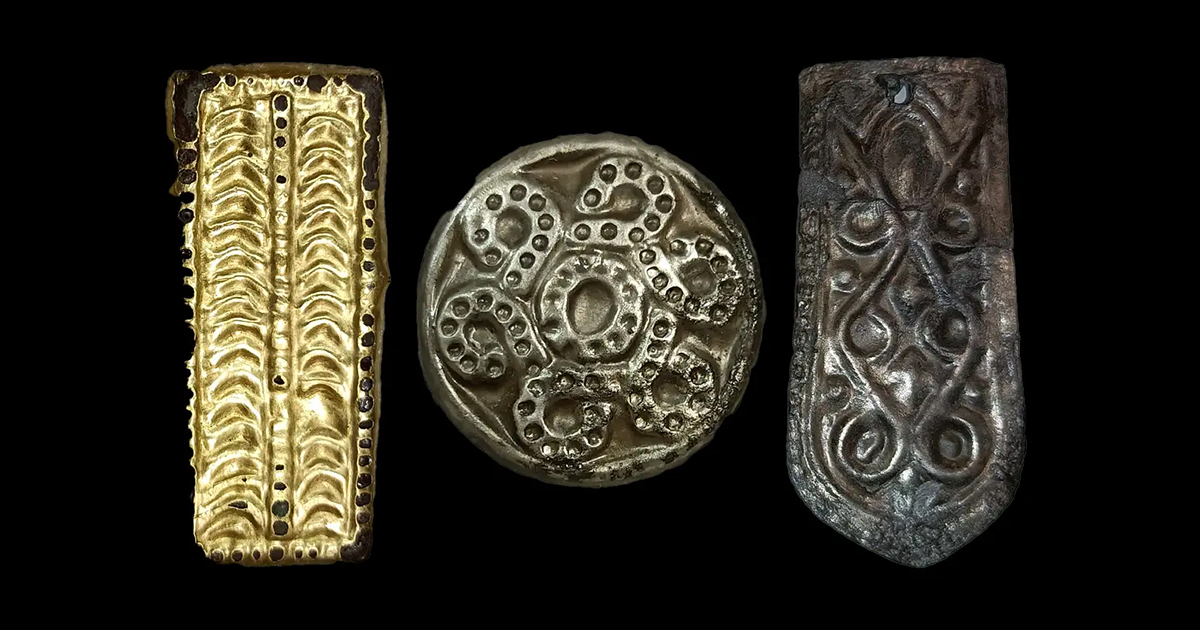
Items discovered. Image Credit : Szent István Király Museum
Archaeology & Discoveries

Hungarian Archaeologists Uncover 1,300-Year-Old Avar Warrior Burial with Intact Sabre

Allthathistory October 27, 2025

A team from the Szent István Király Museum has discovered an elite warrior’s grave near Aba and Székesfehérvár in central Hungary. The burial, dated between 670 and 690 CE, belonged to a member of the Avar Khaganate, the nomadic empire that ruled the Pannonian Basin and much of Central and Eastern Europe during the early medieval period.

The Avars arrived in the region during the 6th century and quickly established dominance through military prowess and strategic alliances. Their conflicts with Byzantium lasted from 568 to 626, leaving a mark on the political landscape of the era. They also influenced Slavic migration patterns across Southeastern Europe. Physical evidence of their society remains scarce, making each new burial discovery significant for understanding their culture.

Excavators found the tomb already disturbed by ancient looters who had scattered the skeleton’s upper portions—head, chest, and abdomen. Yet the burial yielded a wealth of objects that speak to the warrior’s high rank. A complete sabre with blade and hilt survived intact. Silver belt fittings, a long knife, gilded braid ties, glass bead earrings, and arrowheads also remained in place. The arm bones and lower body stayed in their original positions despite the earlier disturbance.

What puzzles researchers is the looters’ selectivity. They left behind the warrior’s weapons and many ornamental pieces, items that would have held considerable value in any era. Whether they were interrupted, scared off, or simply uninterested in military equipment remains unknown.

Read moreThe Cave of Hebron: Tomb of the Patriarchs?

Removing the sabre tested the excavation team’s skills. More than thirteen centuries underground had left the weapon dangerously fragile. Museum volunteers from the Community Archaeology Program constructed a custom wooden cradle to support the sabre and its surrounding soil block. This innovation allowed specialists to transport the weapon to laboratory facilities without damage, where they could conduct detailed micro-excavation under controlled conditions.
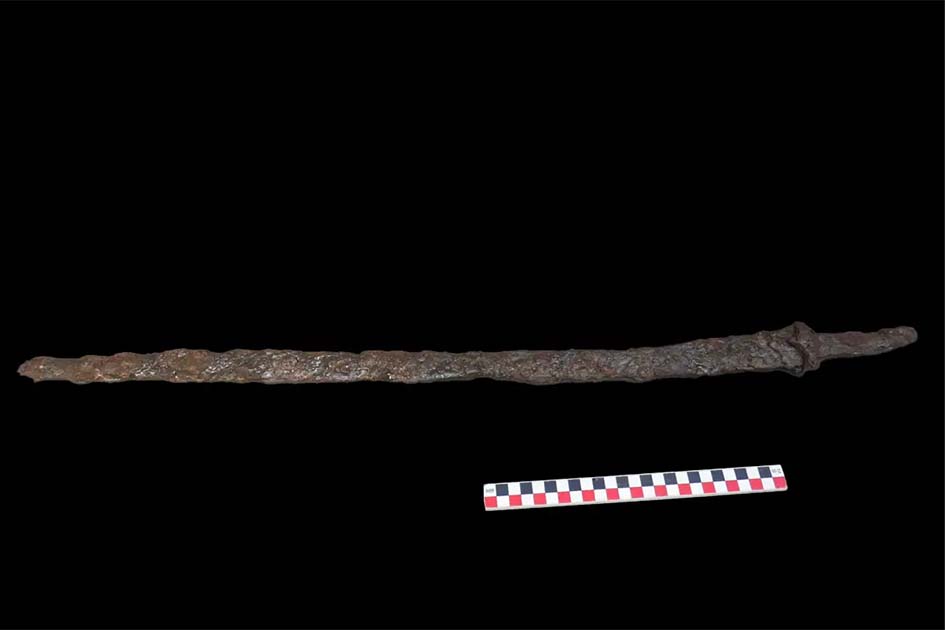
Weaponry. Source : Szent István Király Museum

Conservator Petra Bódisné Szalontai completed the painstaking restoration work. The sabre emerged with its elegant curve and decorative traces visible—characteristics that place it among the rarest Avar weapons on record. The silver and gilded ornaments revealed sophisticated metalworking techniques. These pieces demonstrate both the warrior’s elevated social standing and the technical abilities of Avar craftsmen, who worked with precious metals to create objects of lasting beauty.

The grave contents provide tangible evidence of Avar Khaganate society during the late 7th century. Despite the ancient looting, what survived documents the wealth, artistic achievement, and burial customs of a nomadic power that shaped early medieval Europe.

You may also like

Ancient Rock Carvings Uncovered in Ecuador Point to Shared Amazonian Cultural Traditions

Stolen Hercules Fresco Finds Its Home After Decades in U.S. Collection

Maya Medical Systems Used Living Organisms as Precision Surgical Tools

Ancient Rock Art in Texas-Mexico Borderlands Endured 4,000 Years

Were Wolves Kept and Nursed by Ancient Seal Hunters?

Ancient Peruvians Survived Climate Catastrophe Through Adaptation, Not War

Allthathistory
Written by Allthathistory

Tags: archaeology, Avar, Hungary, sabre, tomb, warrior

Leave a Reply Cancel reply

Your email address will not be published. Required fields are marked *

  • Ancient Rock Carvings Uncovered in Ecuador Point to Shared Amazonian Cultural Traditions
    Archaeologists have identified a panel containing approximately 30 ancient rock carvings in Santiago de Méndez canton, Morona Santiago province, marking
  • Stolen Hercules Fresco Finds Its Home After Decades in U.S. Collection
    Archaeologists at Pompeii have identified the original location of a looted fresco fragment depicting the infant Hercules strangling serpents, solving
  • Maya Medical Systems Used Living Organisms as Precision Surgical Tools
    Maya medical systems deployed living organisms as precision surgical tools centuries before germ theory existed. Recent archaeological evidence shows these
  • Ancient Rock Art in Texas-Mexico Borderlands Endured 4,000 Years
    Hunter-gatherers in what is now southwestern Texas and northern Mexico created rock art for more than 4,000 years, maintaining consistent
  • The Thermal Engineering Behind Tiwanaku’s Agricultural Success
    At nearly 3,850 meters above sea level, frost arrives almost nightly on Bolivia’s Altiplano. Modern visitors struggle to breathe. Yet
The Gnostic Gospels
Encounters at the Heart of the World: A History of the Mandan People
Substack Articles

Latest from AllThatHistory Weekly

The Plague of Justinian: The Pandemic That Ended the Ancient World

The Plague of Justinian: The Pandemic That Ended the Ancient World

In 541 CE, bubonic plague arrived at an Egyptian port and spread across the known world. It killed perhaps a quarter of the Byzantine Empire’s population, ended Justinian’s reconquest of Rome, and created the conditions for the Arab conquests a century later. Ancient DNA confirmed the pathogen in 2013. This is the pandemic that built the medieval world.

Read More →
The Real Nazca Lines: What Mainstream Archaeology Won’t Commit To

The Real Nazca Lines: What Mainstream Archaeology Won’t Commit To

Everyone has heard of the Nazca Lines. Most people know the alien explanation is nonsense. But the real academic debate three competing theories, none of them fully supported by the evidence is far more interesting than the alternative history crowd wants you to know. The truth is messier, and better.

Read More →
Who Was Cleopatra?

Who Was Cleopatra?

Most of what people know about Cleopatra came from her enemies.

Read More →
Stonehenge’s Bones: The Burial Site That Rewrites What We Thought We Knew

Stonehenge’s Bones: The Burial Site That Rewrites What We Thought We Knew

New isotope analysis of human remains at Stonehenge shows that many of the people buried there in its earliest phase came from Wales the same place as the bluestones. Some of them may have been descendants of the communities that quarried and transported the stones 300 kilometers to Salisbury Plain. The stones and the dead may have been making the…

Read More →
Who Built Gobekli Tepe and Why Did They Bury It?

Who Built Gobekli Tepe and Why Did They Bury It?

Gobekli Tepe was built 12,000 years ago at least 1,000 years before the first evidence of agriculture anywhere in the world. It required coordinating hundreds of workers, quarrying 20-ton limestone pillars, and sustaining organized construction over generations. The people who built it were hunter gatherers. Then they deliberately buried the entire site. This is one of archaeology’s most important unsolved…

Read More →
What Happened to the Maya Civilization?

What Happened to the Maya Civilization?

Between 800 and 1000 AD, dozens of major Maya cities in the southern lowlands went quiet.

Read More →
❮
❯

Subscribe to receive our newest archaeology articles, long-form investigations, and historical insights directly in your inbox.

© Copyright AllThatHistory - 2025