Skip to content
  • Home
  • Articles
    • Archaeology & Discoveries
    • Historical Events
    • Artifacts & Treasures
    • Ancient Civilizations
    • Unexplained Phenomena
    • Mythology
  • Subscribe
© Copyright AllThatHistory - 2025
Theme by ThemeinProgress
Proudly powered by WordPress
  • Home
  • Articles
    • Archaeology & Discoveries
    • Historical Events
    • Artifacts & Treasures
    • Ancient Civilizations
    • Unexplained Phenomena
    • Mythology
  • Subscribe
AllThatHistory
  • You are here :
  • Home
  • Archaeology & Discoveries
  • 3,000 Year Old Sword of a Pharoah Discovered in Egypt
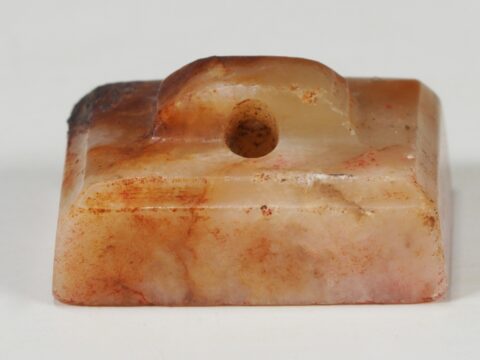
The Bronze Sword of Ramesses II (Interesting Engineering / Egyptian Ministry of Tourism and Antiquities)
Archaeology & Discoveries

3,000 Year Old Sword of a Pharoah Discovered in Egypt

Allthathistory September 23, 2024

An excavation team led by Dr. Ahmed Saeed El-Kharadly have uncovered an ancient sword in Egypt’s Beheira Governate in the north of the country, between Alexandria and Cairo and in the heart of ancient Egypt.

The sword was found at the Tell Al-Abqain archaeological site, in what appears to have been a military storage complex for the Egyptian army, reports Interesting Engineering. And this is not just any bronze sword: according to the hieroglyphs along the side, this is a sword of an Egyptian pharaoh.

  • The Komet: The Most Dangerous Warplane Ever Built?
  • The Radioactive Guardian of the Egyptian Afterlife

The hieroglyphs include the royal cartouche of Ramesses II, great pharaoh of the New Kingdom who ruled a united Egypt more than 3,000 years ago. Ramesses is also believed by most archaeologists and historians to be the pharaoh of the Biblical Exodus, and was known to the Greeks as Ozymandias.

Called Ramesses the Great, his reign was at the heart of the last great moment of ancient Egypt as an independent and powerful state. The reign of Ramesses saw the construction of many of the monumental statues and buildings which define ancient Egypt in the minds of many, including the great temples of Abu Simbel and Karnak. 

Read moreThe Cave of Hebron: Tomb of the Patriarchs?

His kingdom saw a flourishing of the arts, but was also beset by attacks from foreign adversaries including those who came from the desert to the East, from modern day Libya. The military complex at Tell Al-Abqain was constructed to defend against these attacks, and the sword certainly suggests that the great pharaoh liked to get up close and personal with his enemies.

Header Image: The Bronze Sword of Ramesses II (Interesting Engineering / Egyptian Ministry of Tourism and Antiquities)

You may also like

Ancient Rock Carvings Uncovered in Ecuador Point to Shared Amazonian Cultural Traditions

Stolen Hercules Fresco Finds Its Home After Decades in U.S. Collection

Ancient Rock Art in Texas-Mexico Borderlands Endured 4,000 Years

Were Wolves Kept and Nursed by Ancient Seal Hunters?

Ancient Peruvians Survived Climate Catastrophe Through Adaptation, Not War

Peru’s Mysterious “Band of Holes” May Have Been Ancient Marketplace and Accounting System

Allthathistory
Written by Allthathistory

Tags: Alexandria, Bible, Bronze Age, Egypt, Ramesses II, weapon

Leave a Reply Cancel reply

Your email address will not be published. Required fields are marked *

  • Ancient Rock Carvings Uncovered in Ecuador Point to Shared Amazonian Cultural Traditions
    Archaeologists have identified a panel containing approximately 30 ancient rock carvings in Santiago de Méndez canton, Morona Santiago province, marking
  • Stolen Hercules Fresco Finds Its Home After Decades in U.S. Collection
    Archaeologists at Pompeii have identified the original location of a looted fresco fragment depicting the infant Hercules strangling serpents, solving
  • Maya Medical Systems Used Living Organisms as Precision Surgical Tools
    Maya medical systems deployed living organisms as precision surgical tools centuries before germ theory existed. Recent archaeological evidence shows these
  • Ancient Rock Art in Texas-Mexico Borderlands Endured 4,000 Years
    Hunter-gatherers in what is now southwestern Texas and northern Mexico created rock art for more than 4,000 years, maintaining consistent
  • The Thermal Engineering Behind Tiwanaku’s Agricultural Success
    At nearly 3,850 meters above sea level, frost arrives almost nightly on Bolivia’s Altiplano. Modern visitors struggle to breathe. Yet
The Gnostic Gospels
Encounters at the Heart of the World: A History of the Mandan People
Substack Articles

Latest from AllThatHistory Weekly

A Fragment of the Iliad Found Inside a Mummy Rethinks How Greeks Were Used in Egyptian Burial Magic

A Fragment of the Iliad Found Inside a Mummy Rethinks How Greeks Were Used in Egyptian Burial Magic

A papyrus piece of Homer's Iliad discovered inside a Saqqara mummy reveals how ancient Greeks were used in Egyptian funerary magic.

Read More →
Troy Was Real. Here Is What the Archaeology Actually Shows.

Troy Was Real. Here Is What the Archaeology Actually Shows.

The debate over whether the Trojan War happened has run for centuries.

Read More →
550-Million-Year-Old Soft-Bodied Sponge Fossil Fills Critical Gap in Animal Evolutionary Record

550-Million-Year-Old Soft-Bodied Sponge Fossil Fills Critical Gap in Animal Evolutionary Record

A Precambrian sponge lacking hard skeletal structures suggests the 'missing years' of early animal evolution reflect a preservation gap, not an absence of life.

Read More →
What Sank to the Bottom of a Swiss Lake 2,000 Years Ago

What Sank to the Bottom of a Swiss Lake 2,000 Years Ago

In November 2024, the Cantonal Office of Archaeology of Neuchatel was conducting routine aerial monitoring of the lakebed when a photograph revealed something that did not belong there.

Read More →
13,000 Years Ago, Someone Painted a Bison in the Dark. We Just Found Out When.

13,000 Years Ago, Someone Painted a Bison in the Dark. We Just Found Out When.

The Font-de-Gaume cave sits in a limestone hillside near the town of Les Eyzies in the Dordogne region of southwestern France.

Read More →
The War Horn That Made Roman Soldiers Flinch

The War Horn That Made Roman Soldiers Flinch

In the summer of 2025, during a routine archaeological excavation ahead of a housing development in West Norfolk, England, a construction site turned up something unexpected.

Read More →
❮
❯

Subscribe to receive our newest archaeology articles, long-form investigations, and historical insights directly in your inbox.

© Copyright AllThatHistory - 2025