
History’s Largest Political Alliances With ‘EPIC FAIL’ Moments
From the League of Nations to the TPP, history’s epic fails in global alliances left us with amusing ‘what-ifs.’ Which failed pact do you think could’ve changed the world?

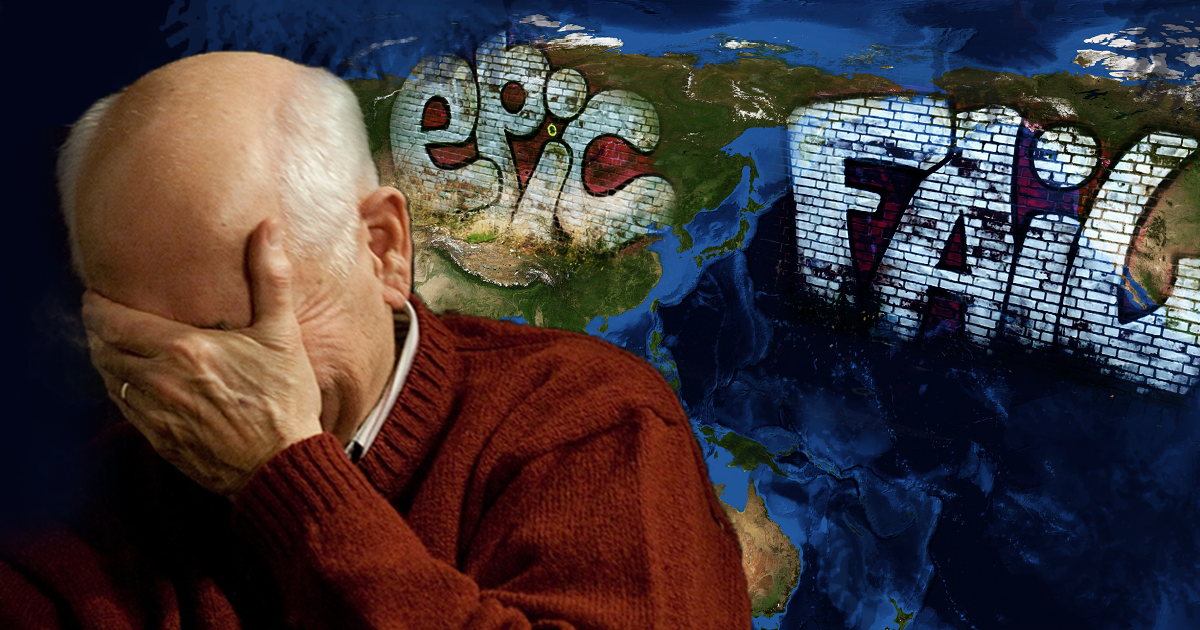
World history has witnessed ambitious political alliances take form to reshape geopolitics and foster cooperation. Some were born out of war, others from economic strategy while a few gathered together under ideological alignment. However, not all of history’s political alliances made it past the drawing board—or if they did, they fractured before their full potential could even unfold.
These unfulfilled pacts offer tantalizing “what-ifs,” teasing us with glimpses of alternate realities where global power might have shifted; where wars may have been avoided; where history could’ve been written anew. Below are the superpowers that could’ve existed, but rather turned out to be moments of—as people these days would say—Epic Fail.
The League of Nations: A Vision of World Peace That Cracked Early
Established in 1920, the League of Nations was conceived as the world’s first permanent international organization dedicated to peace. The League was championed by US President Woodrow Wilson in the aftermath of World War I, with the aim to resolve disputes through diplomacy rather than warfare. In an ironic turn of events, however, Wilson’s own country never joined. The US Senate, wary of entangling alliances and concerns over national sovereignty, rejected the Treaty of Versailles—and with it, the League.
Without the United States’ participation and lacking a standing military force, the League was largely ineffective. It failed to stop Japanese aggression in Manchuria (1931), Italy’s invasion of Ethiopia (1935), and Germany’s remilitarization of the Rhineland (1936). Had the USA ratified the treaty and joined the League, its presence might have added both authority and deterrence, potentially reshaping the fragile interwar order and delaying—or even preventing—World War II.
Despite its epic fail, the League’s dissolution in 1946 paved the way for the United Nations, which sought to improve upon the League’s shortcomings with stronger mechanisms and broader participation.
US-France Relations in the Cold War: Ambitions and Strains
The United States and France share a historic bond, forged during the American Revolutionary War through agreements like the 1778 Treaty of Amity and Commerce. During the Cold War, as Soviet influence grew and nuclear risks loomed, both nations sought to strengthen economic and defense ties within NATO to counter the Eastern bloc. While no single formal treaty akin to the 1778 agreement was proposed, discussions for closer bilateral and multilateral cooperation persisted in the 1950s and 1960s to bolster Western unity.
Tensions, however, emerged under French President Charles de Gaulle, who resisted US dominance in NATO and prioritized French sovereignty. Then in 1966, France withdrew from NATO’s integrated military command and developed an independent nuclear arsenal, straining the alliance. These moves limited the potential for deeper Franco-American collaboration. While a stronger partnership might’ve enhanced Western cohesion, broader factors—such as de Gaulle’s nationalism, economic challenges and diverging strategic priorities—complicated unity. Despite these strains, US-France cooperation endured in areas like intelligence and trade, shaping the Western bloc’s resilience throughout the Cold War. Not a complete epic fail.

The Warsaw Pact’s Roots: Mistrust and Fears
As the Iron Curtain divided Europe in the late 1940s, fleeting proposals for a Pan-European security framework briefly raised hopes of uniting East and West. Soviet leaders, including Foreign Minister Vyacheslav Molotov, suggested a collective security arrangement involving both the USSR and Western nations. Western powers, however, viewed these overtures as an epic fail of sincerity, suspecting they were ploys to delay NATO’s formation and weaken Western integration through efforts like the Marshall Plan.
Mutual distrust ultimately prevailed, dashing prospects for a unified alliance. The West, skeptical of Soviet motives, forged ahead with NATO in 1949, solidifying the Cold War’s divide. The Soviet Union, perceiving NATO as a threat, responded by establishing the Warsaw Pact in 1955, consolidating Eastern Bloc nations after West Germany’s NATO membership. While a broader security pact might’ve softened the era’s ideological clashes, deep differences in ideology, economics, and geopolitics made such an outcome unlikely. Still, these early discussions showed that the path to division was not a complete failure, as both sides sought stability, albeit through rival blocs.

SEATO’s Epic Fail: A Treaty With Teeth Missing
The Southeast Asia Treaty Organization (SEATO), established in 1954 through the Manila Pact, aimed to halt communist expansion in Southeast Asia, drawing inspiration from NATO. Its members—the United States, United Kingdom, France, Australia, New Zealand, Pakistan, the Philippines and Thailand—formed a coalition to counter Soviet and Chinese influence. Yet, with only the Philippines and Thailand as regional members, and major powers like Indonesia, India, and Vietnam absent due to non-alignment or conflict, SEATO struggled to gain local legitimacy.
Unlike NATO, SEATO’s charter lacked mandatory military commitments, requiring unanimous consent for action, which critics saw as an epic fail in design. This weakness was glaring during the Vietnam War, when SEATO failed to deliver a unified response, as members like France and the UK hesitated to engage fully. By 1977, shifting regional priorities led to SEATO’s dissolution. A stronger treaty with binding obligations and broader regional support might have bolstered its role as a counterweight to communism, but distrust of Western-led alliances and the non-aligned movement posed steep hurdles.

The Trans-Pacific Partnership (TPP): A Modern Missed Opportunity
The Trans-Pacific Partnership (TPP), negotiated among 12 Pacific Rim nations—including Japan, Australia, Vietnam and the United States—emerged as a bold 21st-century trade agreement. Signed in 2016, it sought to slash trade barriers, establish robust labor and environmental standards, and counter China’s growing economic clout in Asia. The TPP was hailed as the vibrant heart of US leadership in the region, but critics in the US saw it as an epic fail for American workers; fearing job losses and eroded sovereignty.
In 2017, the Trump Administration withdrew the USA from the TPP, prioritizing domestic concerns over multilateral commitments. The remaining nations forged ahead with the Comprehensive and Progressive Agreement for Trans-Pacific Partnership (CPTPP), which took effect in 2018 but lacked the economic heft of the US economy. A fully ratified TPP with American participation might have reshaped global trade and bolstered American influence in the Asia-Pacific, though opposition within member states and China’s competing trade initiatives posed challenges.

A World Unwritten
These epic fails of broken alliances are more than footnotes in history—they’re also windows into the roads not taken. Each reflects moments when humanity stood at the edge of transformation, only to step back. Whether through mistrust, political hesitancy or structural flaws, these pacts failed to bloom into the world-shaping forces they aspired to be. Yet in their ashes, they leave behind provocative questions: What if the League had worked? What if TPP had united the Pacific? What if East and West had cooperated before dividing the globe? These “what-ifs” remind us that history isn’t just about what happened—it’s also about what might have been.
Top image: CC BY 2.0 (Facepalming time) by Daveoratox, CC BY-SA 4.0 (Map of today’s world) by Maulucioni, CC BY-SA 3.0 (Epic Fail graffiti? Epic win) by Faldrian.



.jpg)