This Place Near Iran Affects World Oil Prices – From History to Consequences
Known as the world’s jugular vein for the world’s economy and oil supply, closing this vital waterway near Iran would be destructive. Find out why.


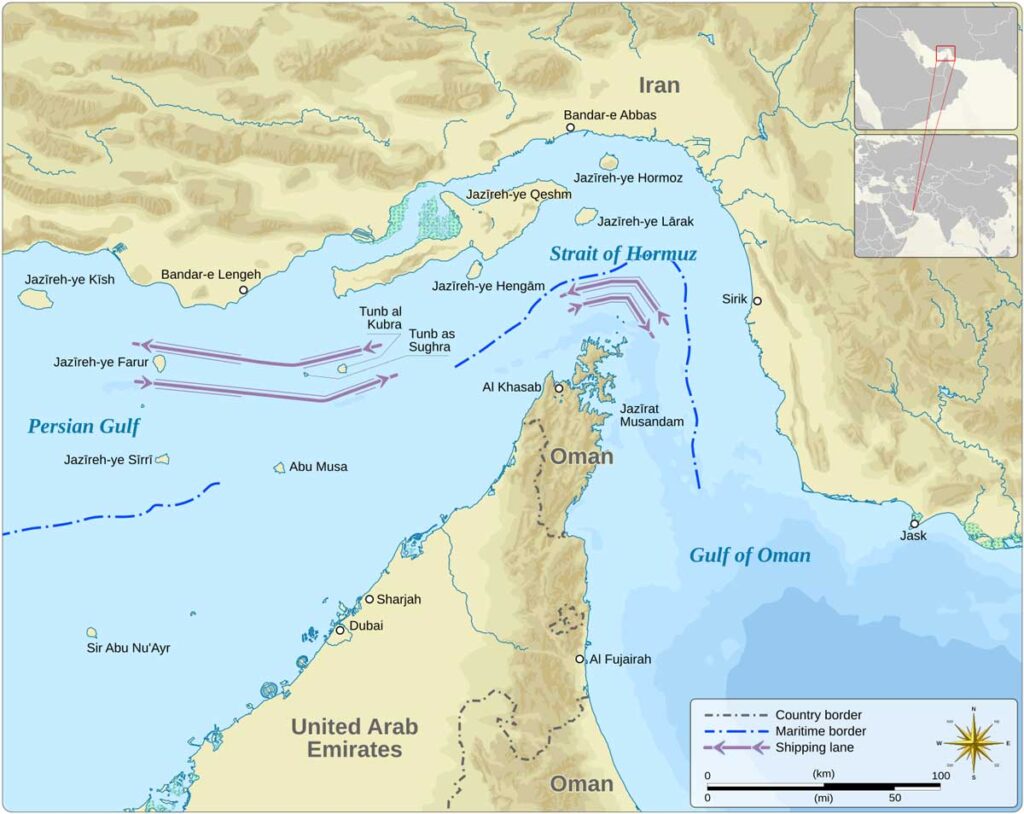
There’s this narrow but vital place of water near Iran that has witnessed millennia of world maritime trade, diplomatic gambits and geopolitical rivalries. Stretching between the Persian Gulf and the Gulf of Oman, this specific waterway connects (and affects) major oil-exporting nations to world markets – influencing oil prices big time. This waterway is the Strait of Hormuz; known for having earned the title as the planet’s most important choke point for crude oil and liquefied natural gas.
More info on current events later, but first.. let’s take a brief time travel to ancient history to start things up.
A Strait of Ancient Empires
The Strait of Hormuz’s history is just as ancient as the civilizations that bordered it. From the seafaring empires of Mesopotamia to the strategic maneuvers during the Age of Sail, the strait’s significance has evolved side by side with world trade dynamics. The Strait of Hormuz first gained prominence in the ancient world as a key route for spice and silk trade, connecting East Asia to Continental Europe. Persian empires, like that of Cyrus the Great’s, recognized the waterway’s strategic value and fortified its surrounding areas.
Fast forward to the 20th century, the strait emerged as a focal point during the discovery of oil in the Gulf region. This newfound resource transformed its surrounding nations into global energy giants. The shipping lanes brimming with crude oil tankers became a lifeline for economies worldwide as a result.
The “Tanker Wars” of the Iran-Iraq Conflict (1980–1988)
The Iran-Iraq War brought unprecedented attention to the Strait of Hormuz. Attacks on oil tankers and merchant vessels—known as the “Tanker Wars“—became a grim reality as both nations sought to cripple each other’s oil-dependent economies. Despite the targeted strikes, the strait never saw a full closure, thanks to international naval interventions.Politicians like US President Ronald Reagan championed Operation Earnest Will to escort vessels, highlighting the strait’s global importance. Meanwhile, Iranian leaders like Ayatollah Khomeini viewed the waterway as a bargaining chip in their regional aspirations.
Threats, Tensions & Oil Price Hikes in the Early 21st Century
The early 2000s marked the resurgence of threats to close the Strait of Hormuz, often as a reaction to American-imposed sanctions on Iran. In 2012, during heightened tensions over Iran’s nuclear program, President Mahmoud Ahmadinejad hinted at leveraging the strait as a countermeasure against Western pressures. While these threats caused temporary spikes in oil prices, military coalitions ensured the continuation of maritime traffic.
The Strait Today In 2025: On the Brink of Escalation
The strait at present is a flashpoint of regional and international rivalries. In June 2025, tensions soared after US President Donald J. Trump ordered airstrikes on Iran’s nuclear facilities. Iran’s parliament responded by approving a motion to close the Strait of Hormuz—though it awaits final approval from the Supreme National Security Council and Supreme Leader Ayatollah Khamenei himself.
International leaders, including the British Prime Minister and the Saudi Crown Prince, as well as Russian President Vladimir Putin and China’s President Xi Jinping have urged de-escalation and warned about serious consequences should the closure take place. US Vice President JD Vance has also chimed in saying that the closure of the Strait of Hormuz would be self-destructive to the economy of Iran overall. Meanwhile, the UN Secretary-General has called for diplomatic resolution in response to avoid such massive world-changing repercussions.
The Consequences of the Strait’s Closure
IF Iran were to block the Strait of Hormuz, its consequences would spread out like seismic ripples in a vast ocean, touching every corner of the world:
- Global Market Prices Go UP: A staggering one-fifth of our world’s daily crude oil supply and a high portion of liquefied natural gas pass through this strait. Its closure could trigger unprecedented oil price hikes, and thus destabilizing economies dependent on Gulf oil. This hurts everyday peoples’ cost of living way too much; people who are already suffering from inflation on top of that.
- Regional Security In Chaos: Neighboring Gulf nations that rely on the strait for exports would face significant economic setbacks. Military buildups and clashes could escalate into a larger conflict that would be catastrophic.
- Diplomatic Strains Galore: Allies and adversaries alike would reassess their positions, leading to shifts in alliances. Key oil-importing nations, like China and India, would face economic pressures while navigating diplomatic quagmires.
A Story of Unresolved Tensions
One could see the Strait of Hormuz as being the very heartbeat of global energy—its every pulse sending waves across the planet. This strait remains a pivotal stage for age-old rivalries and present-day power struggles. Meanwhile, its history serves as a testament to the delicate balance between cooperation and conflict; as well as trade and turmoil of numerous nations – even livelihoods.
As the world watches the current escalation taking place, leaders must learn from history’s lessons—ensuring that this lifeline of global trade remains open and secure for generations to come.
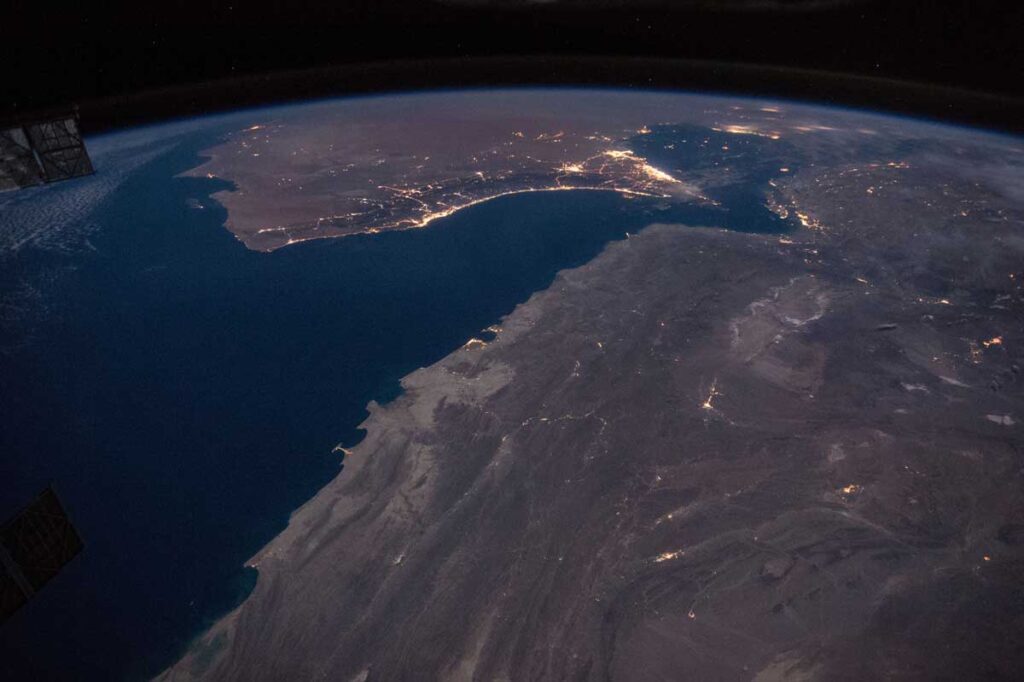
Header Image: Aerial view of the Strait of Hormuz – taken near Iran with its oil-shipping route. By NASA. Source: Public Domain.
References:
- Dunn, Candace, and Justine Barden. “Amid Regional Conflict, the Strait of Hormuz Remains Critical Oil Chokepoint.” U.S. Energy Information Administration, 16 June 2025, https://www.eia.gov/todayinenergy/detail.php?id=65504.
- Express newspaper. “JD Vance: Closing the Strait of Hormuz Would Be a Self-Destructive Act for Iran.” Gazeta EXPRESS, 22 June 2025, https://www.gazetaexpress.com/en/JD-Vance%3A-Closing-the-Strait-of-Hormuz-would-be-a-self-destructive-act-for-Iran/.
- Fleming-Jones, Jeremy. “China Calls for Global Efforts to Defuse Tensions Over Vital Strait of Hormuz.” EuroNews, 23 June 2025, https://www.euronews.com/my-europe/2025/06/23/china-calls-for-global-efforts-to-defuse-tension-over-vital-strait-of-hormuz.
- McDonald, Andrew. “UK Warns Iran Against Strait of Hormuz Blockade.” Politico, 23 June 2025, https://www.politico.eu/article/uk-warn-iran-strait-of-hormuz-block/.
- LaRocco, Lori Ann. “Strait of Hormuz GPS Jamming Remains Major Security Issue, Tanker CEO Says.” CNBC, 24 June 2025, https://www.cnbc.com/2025/06/24/strait-of-hormuz-gps-jamming-major-security-issue-tanker-ceo.html.