2,800-Year-Old Building in Germany May Have Been Used for Ancient Rituals
A 2,800 year old Bronze Age building in Germany was found near burned animal bones and large pottery vessels that may point to ancient rituals.

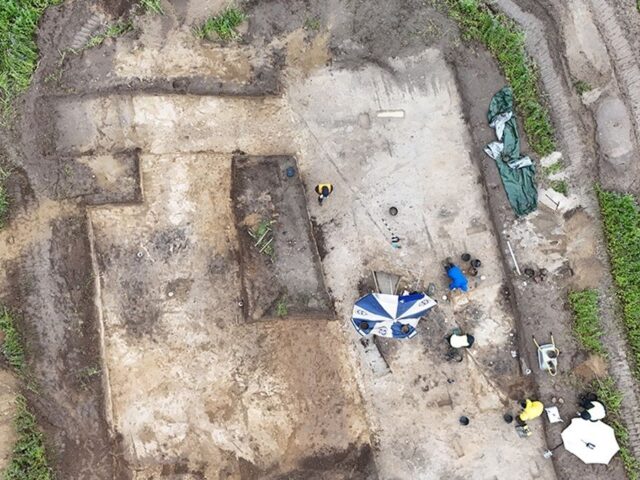
Archaeologists have uncovered an unusual Bronze Age building in Germany that may have served as a place for religious ceremonies and communal gatherings nearly 2,800 years ago. The nearly square structure stands out from typical buildings of the period, while nearby pits contain large quantities of pottery and burned animal bones.
The discovery was made at Seddin in Brandenburg, northwest of Berlin. Archaeologists exposed the building during excavations in September 2026, dating it to around 850 BC. Researchers are now investigating whether the structure played a special role in the area’s Late Bronze Age community.
Bronze Age Building in Germany Has an Unusual Shape
The structure measures approximately 10.6 meters from north to south and 11.4 meters from east to west. Its almost square layout differs from the long, rectangular buildings generally associated with the period in northern Germany. According to Brandenburg’s State Office for Monument Preservation and Archaeological State Museum, the building also has evidence of clay used in its construction, suggesting that its walls may have received special treatment.
Archaeologists have interpreted the structure as a possible ceremonial building rather than an ordinary house. However, its exact function has not been established. The building stands on slightly elevated ground, around 900 meters from the famous Seddin burial mound traditionally associated with the legendary King Hinz.
Burned Animal Bones and Large Pottery Vessels
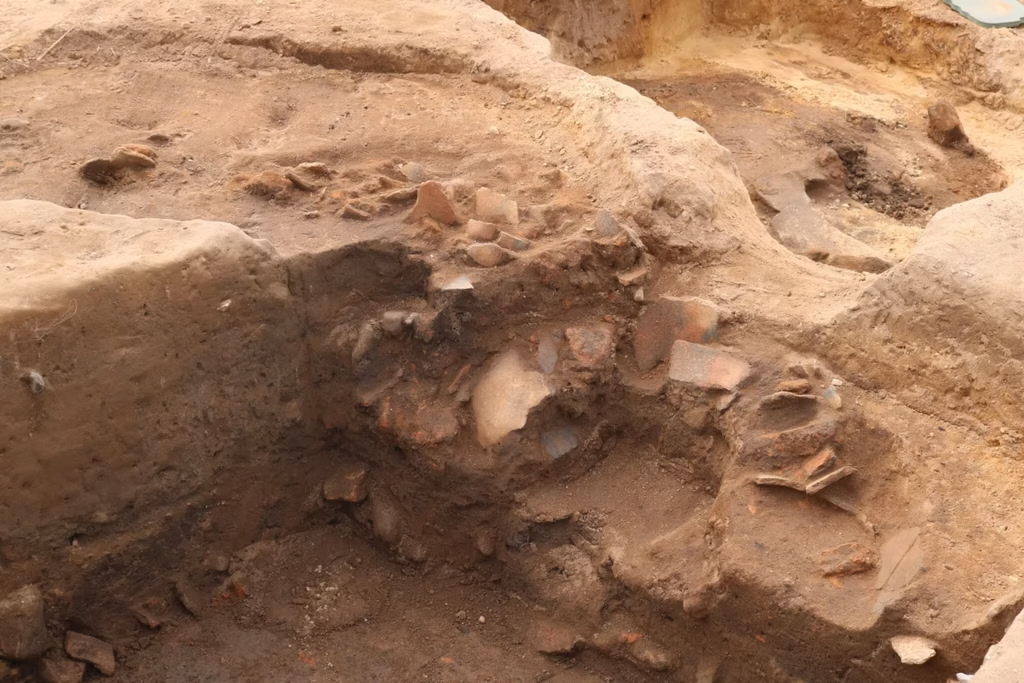
The finds surrounding the building provide important clues about what may have happened at the site. Archaeologists uncovered unusually large quantities of Late Bronze Age pottery in nearby pits. Some vessels have rim diameters exceeding 50 centimeters, making them considerably larger than many vessels previously found in the settlement. Researchers believe these containers may have held food and drink for gatherings involving larger groups of people.
Excavations also revealed numerous burned animal bones. Archaeologists have proposed that animals may have been consumed during communal feasts before their remains were burned. Another possibility is that entire animals were burned during ritual offerings. Further scientific analysis is needed to determine which explanation best fits the evidence. A small amber bead was also recovered during the excavation. According to the Prignitz district authorities, the find points to possible connections with the southern Baltic region.
What the Bronze Age Building in Germany Reveals
The newly uncovered structure adds to evidence that Seddin was more than a burial site during the Late Bronze Age. Archaeologists have identified a substantial settlement in the surrounding landscape, including buildings and other traces of everyday activity. Researchers estimate that the community may have included between 200 and 300 people, although this remains an estimate.
The unusual building and the nearby pottery and burned bones suggest that certain activities may have taken place in a designated area. Whether those activities involved religious ceremonies, communal meals, or both remains an open question. The excavation is part of a research project involving the University of Göttingen and Brandenburg’s heritage authorities. Researchers are continuing to examine the site’s remains to understand how the settlement was organized and how its inhabitants used the landscape.
The Mystery of the Seddin Burial Mound
Seddin is already known for a monumental Bronze Age burial mound often called the King’s Grave. Local tradition associates it with King Hinz, but there is no surviving evidence confirming that a ruler by that name was buried there. The newly discovered building provides another reason to investigate the wider archaeological landscape around the tomb. Its date and location suggest that it belonged to the same broader Bronze Age setting, although the precise relationship between the building and the burial mound still requires study.
For now, the pottery, burned animal bones, and unusual square layout offer evidence of activities that left no written records. Future analysis may help archaeologists determine whether the building was primarily a ceremonial space or served another special purpose within the Seddin community.