
Skip to content
  • Home
  • Articles
    • Archaeology & Discoveries
    • Historical Events
    • Artifacts & Treasures
    • Ancient Civilizations
    • Unexplained Phenomena
    • Mythology
  • Subscribe
© Copyright AllThatHistory - 2025
Theme by ThemeinProgress
Proudly powered by WordPress
  • Home
  • Articles
    • Archaeology & Discoveries
    • Historical Events
    • Artifacts & Treasures
    • Ancient Civilizations
    • Unexplained Phenomena
    • Mythology
  • Subscribe
AllThatHistory
  • You are here :
  • Home
  • Archaeology & Discoveries
  • First Assyrian Cuneiform Inscription from First Temple Period Discovered in Jerusalem
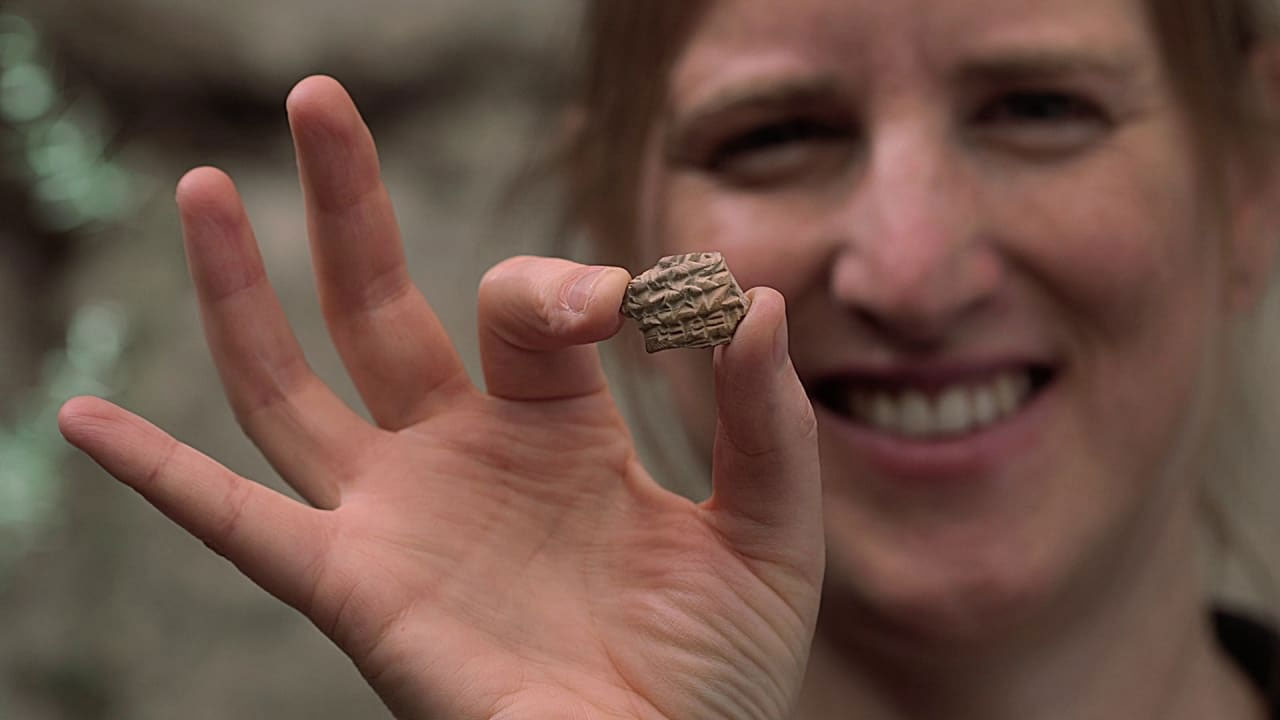
Dr. Ayala Zilberstein, excavation director on behalf of the Israel Antiquities Authority, holding the rare sealing. (photo credit: Emil Aladjem, Israel Antiquities Authority.)
Archaeology & Discoveries

First Assyrian Cuneiform Inscription from First Temple Period Discovered in Jerusalem

Allthathistory October 22, 2025

A fragment of pottery no bigger than a coin has revealed something Jerusalem has never seen before. The 2.5-centimeter shard bears Akkadian cuneiform script—an Assyrian inscription from roughly 2,700 years ago, marking the first discovery of its kind within the ancient city.

The Israel Antiquities Authority and the City of David Foundation pulled the fragment from excavations near the Western Wall of the Temple Mount. What makes this tiny piece of clay remarkable isn’t just its age, but what it represents: a tangible thread connecting the Assyrian Empire’s administrative machinery to the Kingdom of Judah during the First Temple period.

Eliyahu Yanai/City of David

Researchers believe the inscription once belonged to a royal seal stamped onto an official message dispatched from Assyria’s court to Judah. The content hints at something more than routine correspondence. Scholars interpreting the incomplete text suggest it references delayed tribute payments, potentially linking it to a moment of political friction described in biblical accounts, when King Hezekiah chose defiance over submission to Assyrian authority.

Recovery of the fragment involved wet sifting at Davidson Archaeological Park, a process that confirmed its authenticity. The research team notes this represents direct physical proof of communication flowing between the ancient Near East’s superpower and one of its vassal territories. Within the fragmentary text, two details stand out: a date marked as “the first of the month of Av” and mention of a “chariot officer,” the official courier tasked with carrying royal dispatches across the empire.

Read moreThe Cave of Hebron: Tomb of the Patriarchs?

The fragment’s discovery location tells its own story. Archaeologists extracted it from soil layers originally deposited during the Second Temple period, material that had filled Jerusalem’s ancient drainage canal. They determined the pottery itself came from a collapsed First Temple era structure, one of the few known sites west of the Temple Mount containing remains from that earlier time.

Laboratory analysis added another layer to the mystery. Petrographic examination showed the clay didn’t come from anywhere near Jerusalem. Its composition matches material from the Tigris Basin, where Assyria’s power centers: Nineveh, Ashur, and Nimrud (Kalḫu), once dominated the landscape. The document was manufactured in an Assyrian administrative hub before making the journey to Judah’s capital. Israel’s Geological Survey is currently conducting chemical studies to pinpoint the exact source.

The incomplete nature of the text hasn’t stopped scholars from reading between the lines. They interpret it as evidence of strain between Judah and its imperial overlord, possibly triggered by tribute payments that arrived late or not at all. The discovery illuminates how Assyrian control operated in Jerusalem and reveals the communication networks that bound the empire to its distant territories during the late 8th and early 7th centuries BCE.

What the fragment ultimately demonstrates is Jerusalem’s role as more than a religious center during this period. Even under foreign domination, the city functioned as an administrative and political nerve center, fully integrated into the international systems of its time. Letters traveled, seals were pressed into clay, tax records moved between capitals, all the bureaucratic machinery that kept the ancient world’s most formidable empire connected to its vassals in the west.

Read more3,000 Year Old Sword of a Pharoah Discovered in Egypt

The inscription goes on public display October 23 at the “New Discoveries in Jerusalem and Environs” Conference.

Header image: Dr. Ayala Zilberstein, excavation director on behalf of the Israel Antiquities Authority, holding the rare sealing.(photo credit: Emil Aladjem, Israel Antiquities Authority.)

You may also like

Ancient Rock Carvings Uncovered in Ecuador Point to Shared Amazonian Cultural Traditions

Stolen Hercules Fresco Finds Its Home After Decades in U.S. Collection

Maya Medical Systems Used Living Organisms as Precision Surgical Tools

Ancient Rock Art in Texas-Mexico Borderlands Endured 4,000 Years

Were Wolves Kept and Nursed by Ancient Seal Hunters?

Ancient Peruvians Survived Climate Catastrophe Through Adaptation, Not War

Allthathistory
Written by Allthathistory

Tags: archaeology, Assyria, cuneiform, Hezekiah, Jerusalem, Judah

Leave a Reply Cancel reply

Your email address will not be published. Required fields are marked *

  • Ancient Rock Carvings Uncovered in Ecuador Point to Shared Amazonian Cultural Traditions
    Archaeologists have identified a panel containing approximately 30 ancient rock carvings in Santiago de Méndez canton, Morona Santiago province, marking
  • Stolen Hercules Fresco Finds Its Home After Decades in U.S. Collection
    Archaeologists at Pompeii have identified the original location of a looted fresco fragment depicting the infant Hercules strangling serpents, solving
  • Maya Medical Systems Used Living Organisms as Precision Surgical Tools
    Maya medical systems deployed living organisms as precision surgical tools centuries before germ theory existed. Recent archaeological evidence shows these
  • Ancient Rock Art in Texas-Mexico Borderlands Endured 4,000 Years
    Hunter-gatherers in what is now southwestern Texas and northern Mexico created rock art for more than 4,000 years, maintaining consistent
  • The Thermal Engineering Behind Tiwanaku’s Agricultural Success
    At nearly 3,850 meters above sea level, frost arrives almost nightly on Bolivia’s Altiplano. Modern visitors struggle to breathe. Yet
The Gnostic Gospels
Encounters at the Heart of the World: A History of the Mandan People
Substack Articles

Latest from AllThatHistory Weekly

The War Horn That Made Roman Soldiers Flinch

The War Horn That Made Roman Soldiers Flinch

In the summer of 2025, during a routine archaeological excavation ahead of a housing development in West Norfolk, England, a construction site turned up something unexpected.

Read More →
Britain Wasn’t Always an Island: The Drowned World Beneath the North Sea

Britain Wasn’t Always an Island: The Drowned World Beneath the North Sea

The North Sea was not always there. Before the water arrived, before the English Channel cut Britain off from continental Europe, there was land. Dry, forested, inhabited land.

Read More →
Iran-War: Near Middle East Burning – Ancient History Repeating?

Iran-War: Near Middle East Burning – Ancient History Repeating?

Watching the Iran-war in the Near Middle East region, our news screens project scene after scene of ominous dark smoke billowing from yet another target hit by an airstrike. The first week of April 2026 heralded the announcement that airstrikes on Isfahan in Iran and southern Lebanon has increased.

Read More →
When Spices Were Worth More Than Gold

When Spices Were Worth More Than Gold

In 410 CE, when the Visigoths besieged Rome, they demanded ransom: gold, silver, silk, and 3,000 pounds of pepper.

Read More →
How Whistling Became a Language

How Whistling Became a Language

On the steep volcanic island of La Gomera in Spain’s Canary Islands, shepherds have communicated for centuries using an astonishing method: they whistle.

Read More →
Greek Fire: The Byzantine Superweapon Lost to History

Greek Fire: The Byzantine Superweapon Lost to History

In the summer of 678 CE, an Arab fleet of several hundred ships approached Constantinople.

Read More →
❮
❯

Subscribe to receive our newest archaeology articles, long-form investigations, and historical insights directly in your inbox.

© Copyright AllThatHistory - 2025