Skip to content
  • Home
  • Articles
    • Archaeology & Discoveries
    • Historical Events
    • Artifacts & Treasures
    • Ancient Civilizations
    • Unexplained Phenomena
    • Mythology
  • Subscribe
© Copyright AllThatHistory - 2025
Theme by ThemeinProgress
Proudly powered by WordPress
  • Home
  • Articles
    • Archaeology & Discoveries
    • Historical Events
    • Artifacts & Treasures
    • Ancient Civilizations
    • Unexplained Phenomena
    • Mythology
  • Subscribe
AllThatHistory
  • You are here :
  • Home
  • Archaeology & Discoveries
  • Chachapoya Tomb Unearths Ancient Rituals in Peru’s Kuélap
Tomb in Peru
Archaeology & Discoveries

Chachapoya Tomb Unearths Ancient Rituals in Peru’s Kuélap

Allthathistory May 24, 2025

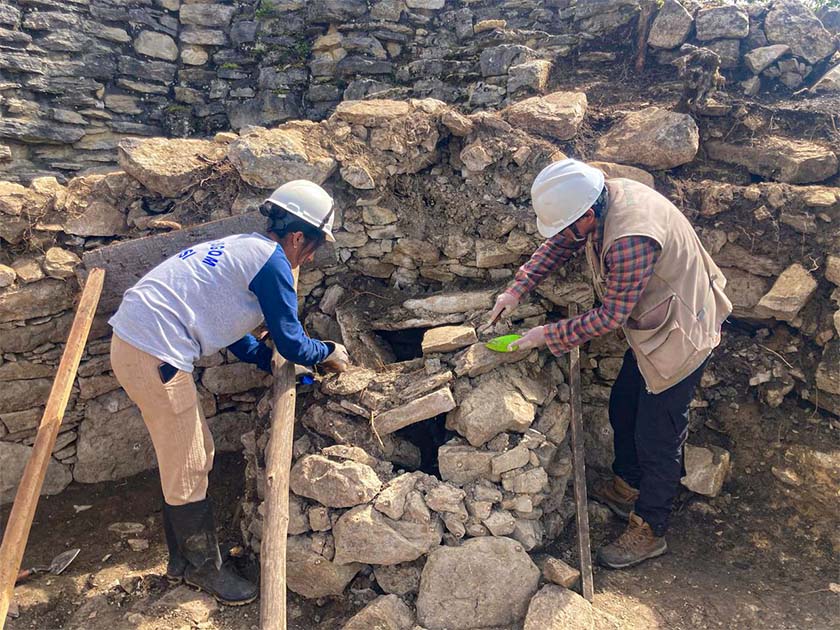
Archaeologists have made a big discovery high up in the foggy Andes of northern Peru. They found an old tomb in the style of a chulpa at the ancient city of Kuelap. This tomb had human remains and special offerings inside. It gives us new clues about the mysterious Chachapoya people. These “Warriors of the Clouds” lived before the Incas. They built their city on top of a mountain in the wild Amazonas area. This city has grabbed the attention of researchers for many years. The team dug in a part of the 6th-century fortress that no one had looked at before. What they found tells us a lot about how the Chachapoya buried their dead and how spiritual they were.

Kuelap sits 3,000 meters up in the sky and covers almost 15 acres. Its tall limestone walls show how clever its builders were. These huge walls some as high as 19 meters, have caused many arguments among experts. Some think they were built to keep out enemies. Others say they might have had a special meaning maybe marking the city as a holy place. The Chachapoya lived from about 400 to 1470 CE. Then the Incas took over. We still don’t know much about the Chachapoya, but Kuelap stands as one of the biggest things they left behind.
Tomb in Peru

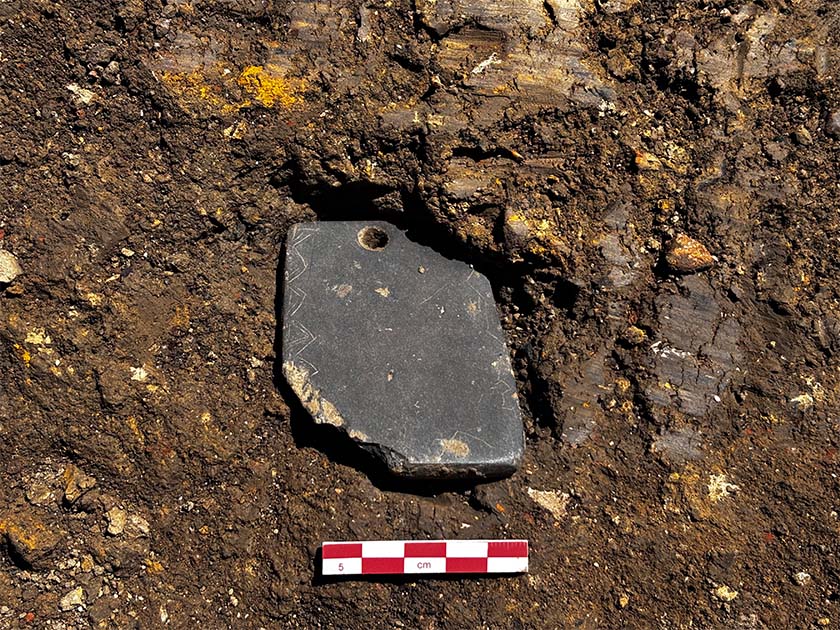
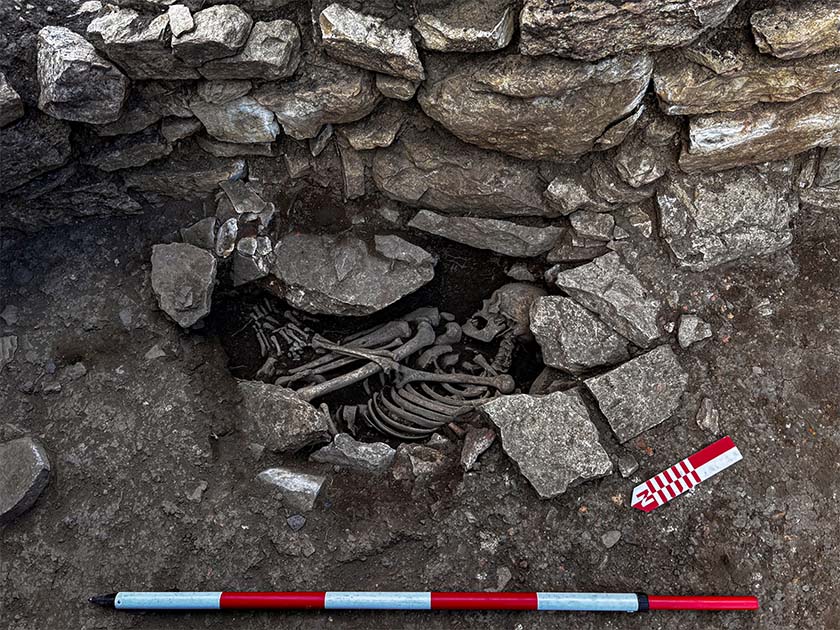
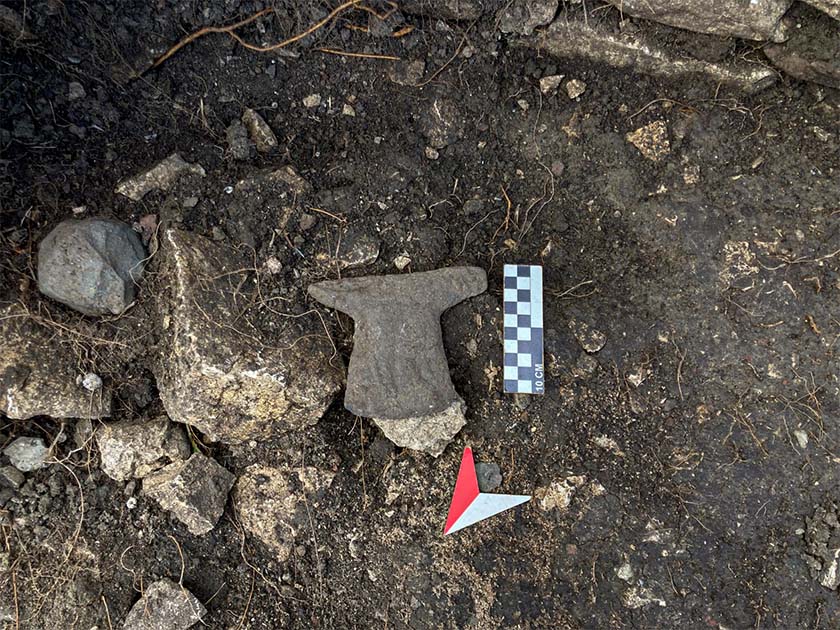
Peru’s Ministry of Culture announced a new find at Kuelap focusing on Research Area No. 1 within Complex 26. Archaeologists uncovered six round stone structures surrounding a central yard. In one of these, Structure 10, they found an above-ground stone grave typical of Chachapoya burial customs. The grave contained human remains with placed gifts, including a polished stone axe and a slate pendant with complex geometric patterns. These items used in everyday life and sacred rites, point to a culture that gave deep meaning to its burial practices.

Other discoveries, like stone pieces and metal traces, suggest elaborate goodbye ceremonies before Kuelap was left around 1570 CE when the Spanish conquest upset native ways of life across the Andes. The careful layout of the tomb and its gifts shows that Chachapoya burials were planned events showing social ranks and family ties. This find fits with other proof of how the Chachapoya honored their dead, a custom that might have brought people closer in a region often faced with conflict and tough environmental conditions.
Read moreThe Cave of Hebron: Tomb of the Patriarchs?

This dig is part of a bigger plan to check out 16 different spots in Kuelap covering more than 24,000 square meters. Besides digging up old stuff, experts are trying to protect the site’s weak buildings from wear and tear and earthquakes. The story of the Chachapoya put together from these finds, shows us a smart group of people who mixed practicality with spiritual beliefs, and made it work in one of the toughest parts of the Andes. As they keep digging, researchers want to learn more about how these people lived day-to-day, what they believed in, and how their society was set up in this city high up in the clouds.

Finding the tomb in Kuelap Peru, shows why people are still so interested in the Chachapoya civilization. It sheds light on their complex burial habits and reminds us why it’s so important to keep this old city safe for the future. As experts study each item they find, Kuelap keeps showing us how tough and creative these people were. They carved out a place for themselves in the Andean mountains leaving behind a lasting link to Peru’s rich cultural past.

Header Image: Archaeologist in the dig site in Peru. Source: Gob.pe

Sources

  1. Amazonas: Descubren estructura funeraria y objetos ceremoniales en la zona norte de Kuélap – https://www.gob.pe/institucion/cultura/noticias/1168711-amazonas-descubren-estructura-funeraria-y-objetos-ceremoniales-en-la-zona-norte-de-kuelap: Official report from Peru’s Ministry of Culture on the chulpa tomb and artifacts.
  2. Kuélap: Hallazgo de estructura funeraria en la llaqta es inédito y habría más evidencias – https://andina.pe/agencia/noticia-kuelap-hallazgo-estructura-funeraria-llaqta-es-inedito-y-habria-mas-evidencias-1000133.aspx: Andina news article highlighting the tomb’s significance and potential for further finds.
  3. Valoración económica del Complejo Arqueológico de Kuélap, Amazonas, Perú – https://www.scielo.br/j/resr/a/5W4S4hYgVq5Y6hWzkJ3gL3k/?lang=en: Academic study on Kuélap’s architecture and cultural role.

You may also like

Ancient Rock Carvings Uncovered in Ecuador Point to Shared Amazonian Cultural Traditions

Stolen Hercules Fresco Finds Its Home After Decades in U.S. Collection

Ancient Rock Art in Texas-Mexico Borderlands Endured 4,000 Years

Were Wolves Kept and Nursed by Ancient Seal Hunters?

Ancient Peruvians Survived Climate Catastrophe Through Adaptation, Not War

Peru’s Mysterious “Band of Holes” May Have Been Ancient Marketplace and Accounting System

Allthathistory
Written by Allthathistory

Tags: Amazonas, archaeological discovery, burial rituals, Chachapoya, Kuélap, pre-Inca

Leave a Reply Cancel reply

Your email address will not be published. Required fields are marked *

  • Ancient Rock Carvings Uncovered in Ecuador Point to Shared Amazonian Cultural Traditions
    Archaeologists have identified a panel containing approximately 30 ancient rock carvings in Santiago de Méndez canton, Morona Santiago province, marking
  • Stolen Hercules Fresco Finds Its Home After Decades in U.S. Collection
    Archaeologists at Pompeii have identified the original location of a looted fresco fragment depicting the infant Hercules strangling serpents, solving
  • Maya Medical Systems Used Living Organisms as Precision Surgical Tools
    Maya medical systems deployed living organisms as precision surgical tools centuries before germ theory existed. Recent archaeological evidence shows these
  • Ancient Rock Art in Texas-Mexico Borderlands Endured 4,000 Years
    Hunter-gatherers in what is now southwestern Texas and northern Mexico created rock art for more than 4,000 years, maintaining consistent
  • The Thermal Engineering Behind Tiwanaku’s Agricultural Success
    At nearly 3,850 meters above sea level, frost arrives almost nightly on Bolivia’s Altiplano. Modern visitors struggle to breathe. Yet
The Gnostic Gospels
Encounters at the Heart of the World: A History of the Mandan People
Substack Articles

Latest from AllThatHistory Weekly

The Phaistos Disk: The Undeciphered Message Nobody Can Agree On

The Phaistos Disk: The Undeciphered Message Nobody Can Agree On

In 1908, an Italian archaeologist named Luigi Pernier was excavating the Bronze Age palace of Phaistos on the island of Crete when he found something that has baffled researchers ever since.

Read More →
Why Did the Bronze Age Collapse? The Theory That Changes Everything

Why Did the Bronze Age Collapse? The Theory That Changes Everything

Around 1200 BCE, nearly every civilization in the Mediterranean collapsed within a generation. The Sea Peoples get the blame but new research points to something more interesting, and more unsettling.

Read More →
What Sank to the Bottom of a Swiss Lake 2,000 Years Ago

What Sank to the Bottom of a Swiss Lake 2,000 Years Ago

A Roman cargo just came up from the bottom of a Swiss lake. Plates stacked exactly as they were loaded 2,000 years ago. Two gladii, one still in its scabbard. Spanish olive oil. The ship is gone but the cargo is intact. This one is extraordinary.

Read More →
He Was Attacked by a Lion 6,200 Years Ago. His Community Kept Him Alive.

He Was Attacked by a Lion 6,200 Years Ago. His Community Kept Him Alive.

Near the Black Sea coast of eastern Bulgaria, in a Late Eneolithic cemetery known as Kozareva Mogila, or Goat Mound, archaeologists excavated a burial that has taken years to fully understand.

Read More →
Ireland Had a City Long Before the Vikings Arrived

Ireland Had a City Long Before the Vikings Arrived

Walk into any introductory lecture on Irish history and you will likely hear the same claim: that the Vikings founded Ireland’s first towns.

Read More →
A Fragment of the Iliad Found Inside a Mummy Rethinks How Greeks Were Used in Egyptian Burial Magic

A Fragment of the Iliad Found Inside a Mummy Rethinks How Greeks Were Used in Egyptian Burial Magic

A papyrus piece of Homer's Iliad discovered inside a Saqqara mummy reveals how ancient Greeks were used in Egyptian funerary magic.

Read More →
❮
❯

Subscribe to receive our newest archaeology articles, long-form investigations, and historical insights directly in your inbox.

© Copyright AllThatHistory - 2025