Silenos Sarcophagus in Turkey Features a Rare Roman-Era Face
A Silenos sarcophagus in Turkey features a rare Roman-era face that may have been intended to protect the dead.

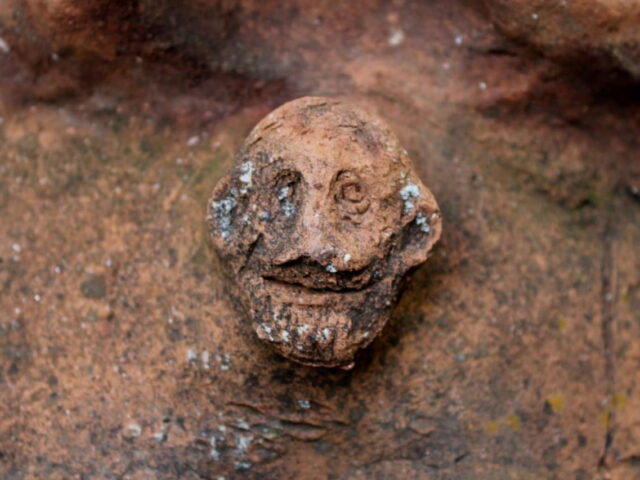
A Silenos sarcophagus in Turkey has drawn attention for its unusual decoration: a small, bearded face attached to the lid of a Roman-era clay coffin. Archaeologist Bilge Yılmaz Kolancı believes the figure represents Silenos, an older companion of the Greek god Dionysus. The image may have served to protect the deceased.
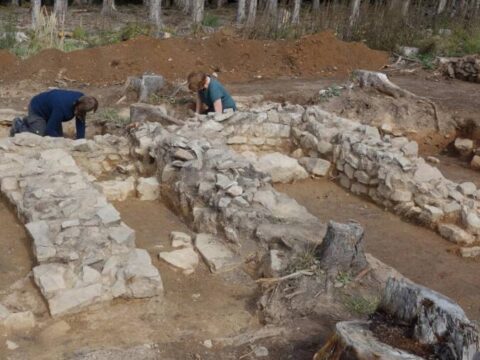
Researchers identified the fragments during archaeological surveys in 2023 near the ancient city of Attouda, in Denizli Province, western Türkiye. Kolancı of Pamukkale University examined the coffin and its distinctive decoration in a study published in 2026.
Silenos Sarcophagus in Turkey: A Rare Face
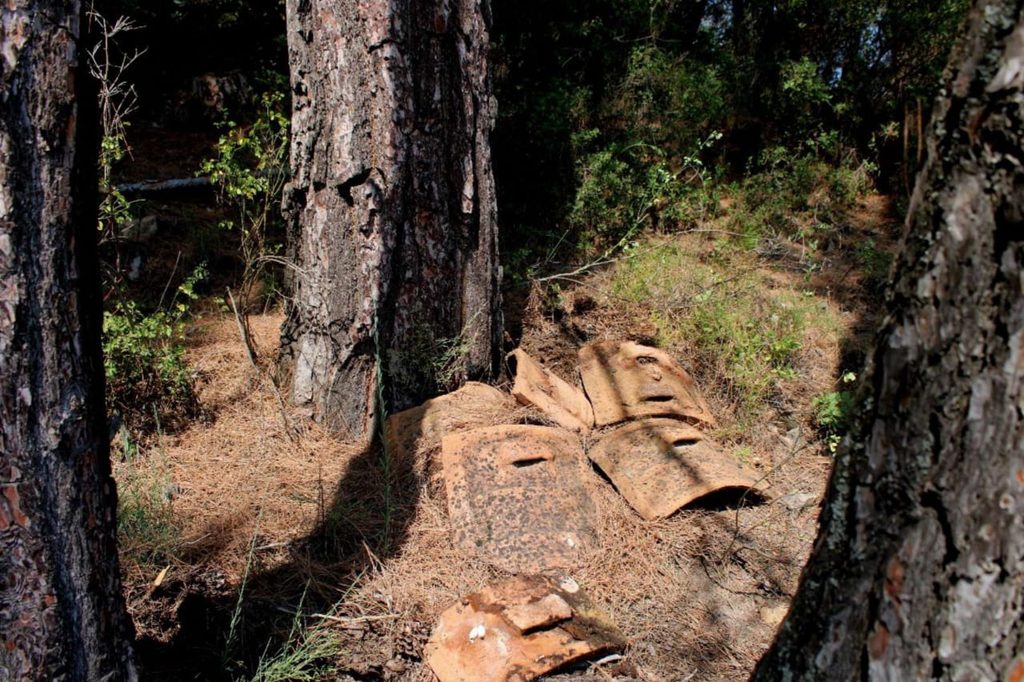
The coffin consists of reddish clay and has a cylindrical body. Researchers recovered six fragments, including two sections of the body and four pieces of the lid. Agricultural leveling had disturbed the original burial site before the team found the fragments.mThe most unusual piece is a lid measuring about 33 by 30.5 centimeters. At its center, a raised face measures just 4.8 centimeters tall. It has large, rounded eyes, a broad nose, a wide mouth, and a short beard. A Greek letter resembling a beta appears beside the face. It may identify a workshop or craftsperson, although researchers have not confirmed its meaning.
The Silenos sarcophagus in Turkey stands out because researchers have not found a comparable Silenos face on other known cylindrical terracotta sarcophagus lids from Anatolia. The surviving fragments now sit in the Denizli Museum.
Who Was Silenos? The Figure on the Sarcophagus
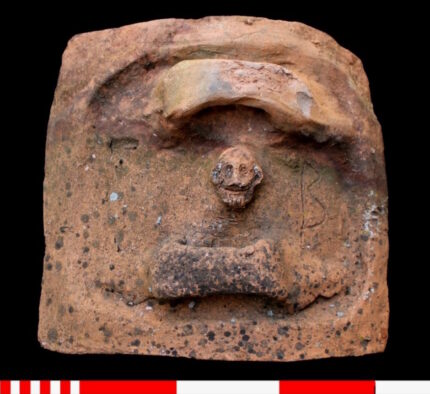
1,900-year-old Roman sarcophagus lid fragment with a protective Silenus relief, found in Attouda, Turkey.
Silenus was an older, bearded figure associated with Dionysus, the Greek god of wine and religious celebration. Ancient artists often gave him exaggerated facial features, which also appear on masks and funerary objects.
Kolancı suggests that the face may have served an apotropaic function, meaning it was intended to ward off harmful forces. Similar imagery appears in other ancient burial contexts, including masks associated with the necropolis of Tralleis.The face’s position on the lid may also matter. It could have sat above the deceased person’s head, although the disturbed grave makes it difficult to reconstruct the coffin’s original arrangement.
Dating the Roman Sarcophagus in Turkey
Researchers tentatively date the coffin to the first or second century AD. They base this estimate on comparisons with similar terracotta sarcophagi from the region. The disturbed burial and lack of associated grave goods prevent a more precise date.
The coffin resembles examples from other ancient settlements in the Lykos Valley, including Laodikeia and Hierapolis. These similarities suggest that a local workshop probably produced it rather than a distant manufacturer. The letter beside the Silenos face could offer another clue about the coffin’s production, but researchers have not yet established its meaning.
What the Silenos Sarcophagus Reveals About Roman Burials
The sarcophagus provides evidence of how Roman-era communities in western Anatolia incorporated religious imagery into burial practices. Researchers have also found another head fragment associated with Silenos at Attouda’s necropolis. Together, the finds suggest that local communities used the figure in their funerary art. Researchers cannot identify the person buried in the coffin or confirm exactly how the face was meant to function. Still, the unusual decoration offers a rare example of mythological imagery on a locally made clay sarcophagus.