1,800-Year-Old Roman Temple Dedicated to Mars Discovered Beneath a German Forest
Archaeologists reveal an ancient Roman temple in Germany with intriguing designs and connections to the Roman Empire.

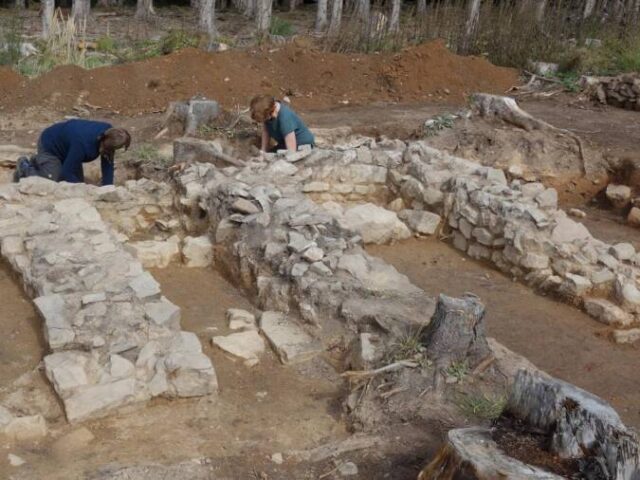
An ancient Roman temple in Germany has emerged from beneath a forest floor, nearly 1,800 years after its construction. Archaeologists uncovered statue fragments, inscribed stones and traces of a nearby settlement, offering new insight into life along the Roman Empire’s northern frontier.
The team made the discovery near Kapersburg fort in the Taunus Mountains of Hesse. Archaeologists have studied the nearby civilian settlement since 2024. Romans called these settlements vici (singular: vicus). They often housed soldiers’ families, merchants, craftspeople and other civilians. Researchers have studied the fort for generations, but the surrounding settlement remains less understood.
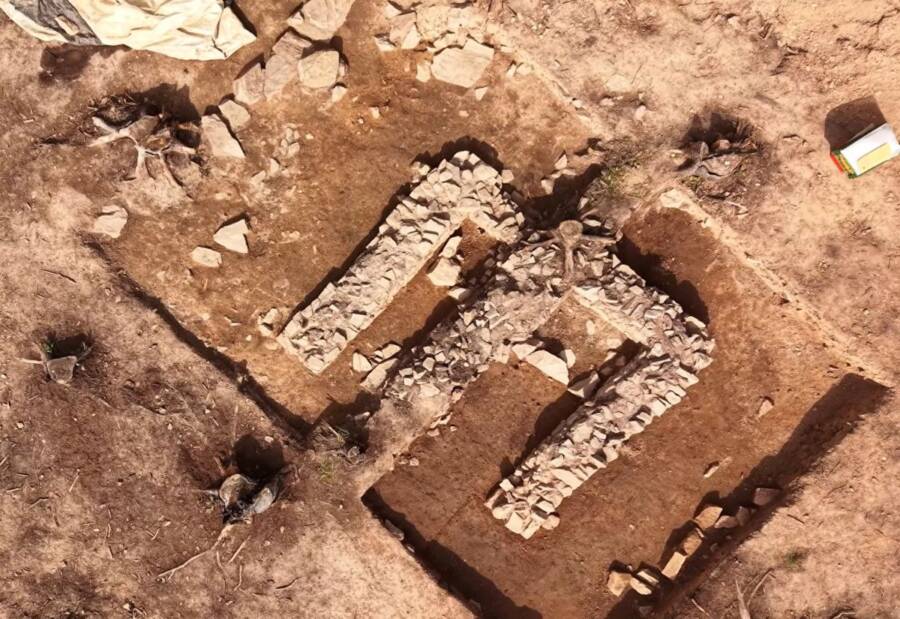
The temple measures roughly 16 feet long. Thick stone foundations surround a smaller, square chamber. Researchers think it may follow an ambulatory design, with a central worship room and a covered walkway around it. One side of the inner chamber appears open. However, archaeologists believe a wooden gate or door may once have closed it. An inscription fragment provided the clearest clue to the temple’s purpose. Researchers identified a dedication to Mars, the Roman god of war. They also recovered statue fragments that may represent the god. These finds offer further evidence of religious activity at the site.
Ancient Roman Temple in Germany Reveals Religious Clues
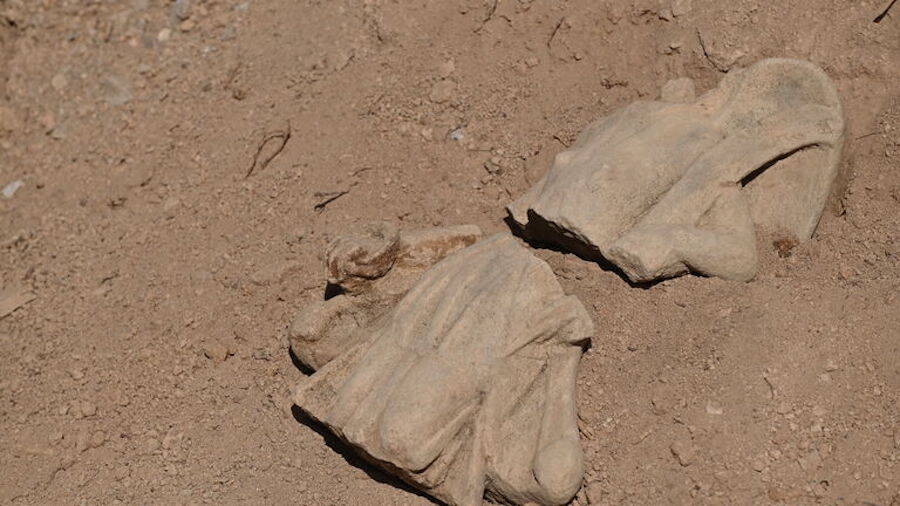
Archaeologists also uncovered two votive stones and a small statuette that likely depicts Victoria, the Roman goddess of victory. Although damaged, the statuette retains several recognizable features. Victoria often appears with wings, a palm branch and a laurel wreath. These details helped researchers identify the figure.
Roman soldiers often associated Victoria with success in battle. They also linked her with Mars. The discoveries suggest that the temple played a role in the community’s religious life. Soldiers and civilians may have visited the sanctuary to honor the gods or seek protection. However, researchers cannot yet determine which rituals took place there. The team continues to study the inscriptions on the votive stones. Their messages could reveal more about the people who worshipped at the temple. They may even help researchers identify the ancient settlement by name.
Life Outside the Roman Fort
The temple belonged to a larger settlement beside Kapersburg, a military fort built in the early second century AD. The fort formed part of the Upper Germanic-Raetian Limes, Rome’s frontier system in the region. A Roman auxiliary unit called the Numerus Nidensium occupied Kapersburg for around 150 years. The unit took its name from Nida, a Roman settlement in what is now Frankfurt. Roman troops eventually abandoned the fort around the middle of the third century, as Roman control along this frontier declined.
The civilian settlement supported the military community. Recent excavations, however, reveal a more varied picture. Archaeologists found evidence of blacksmithing, craft production, ovens and roads. These features point to a busy area where people made goods, prepared food and moved between different parts of the settlement. Some ovens may have helped residents dry grain or bake bread. Researchers also found signs that workers leveled old workshops and built homes in their place. This change suggests that the settlement’s layout evolved over time. Archaeologists found fewer houses than they expected. The area may have served as a transition zone between the fort and the settlement’s more densely populated sections. Further excavation should help clarify how residents used the space.
A Forest That Preserved the Past
Many of the remains lay just centimeters beneath the forest floor. Centuries of woodland protected them from farming and later construction. As a result, walls, floors and other traces of daily life survived in unusually good condition. Archaeologists have investigated Kapersburg fort for more than a century. Yet researchers paid far less attention to the civilian settlement outside its defenses. Recent work is changing that. The new discoveries reveal the people and activities that supported the military community.
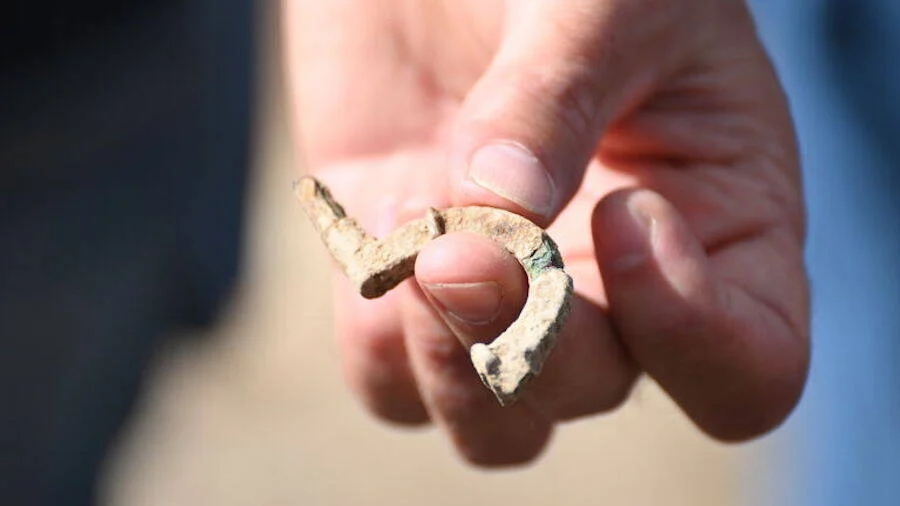
The evidence also suggests that people continued using the area after Roman troops left. Archaeologists found a late antique brooch and fragments of handmade pottery. These objects point to later activity at the site. Researchers tentatively link some of this evidence to Alemannic groups who lived in the region. However, more research must establish who occupied the settlement and when.
What Happened After Rome Left?
The temple and nearby buildings reveal a community that changed over several generations. Residents practiced metalworking, prepared food and built homes. Religious activity also formed part of daily life. Together, these traces show that communities along Rome’s frontier did much more than support the army. Researchers will continue studying the inscriptions and excavating the settlement. Their work may reveal more about the temple’s worshippers, the settlement’s layout and its final years under Roman rule. It may also clarify who used the site after the military withdrew.
The temple dedicated to Mars adds a new dimension to Kapersburg’s history. Archaeologists once focused mainly on the fort’s military role. Now, their discoveries are revealing a more complex community of soldiers, families, merchants and craftspeople. After centuries beneath the trees, this forgotten settlement is helping researchers piece together life at the edge of the Roman world.