Qinngua Norse Church Greenland: East-Facing Grave Confirms Medieval Site
An east-oriented skeleton at Qinngua Norse church Greenland near Narsarsuaq confirms a medieval churchyard—the first new Norse church find in about 60 years.

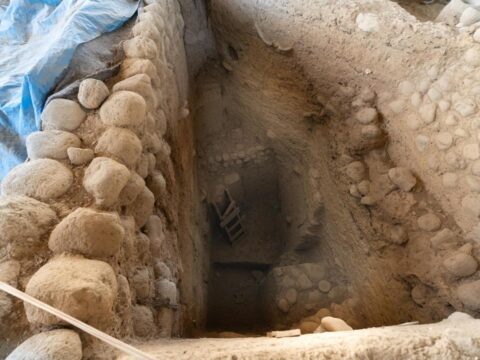
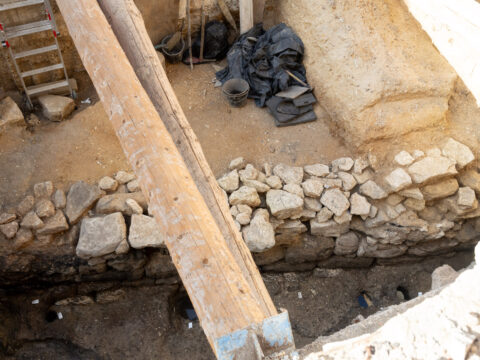
An east-oriented skeleton uncovered during summer fieldwork has confirmed what surveyors long suspected: a medieval church and churchyard at Qinngua Norse church Greenland, near Narsarsuaq in the south of the island. Announced in late September by a joint Scandinavian–Greenlandic team, the grave is the first new Norse church identification in Greenland in roughly sixty years—and it sits close to the elite Brattahlíð zone associated with Erik the Red.
Coverage from High North News, drawing on a University of Bergen press release, and AFP-based reports via BGNES, ORF, and RTBF converge on the same outline. The project brings together the University Museum of Bergen, the National Museum of Denmark, the Greenland National Museum and Archives, and UNESCO Kujataa. Bergen researcher Konrad Smiarowski is named as co-leader; Danish archaeologist Christian E.K. Madsen is quoted as excavation lead for the Qinngua work near Narsarsuaq.
Why a single grave locked the identification
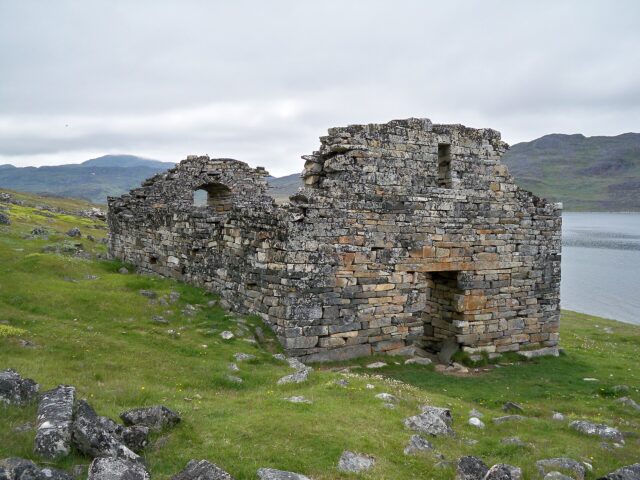
The ruins had looked like a church for years: a square stone wall enclosing a stone building—classic medieval churchyard geometry. Danish National Museum teams investigated the spot in the 2000s, yet the decisive churchyard burial stayed missing. Without graves in consecrated ground, the ecclesiastical reading remained provisional.
This summer’s skeleton changed that. It was laid with an eastward orientation typical of Christian practice. As Smiarowski put it in the Bergen release, the burial is effectively “the final nail in the coffin”: Inuit traditions often place the dead in stone chambers under cairns, while Norse Greenlanders buried their dead beside churches. The find therefore confirms both churchyard and church.
Size, farms, and a possible medieval name
According to Madsen’s AFP briefings, the building measures about eight to ten metres long and three to four metres wide, with at least one grave beside it and two or three farm ruins nearby. He describes the cluster as a “proto-settlement” or village prototype—farms that likely shared fields and resources. High North News likewise notes two to three farms beside the church, a scale that hints at early village formation rather than an isolated chapel.
Unlike some earlier Greenland church finds from the early Norse period that appear to have been abandoned quickly, researchers argue this structure is larger and was probably in use through the Middle Ages. That span matters: it may illuminate the still poorly documented shift from settlement growth to decline. Fabric clues—substantial size and partly dressed stone—are often placed in the eleventh to thirteenth centuries, while Madsen’s AFP comments lean toward a probable thirteenth-century date. The skeleton’s arms-at-sides posture, by contrast, can point toward an earlier medieval horizon. Samples are still under analysis, so absolute dating should stay hedged.
Medieval texts help place named churches along Tunulliarfik Fjord (Erik’s Fjord). One credible description of «Kirkja undir Sólarfjöllum»—the Church beneath the Sun Mountains—matches mountains near the ice sheet where local high pressure often brings clear weather. Smiarowski stresses that Flateyjarbók and Ívar Bárðarson’s Greenland descriptions, read against landscape and known farms, have guided most church identifications. The Qinngua match is promising but remains a landscape correspondence, not a sealed inscriptional name.
Power on Erik’s Fjord—and the disappearance puzzle
Churches were not only places of worship. Smiarowski argues they were centres of power through which Norse society negotiated climatic and social stress. Madsen, speaking to AFP, frames church building as a claim to religious authority that also boosted economic standing. In the relatively small Brattahlíð neighbourhood, as many as six churches have been recorded, yet only three seem to have remained active into the Middle Ages. Smiarowski floats the possibility of elite competition for status—some building campaigns succeeding, others fading—an interpretation rather than a settled social history.
Madsen also sketches the wider livelihood of such farms: agriculture was marginal, so settlers hunted walrus and narwhal for ivory and polar bears for skins, feeding European and even farther markets. The new church, he suggests, helps track how a coastal community was built, sustained, and eventually unravelled by about 1450, centuries before modern Danish colonization.
Norse Greenland’s end remains debated. Smiarowski calls the Qinngua confirmation another piece of that puzzle—not a solution. What is secure for now is more measured and still striking: an east-facing Christian burial has authenticated a medieval churchyard at Qinngua near Narsarsuaq, the first such church find in about six decades, in the shadow of Greenland’s most famous Norse elite landscape.