
Skip to content
  • Home
  • Articles
    • Archaeology & Discoveries
    • Historical Events
    • Artifacts & Treasures
    • Ancient Civilizations
    • Unexplained Phenomena
    • Mythology
  • Subscribe
© Copyright AllThatHistory - 2025
Theme by ThemeinProgress
Proudly powered by WordPress
  • Home
  • Articles
    • Archaeology & Discoveries
    • Historical Events
    • Artifacts & Treasures
    • Ancient Civilizations
    • Unexplained Phenomena
    • Mythology
  • Subscribe
AllThatHistory
  • You are here :
  • Home
  • Archaeology & Discoveries
  • Roman private bath found inside palace tower at Vrelo–Šarkamen
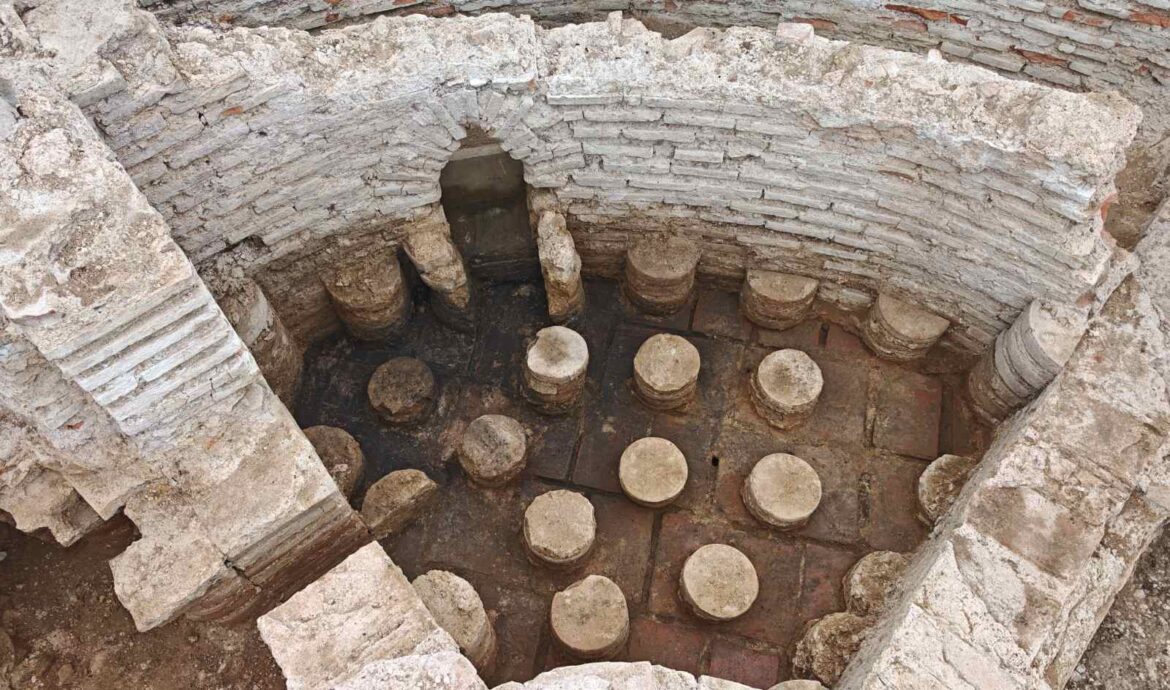
Circular Roman bath remains and hypocaust heating system inside the south-western palace tower at Vrelo–Šarkamen, Serbia
Archaeology & Discoveries

Roman private bath found inside palace tower at Vrelo–Šarkamen

Allthathistory September 4, 2026

Archaeologists excavating the fortified imperialRoman private bath found inside palace tower at Vrelo–Šarkamen residence at Vrelo–Šarkamen in eastern Serbia have uncovered a circular private Roman bath — a balneum — built into the lowest level of a monumental palace corner tower, with heated floors, three bathing pools, a steam room and a furnace.

The excavation team says it currently knows of no direct architectural parallel for a bath arranged this way inside a monumental palace corner tower. The find was reported in early September 2026, including coverage by Live Science and Greek Reporter, with a detailed team account also via Arkeonews.
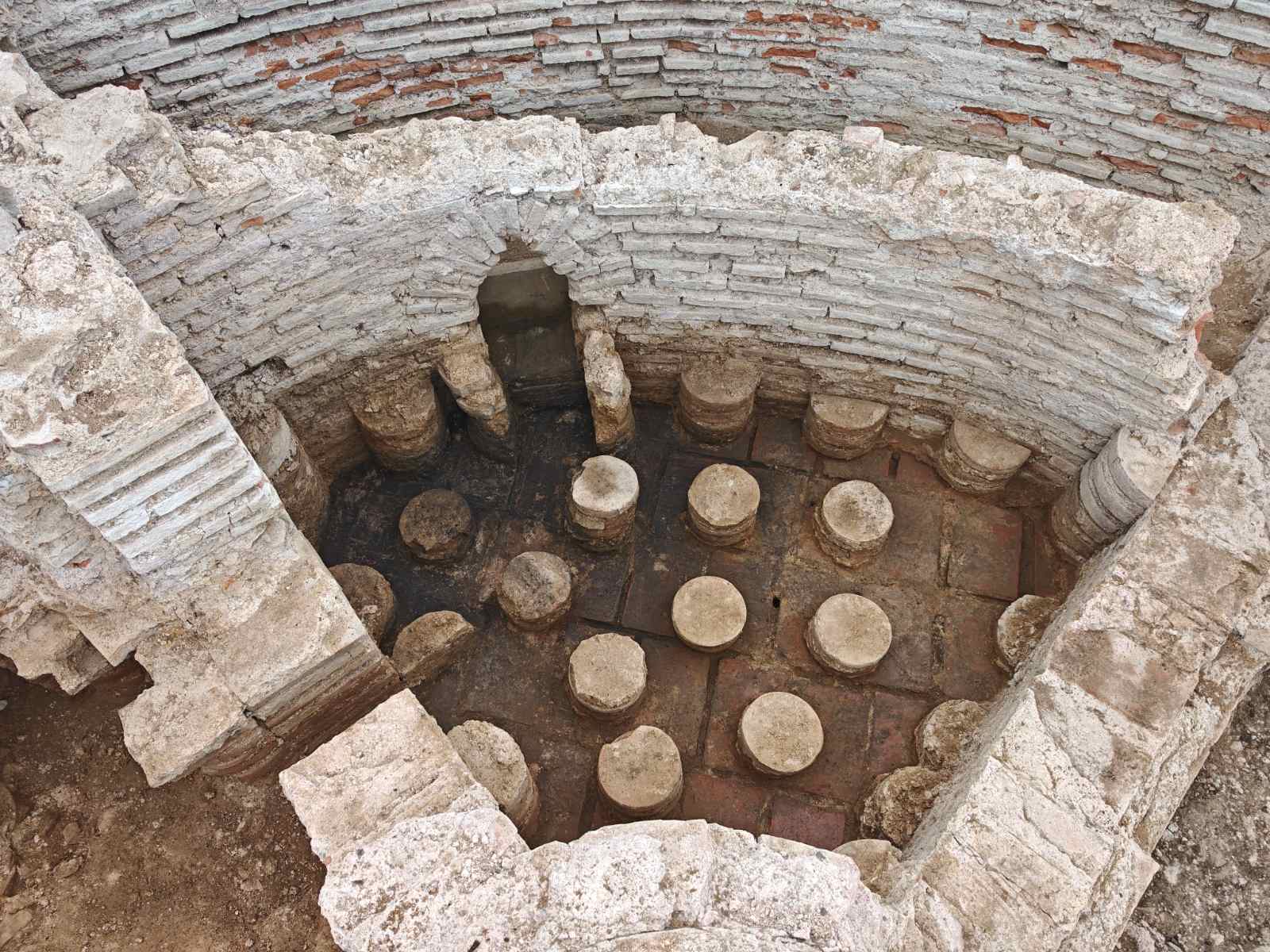
Well-preserved hypocaust pilae supporting the raised floor of the Roman bath at Vrelo–Šarkamen; caption credit Marija Jović / Arkeonews with same source URL
Photo credit: Marija Jović / Arkeonews. Source: Arkeonews

The work is a collaboration between Serbia’s Institute of Archaeology and the Museum of Krajina, with support from the Ministry of Culture of the Republic of Serbia. Excavations are directed by Dr Marija Jović, research associate at the Institute of Archaeology, and Gordan Janjić, museum advisor at the Museum of Krajina.

The balneum occupied the south-western corner tower of a fortified residence associated with the early fourth-century tetrarch Maximinus Daia (also known as Maximinus Daza; r. 310–313). Archaeologists identified three pools or tubs, a sudatorium (steam room), a praefurnium (furnace), a well-preserved hypocaust underfloor heating system on circular pilae, and the emplacement that once held a copper vessel for heating water. The boiler itself did not survive — copper was often recycled — but its setting still shows how the system worked.

Read moreThe Cave of Hebron: Tomb of the Patriarchs?

Rather than sitting in a separate palace wing, the bath was fitted to the tower’s interior on a circular plan beneath a dome pierced by six window openings. The team reads that lighting scheme as a demanding piece of construction, not a last-minute squeeze of plumbing into a defensive shell. Service and leisure were kept apart: the technical rooms, reached through a monumental western entrance for staff, fed heat and hot water into spaces reserved for bathing and rest.

Vrelo–Šarkamen is not an ordinary Roman town. The complex is a fortified high-status residence with monumental architecture and an associated imperial mausoleum, already known for an extraordinary gold jewellery assemblage found about thirty years ago. The new bath adds another marker of elite life: engineering and private comfort built into a structure that also served security and display.

One major question remains open. An eastern entrance links the bath to a paved corridor of the residence, but the difference between palace floor levels and the bath has not yet been explained. The western approach and the function of several rooms are still under study. The team’s claim of “no known direct parallel” is their current assessment from the latest campaign — not a closed catalogue of every Roman bath.

You may also like

Ancient Rock Carvings Uncovered in Ecuador Point to Shared Amazonian Cultural Traditions

Stolen Hercules Fresco Finds Its Home After Decades in U.S. Collection

Ancient Rock Art in Texas-Mexico Borderlands Endured 4,000 Years

Were Wolves Kept and Nursed by Ancient Seal Hunters?

Ancient Peruvians Survived Climate Catastrophe Through Adaptation, Not War

Peru’s Mysterious “Band of Holes” May Have Been Ancient Marketplace and Accounting System

Allthathistory
Written by Allthathistory

Leave a Reply Cancel reply

Your email address will not be published. Required fields are marked *

  • Roman private bath found inside palace tower at Vrelo–Šarkamen
    Archaeologists excavating the fortified imperialRoman private bath found inside palace tower at Vrelo–Šarkamen residence at Vrelo–Šarkamen in eastern Serbia have
  • Ancient Rock Carvings Uncovered in Ecuador Point to Shared Amazonian Cultural Traditions
    Archaeologists have identified a panel containing approximately 30 ancient rock carvings in Santiago de Méndez canton, Morona Santiago province, marking
  • Stolen Hercules Fresco Finds Its Home After Decades in U.S. Collection
    Archaeologists at Pompeii have identified the original location of a looted fresco fragment depicting the infant Hercules strangling serpents, solving
  • Maya Medical Systems Used Living Organisms as Precision Surgical Tools
    Maya medical systems deployed living organisms as precision surgical tools centuries before germ theory existed. Recent archaeological evidence shows these
  • Ancient Rock Art in Texas-Mexico Borderlands Endured 4,000 Years
    Hunter-gatherers in what is now southwestern Texas and northern Mexico created rock art for more than 4,000 years, maintaining consistent
The Gnostic Gospels
Encounters at the Heart of the World: A History of the Mandan People
Substack Articles

Latest from AllThatHistory Weekly

The 1957 Flu Killed 116,000 Americans, and Most People Have Never Heard of It

The 1957 Flu Killed 116,000 Americans, and Most People Have Never Heard of It

A fast vaccine response may be exactly why it disappeared from memory.

Read More →
The Inscription That Reveals How Christianity Closed Down Its Biggest Rival Religion

The Inscription That Reveals How Christianity Closed Down Its Biggest Rival Religion

A newly deciphered Aramaic text found in a Turkish desert fortress documents the exact moment one of Rome’s most popular cults was shut down for good.

Read More →
Was King Arthur a Real Person?

Was King Arthur a Real Person?

Camelot and Excalibur came centuries later. Historians are still arguing over what, if anything, came first.

Read More →
The Women Pharaohs History Keeps Forgetting

The Women Pharaohs History Keeps Forgetting

Everyone knows Hatshepsut and Cleopatra. But Egypt had other female pharaohs that history keeps glossing over including possibly the very first ruler of unified Egypt, a woman whose tomb was larger than the first pharaoh’s. The pattern of female rule appearing in succession crises, followed by deliberate erasure, runs through 3,000 years of Egyptian history.

Read More →
Three Different Human Species Were Living Side by Side, and Nobody Told the Textbooks

Three Different Human Species Were Living Side by Side, and Nobody Told the Textbooks

A small-brained cousin, early Homo sapiens, and a genetic ghost population may have shared the same landscape for tens of thousands of years.

Read More →
What Happened to the Knights Templar’s Legendary Lost Treasure?

What Happened to the Knights Templar’s Legendary Lost Treasure?

A medieval arrest, a burned Grand Master, and 700 years of digging for gold that may never have existed.

Read More →
❮
❯

Subscribe to receive our newest archaeology articles, long-form investigations, and historical insights directly in your inbox.

© Copyright AllThatHistory - 2025