Chan Chan’s Intact Chimú Funerary Platform Holds 38 Elite Burials
At Chan Chan—the vast adobe capital of the Chimú on Peru’s northern coast—archaeologists have opened a funerary platform that stayed largely sealed for about six centuries.…

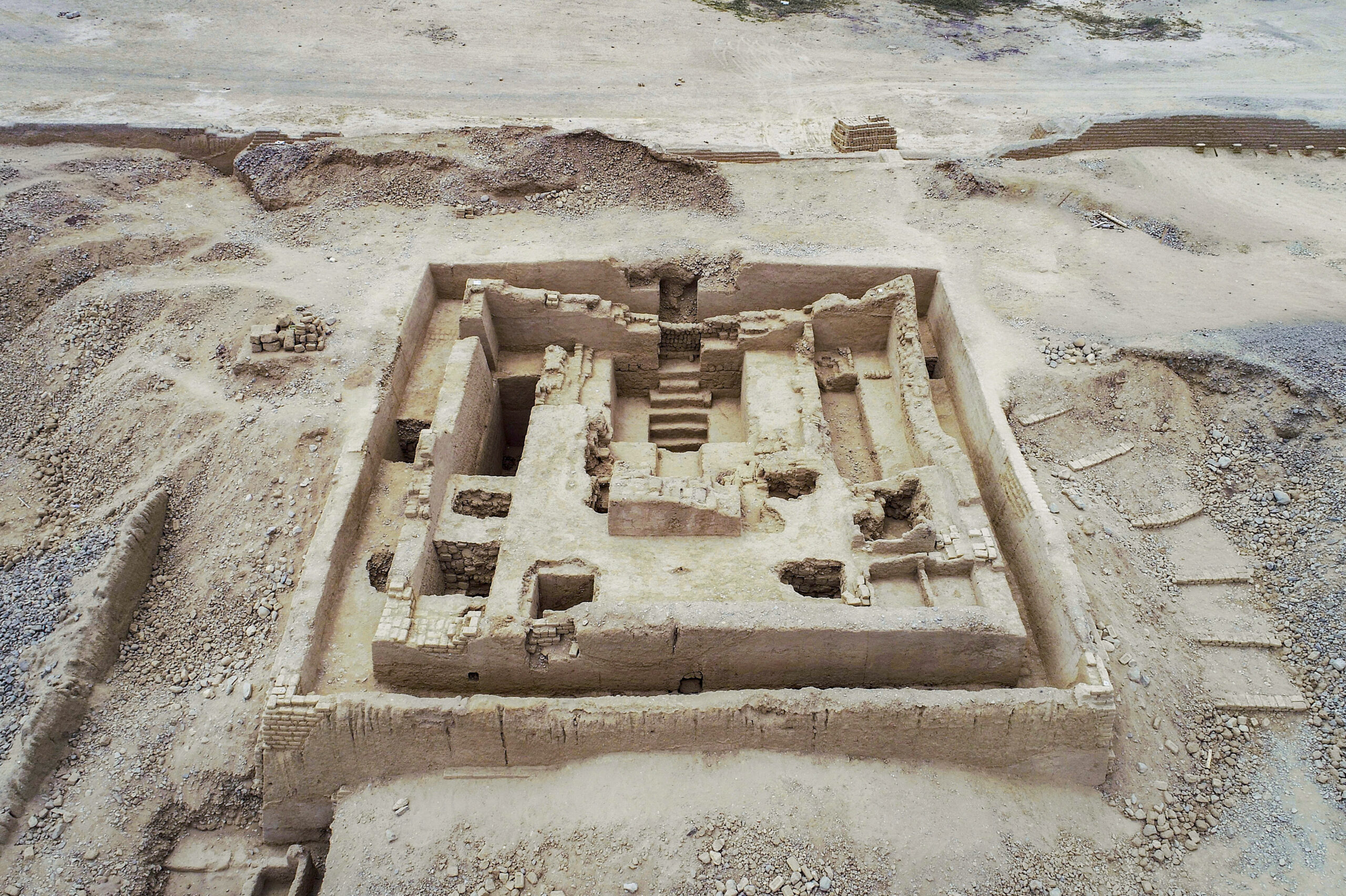
At Chan Chan—the vast adobe capital of the Chimú on Peru’s northern coast—archaeologists have opened a funerary platform that stayed largely sealed for about six centuries. Inside the Utzh An walled complex (the former Gran Chimú Palace), a Peruvian Ministry of Culture team recorded the remains of 38 people along with shell and metal offerings still tied to their burial contexts. Coverage from Archaeology Magazine and El País summarizes the find presented in early September 2026.

The square platform measures nearly 17 meters on a side and about five meters high, with a central chamber and two flanking chambers. A short staircase drops roughly 2.5 meters into the central room (about 1.2 by 5 meters), which includes a niche and held a principal burial with many shell and metal objects. The side chambers are larger (about 1.5 by 8 meters): one contained weapons and metal emblems but no skeletons; the other has so far produced 20 individuals, with 18 more recovered elsewhere on the platform, according to figures reported by Andina and echoed in Archaeology Magazine.
Chimú rulers were customarily buried on platforms within large compounds, but most known elite tombs were stripped long ago. Project lead Jorge Meneses Bartra of the Chan Chan Archaeological Complex Special Project (PECACH) told El País that earlier pictures of Chimú elite burial often came from looted platforms or decontextualized museum and private holdings. Because stone fill had discouraged looters, researchers can now study bodies and grave goods together rather than reconstructing associations after the fact.
The principal individual’s skeleton is incomplete; Meneses suggests familiar Andean practices of moving mummies or taking skeletal relics may explain the gaps—an interpretation that awaits fuller bioarchaeological work. Red pigment on the principal skull (and on some other bodies) will be tested to see whether it is cinnabar. Andina also reports one burial laid fully extended, a pose that departs from the flexed or seated-flexed pattern usual in Chimú mortuary practice.
The work sits in PECACH’s eighth season under the Ministry of Culture; Meneses’s team numbers about 98 specialists and workers. Culture Minister Alberto Beingolea joined the on-site presentation. Field excavation was due to wind down within days of the announcement, with laboratory study and conservation racing Peru’s November rains. Chan Chan’s protected zone covers 1,414 hectares; Meneses notes that no more than about 7 percent has been excavated—so this platform is a rare window, not a finished picture of Chimú elite deathways. The Chimú polity flourished roughly AD 900–1470 before Inca expansion, and Chan Chan remains the largest adobe city in the Americas.