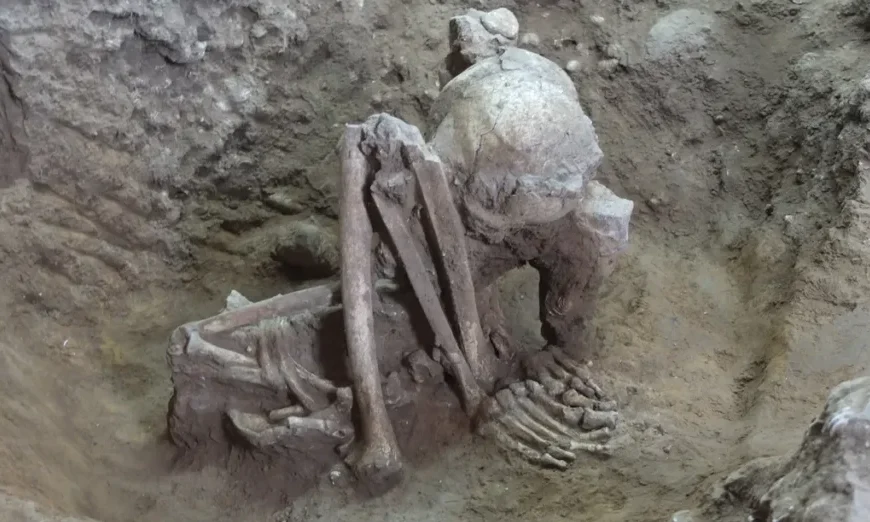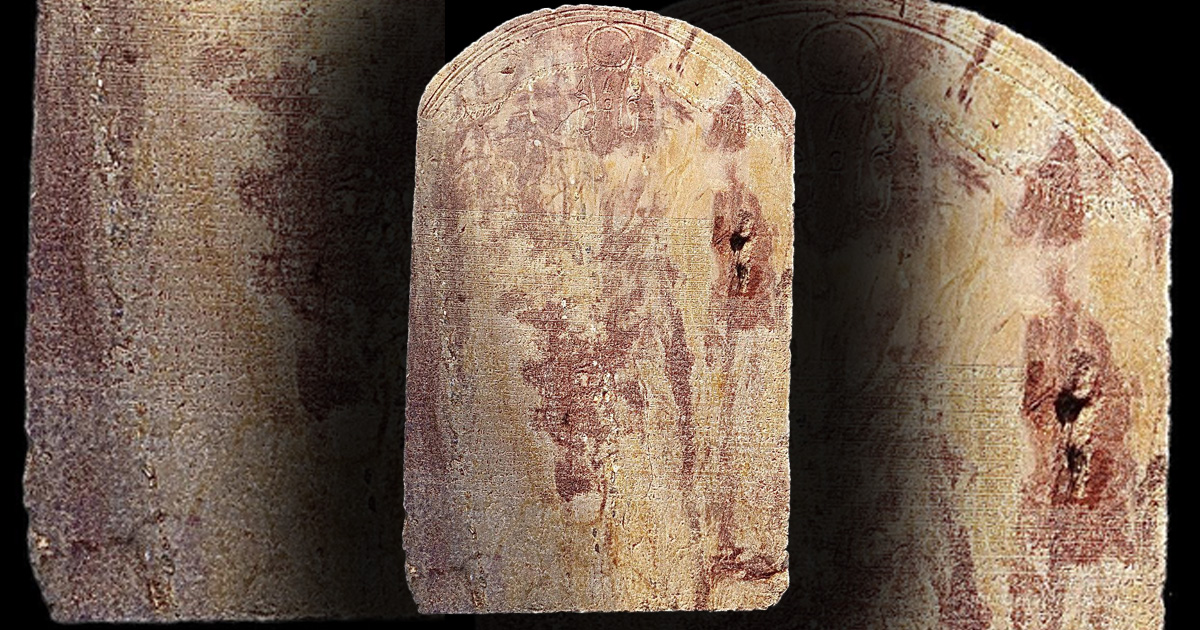
In Egypt’s Sharqia Governorate, near the modern town of Tell el-Fara’un, archaeologists have uncovered significant remnants of the ancient city of Imet, dating to approximately 400–350 BCE. Recent excavations, led by a British team from the University of Manchester, have revealed a complex urban landscape buried beneath a hill, offering fresh perspectives on life in the Nile Delta during the Late Period of ancient Egypt. Through advanced radar scanning and meticulous fieldwork, the team has exposed multi-story residences, storage facilities, and religious artifacts, shedding light on the city’s social structure, economy, and spiritual practices. Excavation and Urban Layout The archaeological investigation at Tell el-Fara’un, also known as Tell Nabasha, employed ground-penetrating radar and satellite imagery to map subsurface structures before excavation began. These non-invasive techniques identified areas with high concentrations of buried remains, guiding the team’s efforts. The excavations revealed a variety of structures, including residential buildings, grain storage units, and shelters for livestock. Among the most notable finds are multi-story dwellings, referred to as “tower houses” by researchers. These structures, characterized by thick mudbrick foundations, were likely designed to accommodate extended families or communal groups, reflecting a densely populated urban center. The layout of Imet suggests a well-organized city with a mix of residential, agricultural, and ceremonial spaces. Excavations also uncovered a structure near a central temple, though its precise function remains under study. The temple, dedicated to the goddess Wadjet, underscores Imet’s religious significance in the region. The presence of a ceremonial processional route, lined with mudbrick columns, further highlights the city’s role as a hub for ritual activities. Artifacts and Cultural Insights The dig yielded several artifacts that provide a glimpse into Imet’s material culture and religious practices. Among them is a green-blue ushabti, a funerary figurine crafted with intricate detail, dating to at least 2,300 years ago. Such figurines were placed in tombs to serve the deceased in the afterlife, reflecting the spiritual beliefs of the period. Another significant find is a limestone stela depicting the god Horus standing atop two crocodiles while grasping snakes, with another deity positioned above him. This imagery aligns with Late Period iconography, where Horus was often portrayed as a protector against chaotic forces. A bronze sistrum, a ceremonial musical instrument, was also recovered. Used in religious rituals, the sistrum was shaken to produce a distinctive sound, often associated with worship of deities like Hathor or Isis. These artifacts, combined with the architectural finds, suggest that Imet was not only a population center but also a place of considerable religious activity, likely centered around its temple to Wadjet, the patron goddess of Lower Egypt. Historical Context Imet, located in the eastern Nile Delta, flourished during Egypt’s Late Period (circa 664–332 BCE), a time of political transition and cultural exchange. This era saw Egypt navigating internal divisions and external influences, including Persian rule during the 27th Dynasty (525–404 BCE). As a regional center, Imet likely served as an administrative and economic hub, facilitating trade and agriculture in the fertile Delta. The discovery of grain storage facilities and animal shelters points to a self-sustaining community reliant on the region’s agricultural productivity. The architectural style of the tower houses aligns with urban planning trends in the Delta, where vertical construction maximized space in densely populated areas. The presence of such structures at Imet suggests a sophisticated approach to urban living, accommodating a growing population while maintaining proximity to religious and administrative centers. The temple to Wadjet, a symbol of divine protection and royal authority, indicates that Imet held a prominent place in the religious landscape of ancient Egypt, possibly serving as a pilgrimage site or regional cult center. The findings also contribute to our understanding of the Late Period’s cultural dynamics. The artifacts, particularly the Horus stela and sistrum, reflect the continuity of Egyptian religious traditions amid foreign influences. The depiction of Horus subduing dangerous animals underscores themes of order triumphing over chaos, a motif prevalent in Egyptian art during periods of political uncertainty. Header image: Archaeologists scanned and excavated more of the 2,300-year-old city of Imet in Egypt. Photos show the ruins and artifacts they uncovered. Photos from Egypt’s Ministry of Tourism and Antiquities
Preparing for the AI Future: Echoes from the Industrial Revolution
Imagine a world where daily life was marked by the clink of a blacksmith’s hammer and the rustle of horse-drawn carts. This was the reality for much of humanity before the late 18th century. Villages relied on farming to survive and most people lived off the land with just enough to get by. The artisan’s workshop was the heart of craftsmanship where each item—whether a hand-forged iron nail or a delicately woven piece of cloth—bore the signature of personal touch and skill. Life was local, slow and connected to the rhythms of nature. Beneath this tranquil surface, though, something remarkable was brewing. Contrary to the traditional timeline, new evidence reveals that Britain was already setting the stage for industrial change long before the 18th century. By the 1600s, the landscape was changing: the number of artisans increased, and manufacturing was taking root in the British countryside. This early drive towards industrialization, marked by the growth of local weavers and metalworkers, laid the foundations of the new era that was to come. Then, in the late 18th century, a whirlwind of transformation began to sweep across Britain. This period, known as the Industrial Revolution, unfolded a drastic makeover in society that forever reshaped human life – paving the way for machinery, innovation and AI. Enter The Industrial Age The Industrial Revolution wasn’t a sudden change but rather the final stage of many smaller changes that had been happening for years. The invention of the steam engine was a breakthrough that symbolized this leap from manual labor to machine-driven efficiency. The steam engine powered factories, transforming industries and enabling mass production that increased output at an increasing rate. This was more than a new way to work; it was a new way to think, stretching the boundaries of what was possible. By the early 19th century, the Industrial Revolution was in full swing. Factories and steam engines roared to life in Britain, their clatter filling the air as machinery took over tasks once done by hand. The rise of factory production marked the beginning of a new era of industrial might. The artisan’s role, once central to production, became overshadowed by the efficiency of mechanized production. This process allowed for the mass production of goods and made products more affordable all at once. As the revolution gained momentum, its impact spread beyond Britain. Other parts of Europe and the United States began to industrialize, adopting new technologies and production methods. This led to rapid urbanization as people flocked to cities in search of work. However, this urban influx also brought newfound challenges. Cities became crowded, living conditions worsened and stark social inequalities emerged. Factories, while symbols of progress, also became sites of harsh labor conditions with long hours, low wages and dangerous environments becoming too common Rise of the Machines… and Minds Despite these challenges, the Industrial Revolution ignited a wave of movements that sought to reshape society. Labor unions emerged as a powerful force as they advocated for fair wages, safer working conditions and reasonable hours. These unions were forged from the harsh realities of factory life where long miserable hours and dangerous environments were the norm. The tireless efforts of these unions brought about significant changes, improving the lives of workers at a gradual process and setting the stage for future advancements in labor rights. Social reformers also played a crucial role during this period, shining a light on the stark inequalities that had emerged in rapid-growing urban centers. The reformers fought for better housing, sanitation and education, recognizing that industrial progress could not come at the expense of human dignity. These reformers laid the groundwork for the modern social safety nets we see today, ensuring that the march of progress was accompanied by a sense of social responsibility. As the 19th century progressed, the effects of the Industrial Revolution continued to unfold in ways that would have been seen as unimaginable to those people who had lived through it. You see, the steam engines that once powered factories eventually gave birth to an era of incredible technological advancements. Innovations that arose from the age of steam engines soon paved the way for the birth of the digital age—a new era where information flows with free range as steam once did. The principles of efficiency and mechanization that fueled the rise of factories have become the backbone of modern high-tech manufacturing. Fast forward to today in 2024: robotics, artificial intelligence and automation are the cutting-edge frontiers that continue the legacy of progress that first began with the steam engine. The story doesn’t end there, though. For as we move into 2024 and beyond, artificial intelligence stands as the next great leap in this continuum of progress. A Future With Artificial Intelligence Just as the steam engine once redefined the limits of human capability, AI is now poised to do the same. It’s not just about machines taking over manual tasks; it’s about machines thinking, learning and even evolving. The rise of AI represents more than a technological shift—it’s a philosophical one. It forces us to reconsider what it means to be human, to create and to work. As AI begins to shape industries and daily life, we’re standing at the edge of a new revolution, one where the very concept of intelligence is being redefined. The questions we face now echo those of the past: How will this technology change us? What new challenges will emerge? Most of all… how can we ensure that the progress AI brings is balanced with the ethical and social responsibilities that come with it? As we make our first step on this new epoch, let us embrace the possibilities with both curiosity and caution, striving to harness AI’s potential to enrich our lives while guiding its development tempered with wisdom and dignity. Industrial Impacts on Our Planet The Industrial Revolution changed our relationship with the environment in a drastic manner, catalyzing both significant advancements and severe side effects. Rapid industrial growth combined with
Of War & Hope: Lessons From History For Israel & Iran
Once again history repeats itself. The Middle East finds itself in the grip of a catastrophic conflict, with recent missile exchanges between Israel and Iran inflicting devastating losses. Recent missile strikes, including one targeting Israel’s Soroka Hospital in Be’er Sheva, and retaliatory airstrikes on Iran’s Arak heavy water reactor, have left devastation in their wake. These events further stress the deepening humanitarian crisis, as civilians on both sides bear the brunt of intensifying hostilities. In the face of such turmoil, the international community—led by figures such as US President Donald Trump, French President Emmanuel Macron, German Chancellor Friedrich Merz, British Prime Minister Keir Starmer and even Russian President Vladimir Putin—strives to mediate and de-escalate the situation, though challenges abound. President Trump has taken a balanced approach, advocating for peaceful solutions through diplomacy while firmly insisting on Iran’s unconditional nuclear disarmament. President Trump’s reluctance toward direct military action highlights his preference for resolution without war, though he has signaled preparedness for decisive measures if deemed necessary. Meanwhile, Supreme Leader Ayatollah Ali Khamenei’s leadership frames the conflict as a defense of Iranian sovereignty and resistance against external interference. The Ayatollah’s steadfast and commanding rhetoric has aroused domestic support while shaping Iran’s approach to military and diplomatic engagements. Iranian President Masoud Pezeshkian and Israeli Prime Minister Benjamin Netanyahu remain rigid and deep-seated in their stances, thus further complicating diplomatic efforts. Yet, amidst these modern tensions, history offers a much different narrative—one where coexistence between these lands fostered mutual respect and collaboration. This stark difference in narratives between ancient and modern times is akin to that of day and night. You see, the legacy of the Persian Empire and the ancient Israelite Kingdoms provides an important lens through which today’s leaders might glean inspirations and lessons from. Cyrus the Great: A Visionary of Tolerance Cyrus the Great, founder of the Achaemenid Empire, is remembered for his military conquests as well as his revolutionary governance. After conquering Babylon in 539 BCE, Cyrus issued a decree allowing displaced peoples, including the Jewish exiles, to return to their homelands and rebuild their temples. This policy, preserved in biblical accounts and corroborated by the Cyrus Cylinder, marked a significant departure from the practices of previous empires that often suppressed conquered cultures. For the Jewish community, Cyrus’s actions were transformative. His decree allowed for the rebuilding of the Second Temple in Jerusalem, symbolizing a restoration of spiritual and cultural identity. By providing resources and safeguarding their religious practices, Cyrus earned a place of reverence in Jewish history as a liberator and a model of enlightened leadership. His legacy reminds us that even amidst imperial ambitions, policies rooted in respect and inclusion can foster enduring goodwill. Ezra and Nehemiah: Architects of Renewal The stories of Ezra and Nehemiah unfold against the backdrop of the Persian Empire’s support for Jewish restoration. The scribe and priest Ezra played a pivotal role in re-establishing the Torah as the foundation of Jewish religious and social life. Tasked with teaching the law and fostering a sense of unity, Ezra’s leadership was crucial in reviving the spiritual heart of the Jewish people. Meanwhile, Nehemiah served as King Artaxerxes I of Persia’s cupbearer before leading a mission to rebuild Jerusalem’s walls. His determination and strategic acumen not only restored the city’s defenses but also reinvigorated its community. Together, Ezra and Nehemiah represent how visionary leadership, supported by a broader network of tolerance, can spark renewal even in the face of adversity. Mutual Benefits in the History of Israel and Iran Ezra and Nehemiah’s efforts produced significant advantages to the Persian Empire in both practice and strategy. By helping the repair of Jerusalem’s spiritual and municipal foundations, Persia secured stability in a region crucial to its vast dominion. A well-organized and peaceful Jerusalem minimized the risk of rebellion whilst also ensuring loyalty from its citizens. Plus, Jerusalem’s restored stability reinforced Persia’s dominance over vital trade routes connecting the empire’s eastern and western regions. The city’s fortified infrastructure made commerce much safer, fostering economic growth and strengthening Persia’s role as a hub of integration across diverse lands. This prosperity reflected the empire’s ability to harmonize tolerance with strategic governance, promoting broader prosperity for the empire’s melting pot of cultures. Persia’s policies of religious tolerance and support for restoration earned the empire a reputation as an enlightened ruler over its diverse populations. This approach deterred unrest while fostering cooperation, with Jewish communities expressing gratitude for Persia’s role in their renewal. The symbolic achievements of Ezra and Nehemiah illustrate Persia’s diplomatic successes even beyond practical benefits. By grounding governance in respect for local identities, Persia solidified its imperial influence while enriching relations with its subjects—a testament to the power of inclusive leadership. The Tale of Queen Esther Even the renowned legend of Queen Esther reflects the profound potential of diplomatic endurance within complex cultural environments. Her ability to navigate the intricacies of the Persian court, leveraging her influence to save her people, highlights the power of diplomacy and courage in fostering coexistence. While debated for its historical accuracy, the queen’s story still serves as an ageless reminder of building trust and advocating effectively for minority rights guided by thoughtful leadership—a principle vital for modern leaders grappling with global challenges of cultural and political complexity. Bridging the Past with the Present Today’s political leaders might draw lessons from these historical chapters. The collaborative relationship between Ancient Israelite society and Persia stands in stark contrast to the discord that we witness today. Efforts like the Abraham Accords, which sought to normalize relations between Israel and neighboring nations, reflect the enduring need for dialogue and understanding. As today’s world leaders navigate the complexities of modern diplomacy, the legacy of the relations between the Persian Empire and the Ancient Israelite Kingdoms offers a timeless reminder: peace is not just the absence of war but a deliberate act of will tempered by wisdom—a choice to prioritize humanity over hostility. Header Image: “The Fall of Babylon” by English painter John Martin depicting Cyrus the Great’s forces
Reconstructing Roman Southwark: A Monumental Fresco Discovery in London
In 2021, archaeological excavations in Southwark, London, uncovered one of the most significant finds of Roman wall paintings in Britain. Conducted by the Museum of London Archaeology (MOLA) ahead of the Liberty of Southwark development, the discovery revealed thousands of plaster fragments from a high-status Roman building, demolished before AD 200. These fragments, painstakingly reassembled by Senior Building Material Specialist Han Li, form one of the largest collections of Roman frescoes ever found in London. The excavation, part of a collaborative project with Landsec, Transport for London, and Southwark Council, focused on a site near London Bridge already known for a well-preserved Roman mosaic and a rare mausoleum. The newly discovered plaster fragments, dated between AD 40 and 150, were found in a large pit, likely discarded during the building’s demolition. This structure, possibly a wealthy residence or commercial property, featured frescoes across at least 20 internal walls, an extraordinary scale for Roman London. Han Li led the meticulous task of sorting and reconstructing the fragments, a process he described as uniquely challenging due to their fragility and intermingled state. Over three months, with input from specialists like Ian Betts and the British School at Rome, patterns emerged: vivid yellow panels with black borders, depicting birds, fruits, and lyres—stringed instruments associated with Roman elite culture. These designs, rare in Britain, align with those at Fishbourne Roman Palace and sites in Pompeii, Colchester, and Roman Germany, suggesting a sophisticated aesthetic influenced by the broader Roman world. Artistic and Cultural Insights The frescoes reveal a deliberate display of wealth and status. Some fragments imitate luxurious materials, such as red Egyptian porphyry and yellow African giallo antico marble, a decorative choice seen in high-status sites across the Roman Empire. The yellow panel scheme, uncommon in Britain, underscores the building’s prestige, drawing parallels with elite residences like Fishbourne. A particularly remarkable find is a tabula ansata—a decorative tablet—bearing the Latin word Fecit (“has made this”), marking the first known artist’s signature in Roman Britain. Unfortunately, the fragment breaks where the painter’s name would appear, leaving their identity unknown. Graffiti on the plaster provides further insight into the building’s use. A near-complete Greek alphabet, the only such example from Roman Britain, suggests a practical function, possibly as a tally or reference for commercial activities. The precise lettering indicates a skilled scribe, potentially linked to trade, as the building may have served as a hub for storing or distributing goods shipped to Londinium. Other graffiti includes a depiction of a woman with a Flavian-era hairstyle (AD 69–96) and what appears to be tears, alongside a painter’s guideline for an unpainted petalled flower, suggesting an abandoned design. Southwark’s Role in Roman Londinium This discovery reframes Southwark’s significance in Roman Londinium. Established in AD 43, Londinium was a burgeoning trade center, and Southwark, south of the Thames, served as a vibrant suburb. The frescoes’ cosmopolitan style, echoing designs from Xanten, Cologne, and Lyon, highlights Southwark’s integration into the Roman Empire’s cultural network. The building’s early demolition raises questions about urban development in Roman London—possibly reflecting economic shifts or redevelopment pressures. MOLA’s ongoing analysis, including comparisons with frescoes from Britain and beyond, aims to clarify the building’s function and the circumstances of its destruction. The fragments will be archived for future study, with plans for public display to share this find with a wider audience. Header Image: While panel designs were common during the Roman period, yellow panels were not, having only been identified at only a few sites across the country. (MOLA) Source The World’s Most Difficult Jigsaw Puzzle: A Once in a Lifetime Discovery from Roman Southwark – [https://www.mola.org.uk/discoveries/news/worlds-most-difficult-jigsaw-puzzle-once-lifetime-discovery-roman-southwark]: MOLA’s press release on the fresco discovery and excavation details.
Hidden Identity of the ‘Dragon’ Mummy Revealed At Last
On this year 2025’s Father’s Day weekend, the film live adaptation of How to Train Your Dragon has dazzled audiences everywhere. The movie’s cutting-edge visual effects conjures the amazing imagery and magic of dragons, which in turn, has renewed peoples’ deep fascination for these mythic creatures with fresh hot energy. The film even soared to box-office success, thus proving that our interest in dragons is as resilient as ever. Yet, beyond the silver screen lies a real-world mystery wrapped in centuries of folklore. While the movie gave us Hiccup and Toothless, our real-life world presents us with the Koryu dragon mummy hailing from Japan. The Koryu (Rainbow Dragon) mummy has been long revered for its unforgettable features and rumored magical powers since medieval Japan. It is important to note that the dragon mummy has been cherished as an iconic treasure in one of the country’s most sacred Buddhist temples – the Todaiji Temple. Having charmed scholars with its serpentine appearance for generations and was believed to hold cosmic weather-controlling powers of summoning rain during the Muromachi Period (Japan’s medieval ages). The most exciting news of all, however, is that this ancient relic has finally been unmasked by science… and my goodness, the data results present us with an unexpected identity of the creature. With that being said, let us now present to you the identity of the dragon mummy, shall we? When you’re ready to find out the mummy’s identity… just keep scrolling below. Lo, and behold: It turns out that the mummy’s in fact an adult female Japanese marten (Martes melampus). Cousins to weasels rather than being cousins to giant reptilian creatures of myths. Standing at about 40 centimeters long (approx. 15.75 inches), the Koryu mummy’s enigmatic aura earned itself a legendary status. However, its transformation from myth to zoological fact was solidified through recent breakthroughs. Scientists deployed X-ray imaging and radiocarbon dating, discovering that its teeth and head bones confirmed its mammalian origins rather than reptilian or supernatural. The dating pinpointed its age as between the 11th and 12th centuries. The intriguing history of the Koryu mummy bridges folklore with science too. The mummy’s first documented connection to dragon myths takes us to the year 1429. It was in this timeframe when the Muromachi shogun (commander-in-chiefs during medieval Japan) named Ashikaga Yoshinori would have his fateful encounter with the mummy during his visit to Todaiji Temple in Nara – one of Japan’s oldest cities. Nara’s Todaiji Temple contains a storehouse called the Shōsōin Repository where prized religious artifacts and treasures were kept, such as the valuable Ranjatai agarwood and of course.. the enigmatic Koryu mummy. When Ashikaga Yoshinori visited the repository in 1429 to handle relics such as the Ranjatai, he would eventually encounter the Koryu mummy by chance with the assistance of the temple monks. Its dried, dragon-like appearance captivated the shogun’s first sight. After gazing into the mummy and marveling at its otherworldly looks, the shogun likened it to a mythical Koryu – rainbow or flood dragons of East Asia – thus sparking the mummy’s association with these legendary creatures in historical records. Diaries from Todaiji Temple’s monks during that time period have recorded the shogun’s visit, and ever since then, the dragon mummy became further entwined with local folklore. That was when the citizens of Nara believed the mummy’s presence could summon rain whenever the repository was opened, as Eastern dragons were associated with both the weather and water; in contrast to the Western dragon’s fiery nature. While skeptics might assume this marten to have simply wandered into the repository and succumbed to its death either by old age or starvation, researchers have speculated that the temple’s monks may have intentionally preserved or assembled these displays. Then, there’s more: the marten wasn’t the only ‘dragon’ mummy found in the storehouse. Fragmented parts of other so-called ‘Koryu’ mummies were also unveiled from Todaiji Temple. These parts have been revealed to be mole legs and bird bones. This additional find has led researchers to hypothesize that monks might have curated these relics to craft fantastical displays, possibly to captivate or inspire awe among the local community. However, this remains speculative and not definitively proven (as of June 2025). To further add mystery to this whole discovery, the research team reported an uncanny alignment with the past. Listen to this: during preparations for the investigation of the Koryu mummies, heavy rain popped up out of the blue. This heavy rain disrupted the team’s plans and gave them quite a memorable experience. One could say that this was a playful nod to the Koryu dragon’s legendary status as a rain-bringer. Coincidence perhaps? Who knows. From myth to marten, the Koryu embodies a beautiful tapestry of history, natural science, and human imagination. While its identity has now been demystified, its story continues to enchant us, reminding us of the treasures hidden at the crossroads of fact and folklore. Even though its true nature has been revealed, the Koryu remains cherished to the city of Nara and its people. For in the creative minds of mankind, the symbolism of dragons still endures and captivates our imaginations in its supernatural form. Look no further than the movie How to Train Your Dragon, which continues to win the box office as its story rekindles humanity’s timeless dream of dragons. Header Image: Zoomed in photograph of the dragon mummy. From the No. 47 Bulletin of Office of the Shōsōin Treasure House. References: 1. Imai, Kunihiko. “Experts Identify the Species of Shosoin’s Famed ‘Dragon’ Mummy.” Asahi Shimbun, 24 Apr. 2025, www.asahi.com/ajw/articles/15723856. 2. Odeen-Isbister, Sara. “Mystery of 600-Year-Old Mummified ‘Dragon’ Solved.” MSN News, www.msn.com/en-sg/news/other/mystery-of-600-year-old-mummified-dragon-solved/ar-AA1GFoH3. 3. Margolis, Andrea. “Experts Solve Mystery of Ancient ‘Mummified Dragon’ Discovered by Japanese Shogun.” Fox News, 27 May 2025, www.foxnews.com/travel/experts-solve-mystery-ancient-mummified-dragon-discovered-japanese-shogun.
A Time When Giant Monkeys Haunted Our Early Ancestors
In Earth’s grand evolutionary tale, some creatures influenced the lives of our ancestors by sharing their environments, rather than contributing to their direct lineage. On top of that, these creatures may have posed immense hazards to our primeval ancestors. Among them is Dinopithecus, the “terrible baboon.” This extinct supersized primate once roamed the landscapes of prehistoric Africa, living nearby early hominins and leaving behind traces of its existence through fossil records. A Colossus Amongst Primates Dinopithecus ingens thrived from the late Pliocene into the early Pleistocene—roughly between 2.6 and 1.5 million years ago. Its fossils, found in South African sites like Sterkfontein and Swartkrans, reveal an impressive creature. Male Dinopithecus likely weighed between 77 to 100 kilograms (170–220 lbs), standing up to 1.5 meters (5 feet) tal., making them far larger than modern baboons. Female Dinopithecus meanwhile reached about 4 feet (approx. 1.22 meters) tall and averaging at about 64 lbs (29 kg). Their robust skulls and powerful jaws suggest an omnivorous diet consisting of fruits, seeds, tubers… and occasionally other animals. While no complete skeleton has been unearthed as of June 2025, scientists have inferred much about Dinopithecus through skull fragments and isotopic analyses of its teeth, which highlight its dietary preferences and ecological adaptability. Life and Habitat Dinopithecus once thrived in mosaic habitats such as woodland savannas and river valleys—rich environments teeming with life but also dangerous inhabitants. It coexisted with other carnivores such as sabre-toothed cats and giant hyenas as well as large crocodiles, all of which could have been a significant threat despite the baboon’s extra large size. Similar to modern baboons, Dinopithecus may have lived in large groups, relying on vigilance and cooperation for survival. However, direct evidence of its social structure remains unknown as of June 2025. Interactions with Early Hominins It is known that Dinopithecus shared a prehistoric environment with early hominins such as Australopithecus and Paranthropus. Fossils from both groups have been found in close proximity, indicating overlapping ecological niches. While Dinopithecus may have competed with hominins for resources like shelter and food, claims of predatory behavior still remain speculative and unsupported by fossil evidence as of June 2025. Modern baboons, however, are known to be opportunistic hunters and would prey on antelope and even other primates when given a chance. Under duress or food scarcity, what’s to stop a prehistoric ginormous baboon from exhibiting similar behaviors? Furthermore, the babies or the injured of our ancestors would be easy pickings for a starving Dinopithecus. As a result, present-day baboons provide useful comparisons for understanding the prehistoric African landscape and primate behavior. In addition, the colossal baboon’s formidable presence may reflect evolutionary pressures influencing both hominins and other primates. Lessons from Evolution Dinopithecus was not an ancestor of Homo but shared traits that highlight survival strategies common to many primates. Its dietary flexibility, predator awareness, and physical prowess exemplify adaptations to changing ecosystems. Its extinction likely resulted from competition with smaller, more adaptable primates. This reinforces a recurring theme in evolution: adaptability often outweighs sheer strength in determining survival. Final Reflections Dinopithecus was an incredible primate—a towering beast of its time period. While it left no living descendants, its fossils continue to shed light on prehistoric ecosystems and the challenges faced by early humans. The story of this prehistoric mega baboon remains a powerful reminder of nature’s balance, where survival is dictated not only by power, but by the ability to adapt. Header Image: Mouth of a mandrill – the modern world’s largest monkey. By Belgianchocolate. Source: CC BY 4.0
Something Fishy Going On: Rumors of the Furry Trouts
Things are gonna get quite fishy—or rather furry—in this most curious story time of an article. Let us first dive deep into the reflective waters of North America’s lakes and rivers where Nature presents us with a wealth of wonders. Hidden beneath the waters exists a tale as peculiar as it is charming: that of the fur-bearing trout, or furry trout for convenience’s sake. A creature seemingly torn between aquatic grace and the rugged insulation of a snow-dwelling mammal. An animal that has utterly captured the imaginations of storytellers and skeptics alike for decades. Origins of the Myth The furry trout’s story begins in the winter landscapes of the northern hemisphere. A peculiar blend of practicality and whimsy gave rise to this cryptid. The cold waters of Canada and the United States seemed to demand a fish that could brave their icy clutches with the warmth of a mammal. Thus, the fur-bearing trout came to life in the collective imagination of trappers and hunters. One of the earliest mentions of this marvel harks back to the late 19th and early 20th centuries, when travelers and settlers spun tales of trout adorned with lush fur coats. It was whispered that these creatures emerged from particularly frigid environments, where evolution had granted them a pelt as protection against the biting cold. Some rumours even suggest that the fish would shed their furs during hotter seasons, only to be furry again when winter’s coming. Letters and anecdotes began circulating, with some accounts even claiming to have sighted these trout in regions such as Montana and Newfoundland. One rather strange (also hilarious) account came in 1929, Montana Wildlife featured an article by J.H. Hicken, who took the tale a step further. He claimed that when caught, the sudden temperature difference between the cold water and warm air caused the trout to spontaneously explode, leaving behind a ready-to-cook fish and a perfectly intact pelt. A Nordic Cousin: The Icelandic Loðsilungur Far across the Atlantic, in the icy streams of Iceland, swims a creature that’s equally enigmatic: the Loðsilungur. This fascinating cousin to the fur-bearing trout inhabits the folklore of Iceland, where the harsh subarctic environment often blurs the lines between fact and legend. Described as a trout with a distinctive, hairy exterior, the Loðsilungur is said to roam the freezing streams and lakes, its fur serving as insulation against the bitter cold. Unlike its North American counterpart, tales of the Loðsilungur are often intertwined with warnings. Local myths suggest that eating this furry fish brings about bad luck or even illness, making it a creature more revered than sought after. Much like Iceland’s otherworldly landscapes, the Loðsilungur invites both wonder and a touch of caution—reminding us how deeply entwined nature and storytelling are in human culture. The Mold-Aging Connection Oddly enough, the culinary world offers an unexpected bridge between fact and folklore. Mold-aging tuna—a refined culinary art from Japan that results in the formation of a fur-like, velvety mold on the fish’s surface—provides an intriguing modern parallel to the fur-bearing trout. While the mold in this process serves the practical purpose of enhancing flavor, its furry appearance is a visual echo of cryptid tales. Is it possible that early observers mistook mold-covered fish in their raw or cured states as evidence of fur-bearing creatures? Additionally, this fur-like appearance offers an alternate scientific explanation for the mythos of these shaggy fish. Fungal growths, such as the Saprolegnia species, can afflict freshwater fish, creating a woolly appearance reminiscent of fur. While these growths are a sign of disease rather than adaptation, they could easily have inspired imaginative accounts among early settlers or fishermen unfamiliar with such phenomena. Infectious mold could also be the culprit behind the Loðsilungur’s cautionary lore if you think about it. Rational Explanations Of course, every tale—no matter how wondrous—invites skepticism. Could a fish genuinely evolve such a feature? Biologists, understandably, take a more measured approach. The fur-bearing trout is often explained and even at times exposed as a lighthearted hoax. Some specimens displayed in museums or tourist traps were, in fact, ordinary trout cleverly adorned with rabbit fur by enterprising pranksters. Furthermore, there is also an element of mistaken identity. As mentioned above, fungal infections can produce a bizarre, woolly appearance, which might easily have been misunderstood by those encountering such afflicted fish. Whether through fungal growth or culinary inspiration, it is remarkable how observations of nature and creative interpretation can intertwine to shape enduring folklore. The Role of Folklore The question then pops up: why create such a legend? Herein lies the beauty of human imagination. The fur-bearing trout became a symbol of the rugged wilderness, a testament to the ability of life to adapt and survive. It resonated with the minds of those living in remote, untamed regions—where the line between reality and folklore often blurred. In addition, the tale served as a tool for humor. Travelers and locals alike delighted in spinning yarns about these fantastical creatures, often as a jest aimed at credulous outsiders. This was not merely a tale for amusement but a form of cultural bonding, a shared in-joke among communities. Speculative Wonders However, one cannot help but indulge in speculation. What if the fur-bearing trout were real creatures? Imagine the evolutionary pathways it might have taken—perhaps descending from ancestors who ventured into the chilliest streams, necessitating some form of thermal regulation. Could its fur also function as camouflage, blending with the mossy rocks and frothy rapids of its environment? Such a creature would occupy a fascinating niche in the ecosystem. Predators would face a unique challenge in penetrating its furry defenses, while the trout itself might develop curious feeding habits, perhaps relying on insulating streams of hot springs for sustenance. Cultural Impact The furry trout—and its Icelandic cousin, the Loðsilungur—has left an indelible mark on pop culture. From postcards to tourist attractions, these cryptids have been immortalized in playful imagery. Their allure lies in their implausibility—at once a tribute to nature’s resilience and a reminder
When Zeus ‘Ate’ The Creator to Become Supreme God
Zeus’s rise to ultimate power wasn’t just forged by thunderbolts and battles with Titans—it was an act of divine transcendence, rooted in an ancient Orphic tradition often overshadowed by Hesiod’s Theogony. Hesiod’s genesis account gives us a divine family tree of order and rebellion—a genesis filled with clashes and conquests. However, Hesiod’s genesis isn’t the only origin story that was told in Ancient Greece, for there’s another tradition: the Orphic cosmology. The Orphic tradition, in a nutshell, is an Ancient Greek mystical belief system centered around the teachings of the mythical bard-prophet Orpheus. The tradition explores themes such as the soul’s divine origin and cosmic unity. It reimagines creation myths and divine hierarchies, offering a spiritual lens for understanding the universe’s mysteries. In the Orphic version of the creation myth, Zeus’s ultimate ascension does not come through severe war alone. Zeus’s ascendancy comes through the consumption of a primordial god far older and more luminous than any Titan. That god’s name was Phanes—and this, dear readers, is the creator deity’s story. Phanes: The Light That Brought the World Into Being In the beginning, there exists only a boundless and churning void. This state is known as Chaos, yes, but not the chaos of war or noise. This state was silent and unshaped. From this empty void of Chaos came forth two abstract powers: Chronos (Time) and Ananke (Necessity). Together, the abstract couple brought forth a gleaming, swirling Orphic Egg—a symbol of infinite potential coiled and humming with future galaxies. Then, that egg cracked. From within the egg burst forth a radiant primal being: Phanes. The name Phanes means “the Revealer” or “He Who Shines Forth.” Phanes was no warrior, but was a deity of illumination, order, and creative lifeforce. This primal god had four eyes, gold angelic wings and a radiant humanoid body coiled by a giant serpent. Phanes’s form showed great paradox as the god was androgynous which symbolized cosmic balance; thus was both male and female, light and dark, stillness and vibration. Where Hesiod gives us the family lineage from Gaia, Ouranos, and the Titans, the Orphics give us the roots from Phanes—who precedes all these aforesaid deities according to their beliefs. In the Orphic tales, Phanes was the first principle of becoming and growing. The World Through Phanes’s Eyes Phanes sang reality into existence—singing out sacred geometry that formed space, organized the stars to celestial rhythms, and fuelled the universe with harmony and purpose. From Phanes’s song came: Though other deities emerged to rule parts of existence, Phanes remained the source—not a king with a throne, but a cosmic fire—a living map of the universe’s secret architecture containing the blueprints for all creation. Certain Orphic interpretations suggest Nyx is depicted as an older cosmic force who either succeeds Phanes in authority or shares a complex, intertwined relationship, varying across traditions. This is because the Orphic tradition lacks a unified structure, as its myths were preserved through fragmented texts and varied interpretations by followers over time. This decentralization leads to inconsistencies, like Nyx being portrayed alternately as Phanes’s daughter, wife or even a much older force existing beforehand, depending on the source. The Torch Gets Passed Despite the conflicting sources and narratives within the Orphic tradition, the next tidbit of Orpheus’s genesis account tells us that Phanes eventually yielded cosmic authority to Nyx. She in turn, passed authority to Ouranos, which was then taken by Kronos, and ultimately to Zeus. This chain of divine succession is crucial. It represents not just royal inheritance, but also the passing of cosmic knowledge. Each god taking on more than political control—they become vessels of cosmic design. Zeus: The Hungry Sovereign Zeus, son of Kronos and Rhea, had already made a name for himself by overthrowing the Titans. The Titanomachy shook the heavens, and Zeus emerged triumphant. Zeus was awarded lordship over thunderbolts, mastery over other gods and ownership of the Olympian throne. Yet Zeus knew something was missing. His dominion was vast, but not absolute. For though he ruled the present, the very design of the cosmos—its code, its logic, its possibilities—still echoed with the light of Phanes. Thus Zeus sought out the ancient deity. Not to worship. Not to consult. To consume. The Cosmic Consumption Here the myth becomes something stranger and more awe-filled than anything Hesiod described. In a realm beyond realms, beyond the stars and silence, Zeus confronted Phanes. The god of the sky met the god of first light. Some say Phanes willingly merged with Zeus, surrendering his cosmic burden like an old flame lighting another new torch. Others envision Zeus consuming Phanes, not as an act of mindless destruction but as a sacred act of absorption. This absorption of divine creative essence ignited within Zeus an infinite wellspring of cosmic power as a result. By Zeus “eating” Phanes, the Lord of Olympus didn’t just inherit a grander throne—Zeus inherited the foundation of reality itself. What Zeus Became The moment Phanes entered him, Zeus changed. Zeus now embodied the essence of Phanes, holding within himself the primal light that first shaped the cosmos and harmonized existence. This transformation united opposites—male and female, chaos and order, creation and destruction—granting Zeus the boundless vision to perceive and command all that was, is, and could ever be. This transformation reflects the Orphic view of divinity as a dynamic and transcendent force, where the divine merges and progresses into new forms rather than remaining static. In absorbing Phanes, Zeus bridges the finite and infinite, embodying the Orphic ideal of cosmic unity—an eternal interplay of creation and consciousness. Zeus did not simply govern Olympus. He contained the cosmos too. Orphic hymns even describe Zeus after this event with language rarely used for other Olympian gods. He is no longer merely “thunderer,” but: “Zeus of the flashing bolt was the first to be born and the latest, Zeus is the head and the middle; of Zeus were all things created; Zeus is the stay of the earth and the stay of the
Rare Viking Gold Arm-Ring Discovered on Isle of Man
A metal detectorist’s sweep across a field on the Isle of Man uncovered a treasure that gleams with history: a 1,000-year-old Viking gold arm-ring, its eight gold rods expertly braided by a skilled goldsmith. Declared treasure by the Isle of Man Deputy Coroner of Inquests, this rare find offers a vivid glimpse into the wealth and ingenuity of the Viking Age (A.D. 793–1066). Ronald Clucas, a 50-year veteran of the Manx Detectorist Society, made the discovery during his golden anniversary of metal detecting. “It was quite a big shock to discover this lovely piece of gold,” Clucas shared, his voice still tinged with disbelief. “Gold generally gives a very low signal on the detector, so you can’t really predict what is going to be uncovered”. The arm-ring, found folded in two, measures 1.5 inches wide and 3 inches long, weighing a substantial 27.26 grams—a testament to its value in an era when gold was scarce. The Isle of Man, nestled in the Irish Sea between Britain and Ireland, was a bustling hub for Vikings, who began trading there in the 800s before establishing settlements. This arm-ring, dating to around A.D. 1000–1100, reflects the island’s dual economy of coins and bullion, where gold and silver were weighed for transactions. Unlike the more common silver finds, gold artifacts like this are exceptionally rare, making Clucas’s discovery a significant addition to the island’s Viking legacy. Allison Fox, curator for archaeology at Manx National Heritage, explained the arm-ring’s multifaceted role: “Jewellery items such as this had several functions in the Viking Age both as prized personal possessions and visible displays of wealth. They were easily portable and were also used to cover costs in financial transactions” Manx National Heritage. The arm-ring’s two cuts—one removing its terminal end, the other nearly halving the original piece—suggest it was used as hacksilver, a form of currency where precious metals were divided for trade.a Why was this treasure buried? Fox posits it could have been hidden for safekeeping, lost in the chaos of daily life, or even offered to Viking gods as a sacred gift. The true reason remains a mystery, locked in the soil until Clucas’s detector hummed faintly over the find. This is not Clucas’s first encounter with Viking treasure. In 2005, he unearthed a silver ingot and a lead ingot, further cementing his reputation among the island’s detectorists. The gold arm-ring, now displayed in the Viking Gallery at the Manx Museum in Douglas, joins other hoards that illuminate the island’s Norse past. The discovery, aided by insights from experts Dr. Kristin Bornholdt Collins and Professor James Graham-Campbell, underscores the Isle of Man’s enduring connection to its Viking roots. As visitors gaze upon the arm-ring, they’re invited to ponder the hands that crafted it, the arm that wore it, and the earth that guarded it for a millennium. Header image: Manx National Heritage/Simon Park
140,000-Year-Old Fossils Unearthed in Indonesia’s Madura Strait
Near Indonesia’s shores, in the deep Madura Strait, researchers have found evidence of an ancient civilization. Among the fragments of Homo erectus are also the bones of Komodo dragons, buffalo, deer and Stegodon. The find of these fossils near Surabaya is the first indication we have of Sundaland which linked Southeast Asia together in a large tropical plain long in the past. Evidence going back over 140,000 years means these findings add new understandings of that period and show what was once a lively ecosystem, now covered by the sea. The first signs were found in 2011 when sand mining near Java and Madura Strait yielded more than 6,000 vertebrate fossils, among them two skull fragments—a frontal and a parietal bone, both Homo erectus. Only after Harold Berghuis and his team from the University of Leiden reviewed the fossils have researchers confirmed their age and significance. Using OSL on quartz grains, the researchers showed that the sediment layers date to between 162,000 and 119,000 years ago, agreeing with late Middle Pleistocene findings. “There is a strong showing of different hominin species, as well as movements of hominins in this period,” according to Berghuis, who spoke about the richness of the fossils for understanding early man’s migration. The fossils from the Madura Strait show the remains of a buried system of valleys made by the ancient Solo River flowing across the Sunda Shelf. Using data from sedimentary layers, researchers demonstrated that the area was rich with animal and human life thanks to a thriving river. The presence of fossils here challenges earlier assumptions about where Homo erectus lived, making this the first known underwater hominin site in Sundaland. These skull remnants, a close match to Homo erectus from Java’s Sambungmacan site, prove that early humans once lived in areas that sea levels later covered. The melting of glaciers between 14,000 and 7,000 years ago raised the sea level by more than 120 meters, covering part of Sundaland’s valley region. The inland communities may have all fled, so there are now no visible remains of what they left behind in the sea. Underwater archaeology is more important than ever for revealing information about human history. Thanks to new technology, researchers expect to learn a lot more about the lives and tools used by the ancient people of Sundaland, providing valuable details about human evolution and movements across Southeast Asia. Header image: Underwater image. Source: Pixabay
Chachapoya Tomb Unearths Ancient Rituals in Peru’s Kuélap
Archaeologists have made a big discovery high up in the foggy Andes of northern Peru. They found an old tomb in the style of a chulpa at the ancient city of Kuelap. This tomb had human remains and special offerings inside. It gives us new clues about the mysterious Chachapoya people. These “Warriors of the Clouds” lived before the Incas. They built their city on top of a mountain in the wild Amazonas area. This city has grabbed the attention of researchers for many years. The team dug in a part of the 6th-century fortress that no one had looked at before. What they found tells us a lot about how the Chachapoya buried their dead and how spiritual they were. Kuelap sits 3,000 meters up in the sky and covers almost 15 acres. Its tall limestone walls show how clever its builders were. These huge walls some as high as 19 meters, have caused many arguments among experts. Some think they were built to keep out enemies. Others say they might have had a special meaning maybe marking the city as a holy place. The Chachapoya lived from about 400 to 1470 CE. Then the Incas took over. We still don’t know much about the Chachapoya, but Kuelap stands as one of the biggest things they left behind. Peru’s Ministry of Culture announced a new find at Kuelap focusing on Research Area No. 1 within Complex 26. Archaeologists uncovered six round stone structures surrounding a central yard. In one of these, Structure 10, they found an above-ground stone grave typical of Chachapoya burial customs. The grave contained human remains with placed gifts, including a polished stone axe and a slate pendant with complex geometric patterns. These items used in everyday life and sacred rites, point to a culture that gave deep meaning to its burial practices. Other discoveries, like stone pieces and metal traces, suggest elaborate goodbye ceremonies before Kuelap was left around 1570 CE when the Spanish conquest upset native ways of life across the Andes. The careful layout of the tomb and its gifts shows that Chachapoya burials were planned events showing social ranks and family ties. This find fits with other proof of how the Chachapoya honored their dead, a custom that might have brought people closer in a region often faced with conflict and tough environmental conditions. This dig is part of a bigger plan to check out 16 different spots in Kuelap covering more than 24,000 square meters. Besides digging up old stuff, experts are trying to protect the site’s weak buildings from wear and tear and earthquakes. The story of the Chachapoya put together from these finds, shows us a smart group of people who mixed practicality with spiritual beliefs, and made it work in one of the toughest parts of the Andes. As they keep digging, researchers want to learn more about how these people lived day-to-day, what they believed in, and how their society was set up in this city high up in the clouds. Finding the tomb in Kuelap Peru, shows why people are still so interested in the Chachapoya civilization. It sheds light on their complex burial habits and reminds us why it’s so important to keep this old city safe for the future. As experts study each item they find, Kuelap keeps showing us how tough and creative these people were. They carved out a place for themselves in the Andean mountains leaving behind a lasting link to Peru’s rich cultural past. Header Image: Archaeologist in the dig site in Peru. Source: Gob.pe Sources
Ancient Roman Victory Relief Found at Vindolanda Fort
On the windswept hills close to Hadrian’s Wall in northern England, at the Vindolanda fort, archaeologists have found a stone relief of Victoria, the goddess of victory. This sarcophagus, completed around AD 213 and measuring 47 cm tall, 28 cm wide and 17 cm deep, likely marked the royal entrance of a grand archway celebrating Rome’s success over Britain’s new northern border reached at the end of the Severan wars. As a result of decades of hard work by volunteers, we can now glimpse the lives of soldiers, skilled artisans and the everyday culture of a Roman outpost. What can we learn about a goddess from her journeys at the empire’s borders? Long-serving volunteers Jim and Dilys Quinlan found the relief while they were digging in a layer of rubble over an infantry barracks, for the Vindolanda Trust. We can see from its details that an artist, commissioned to capture a major battle, was responsible for sculpting this statue. Dr. The exceptional rarity of such discoveries in Roman Britain, shown by Director Andrew Birley, reflects the importance of the Roman relief in Devon. Professor Rob Collins found that the carving is connected to an extreme monumental archway from the post-Severan era, when Emperor Septimius Severus succeeded in defeating tribes in the north. Curator Barbara Birley says that since the stone mixes a wide range of color, experts are searching for evidence of old pigments commonly added to Roman statues to livens their textures. As the Roman match for Nike, Victoria was much more than a goddess, standing for divine approval and the fighting skills of soldiers at the busy fortress of Vindolanda. Such relief probably reflected that the fort had recovered, offering military strength and cultural activities after the Severan wars. It is clear from the barracks that the statue influenced daily activities of soldiers far from central Rome. Apart from its artistic value, the stone reflects what happened in ancient Ireland: how a sculptor worked, men hoped for victory and these two societies waited through the ages to be united. Vindolanda, a UNESCO World Heritage Site, is important to the communities of Northumberland because its stones form part of the area’s heritage. It shows Italy’s pride and inspires us to think about how local tribes stood up against the ruling power. It will be presented at Vindolanda’s exhibition called “Recent Finds” in 2026, bringing visitors from around the world to reflect on the history of conquest and endurance. Learn more at: https://www.vindolanda.com/