Skip to content
  • Home
  • Articles
    • Archaeology & Discoveries
    • Historical Events
    • Artifacts & Treasures
    • Ancient Civilizations
    • Unexplained Phenomena
    • Mythology
  • Subscribe
© Copyright AllThatHistory - 2025
Theme by ThemeinProgress
Proudly powered by WordPress
  • Home
  • Articles
    • Archaeology & Discoveries
    • Historical Events
    • Artifacts & Treasures
    • Ancient Civilizations
    • Unexplained Phenomena
    • Mythology
  • Subscribe
AllThatHistory
  • You are here :
  • Home
  • Archaeology & Discoveries ,
  • Artifacts & Treasures
  • Ancient Roman Victory Relief Found at Vindolanda Fort
Roman goddess of Victory
Archaeology & Discoveries . Artifacts & Treasures

Ancient Roman Victory Relief Found at Vindolanda Fort

Allthathistory May 21, 2025

On the windswept hills close to Hadrian’s Wall in northern England, at the Vindolanda fort, archaeologists have found a stone relief of Victoria, the goddess of victory. This sarcophagus, completed around AD 213 and measuring 47 cm tall, 28 cm wide and 17 cm deep, likely marked the royal entrance of a grand archway celebrating Rome’s success over Britain’s new northern border reached at the end of the Severan wars. As a result of decades of hard work by volunteers, we can now glimpse the lives of soldiers, skilled artisans and the everyday culture of a Roman outpost. What can we learn about a goddess from her journeys at the empire’s borders?

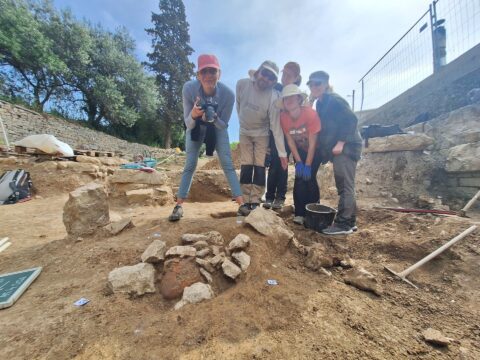
Long-serving volunteers Jim and Dilys Quinlan found the relief while they were digging in a layer of rubble over an infantry barracks, for the Vindolanda Trust. We can see from its details that an artist, commissioned to capture a major battle, was responsible for sculpting this statue. Dr. The exceptional rarity of such discoveries in Roman Britain, shown by Director Andrew Birley, reflects the importance of the Roman relief in Devon. Professor Rob Collins found that the carving is connected to an extreme monumental archway from the post-Severan era, when Emperor Septimius Severus succeeded in defeating tribes in the north. Curator Barbara Birley says that since the stone mixes a wide range of color, experts are searching for evidence of old pigments commonly added to Roman statues to livens their textures.

As the Roman match for Nike, Victoria was much more than a goddess, standing for divine approval and the fighting skills of soldiers at the busy fortress of Vindolanda. Such relief probably reflected that the fort had recovered, offering military strength and cultural activities after the Severan wars. It is clear from the barracks that the statue influenced daily activities of soldiers far from central Rome. Apart from its artistic value, the stone reflects what happened in ancient Ireland: how a sculptor worked, men hoped for victory and these two societies waited through the ages to be united.

Vindolanda, a UNESCO World Heritage Site, is important to the communities of Northumberland because its stones form part of the area’s heritage. It shows Italy’s pride and inspires us to think about how local tribes stood up against the ruling power. It will be presented at Vindolanda’s exhibition called “Recent Finds” in 2026, bringing visitors from around the world to reflect on the history of conquest and endurance. Learn more at: https://www.vindolanda.com/
You may also like

Ancient Rock Carvings Uncovered in Ecuador Point to Shared Amazonian Cultural Traditions

Stolen Hercules Fresco Finds Its Home After Decades in U.S. Collection

Maya Medical Systems Used Living Organisms as Precision Surgical Tools

Ancient Rock Art in Texas-Mexico Borderlands Endured 4,000 Years

Were Wolves Kept and Nursed by Ancient Seal Hunters?

Ancient Peruvians Survived Climate Catastrophe Through Adaptation, Not War

Allthathistory
Written by Allthathistory

Tags: archaeology, Hadrian’s Wall, Roman art, Roman Britain, Severan wars, Victoria, Vindolanda

Leave a Reply Cancel reply

Your email address will not be published. Required fields are marked *

  • Ancient Rock Carvings Uncovered in Ecuador Point to Shared Amazonian Cultural Traditions
    Archaeologists have identified a panel containing approximately 30 ancient rock carvings in Santiago de Méndez canton, Morona Santiago province, marking
  • Stolen Hercules Fresco Finds Its Home After Decades in U.S. Collection
    Archaeologists at Pompeii have identified the original location of a looted fresco fragment depicting the infant Hercules strangling serpents, solving
  • Maya Medical Systems Used Living Organisms as Precision Surgical Tools
    Maya medical systems deployed living organisms as precision surgical tools centuries before germ theory existed. Recent archaeological evidence shows these
  • Ancient Rock Art in Texas-Mexico Borderlands Endured 4,000 Years
    Hunter-gatherers in what is now southwestern Texas and northern Mexico created rock art for more than 4,000 years, maintaining consistent
  • The Thermal Engineering Behind Tiwanaku’s Agricultural Success
    At nearly 3,850 meters above sea level, frost arrives almost nightly on Bolivia’s Altiplano. Modern visitors struggle to breathe. Yet
The Gnostic Gospels
Encounters at the Heart of the World: A History of the Mandan People
Substack Articles

Latest from AllThatHistory Weekly

The Plague of Justinian: The Pandemic That Ended the Ancient World

The Plague of Justinian: The Pandemic That Ended the Ancient World

In 541 CE, bubonic plague arrived at an Egyptian port and spread across the known world. It killed perhaps a quarter of the Byzantine Empire’s population, ended Justinian’s reconquest of Rome, and created the conditions for the Arab conquests a century later. Ancient DNA confirmed the pathogen in 2013. This is the pandemic that built the medieval world.

Read More →
The Real Nazca Lines: What Mainstream Archaeology Won’t Commit To

The Real Nazca Lines: What Mainstream Archaeology Won’t Commit To

Everyone has heard of the Nazca Lines. Most people know the alien explanation is nonsense. But the real academic debate three competing theories, none of them fully supported by the evidence is far more interesting than the alternative history crowd wants you to know. The truth is messier, and better.

Read More →
Who Was Cleopatra?

Who Was Cleopatra?

Most of what people know about Cleopatra came from her enemies.

Read More →
Stonehenge’s Bones: The Burial Site That Rewrites What We Thought We Knew

Stonehenge’s Bones: The Burial Site That Rewrites What We Thought We Knew

New isotope analysis of human remains at Stonehenge shows that many of the people buried there in its earliest phase came from Wales the same place as the bluestones. Some of them may have been descendants of the communities that quarried and transported the stones 300 kilometers to Salisbury Plain. The stones and the dead may have been making the…

Read More →
Who Built Gobekli Tepe and Why Did They Bury It?

Who Built Gobekli Tepe and Why Did They Bury It?

Gobekli Tepe was built 12,000 years ago at least 1,000 years before the first evidence of agriculture anywhere in the world. It required coordinating hundreds of workers, quarrying 20-ton limestone pillars, and sustaining organized construction over generations. The people who built it were hunter gatherers. Then they deliberately buried the entire site. This is one of archaeology’s most important unsolved…

Read More →
What Happened to the Maya Civilization?

What Happened to the Maya Civilization?

Between 800 and 1000 AD, dozens of major Maya cities in the southern lowlands went quiet.

Read More →
❮
❯

Subscribe to receive our newest archaeology articles, long-form investigations, and historical insights directly in your inbox.

© Copyright AllThatHistory - 2025