
Skip to content
  • Home
  • Articles
    • Archaeology & Discoveries
    • Historical Events
    • Artifacts & Treasures
    • Ancient Civilizations
    • Unexplained Phenomena
    • Mythology
  • Subscribe
© Copyright AllThatHistory - 2025
Theme by ThemeinProgress
Proudly powered by WordPress
  • Home
  • Articles
    • Archaeology & Discoveries
    • Historical Events
    • Artifacts & Treasures
    • Ancient Civilizations
    • Unexplained Phenomena
    • Mythology
  • Subscribe
AllThatHistory
  • You are here :
  • Home
  • Archaeology & Discoveries
  • Ireland Ice Age Cave Art May Rewrite the Island’s First Human Story
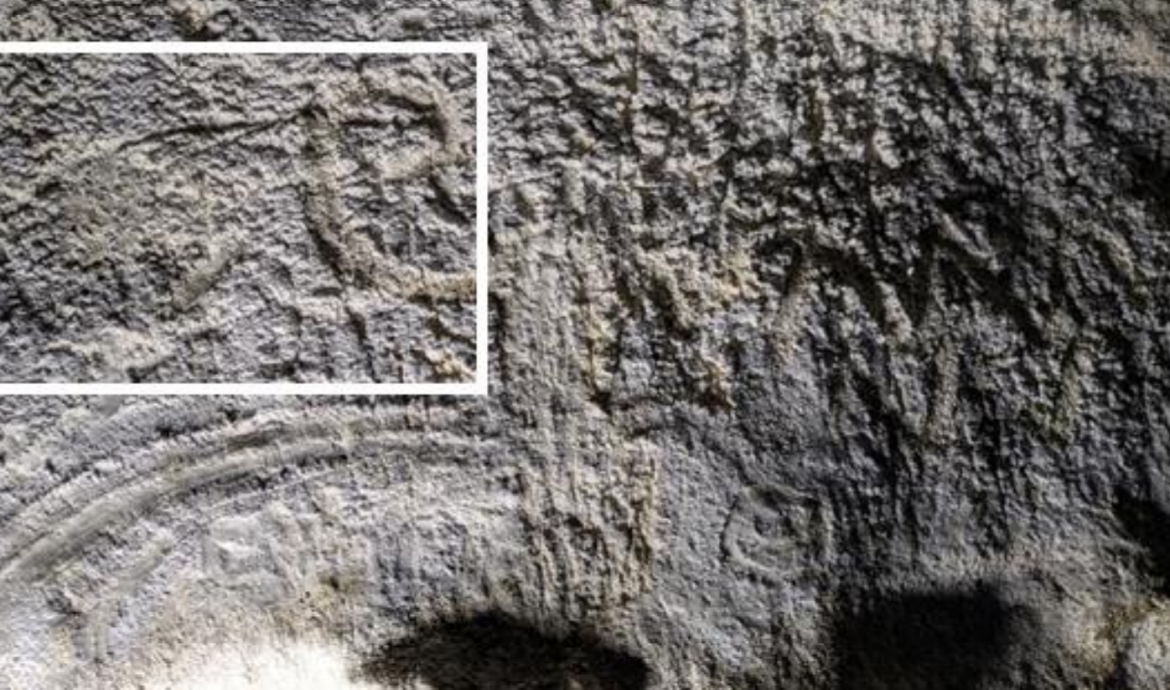
mammoth cave-wall image SW Ireland
Archaeology & Discoveries

Ireland Ice Age Cave Art May Rewrite the Island’s First Human Story

Allthathistory September 7, 2026

Researchers with the Lost Land Bridge Project say they have identified prehistoric rock art in eight caves in south-west Ireland that may date to at least about 15,000 years ago — roughly 5,000 years earlier than the previous oldest widely cited evidence for humans on the island, around 10,500 years ago. That timeline is provisional until the art is scientifically dated.

Coverage of the work appeared in recent days via the BBC and The Debrief.

The project is coordinated by Dr George Nash of the University of Liverpool, working with Genevieve von Petzinger and Barbara Oosterwijk and a multi-disciplinary team that includes colleagues linked to University College Dublin and the University of Adelaide, with caving specialist Shane Diffily and digital mapping consultant Darren Lee.

The team’s working model is an Ice Age “lost land bridge” between modern Pembrokeshire in Wales and the south-east tip of Ireland near Rosslare — about 46 miles (76 km) coast to coast when sea levels were lower. Nash argues hunter-gatherers following herds on that plateau would have been hard-pressed to ignore the route. He and colleagues note that south Wales caves were inhabited tens of thousands of years earlier, and that Ireland’s sparse early record may reflect where archaeologists looked, not where people never went.
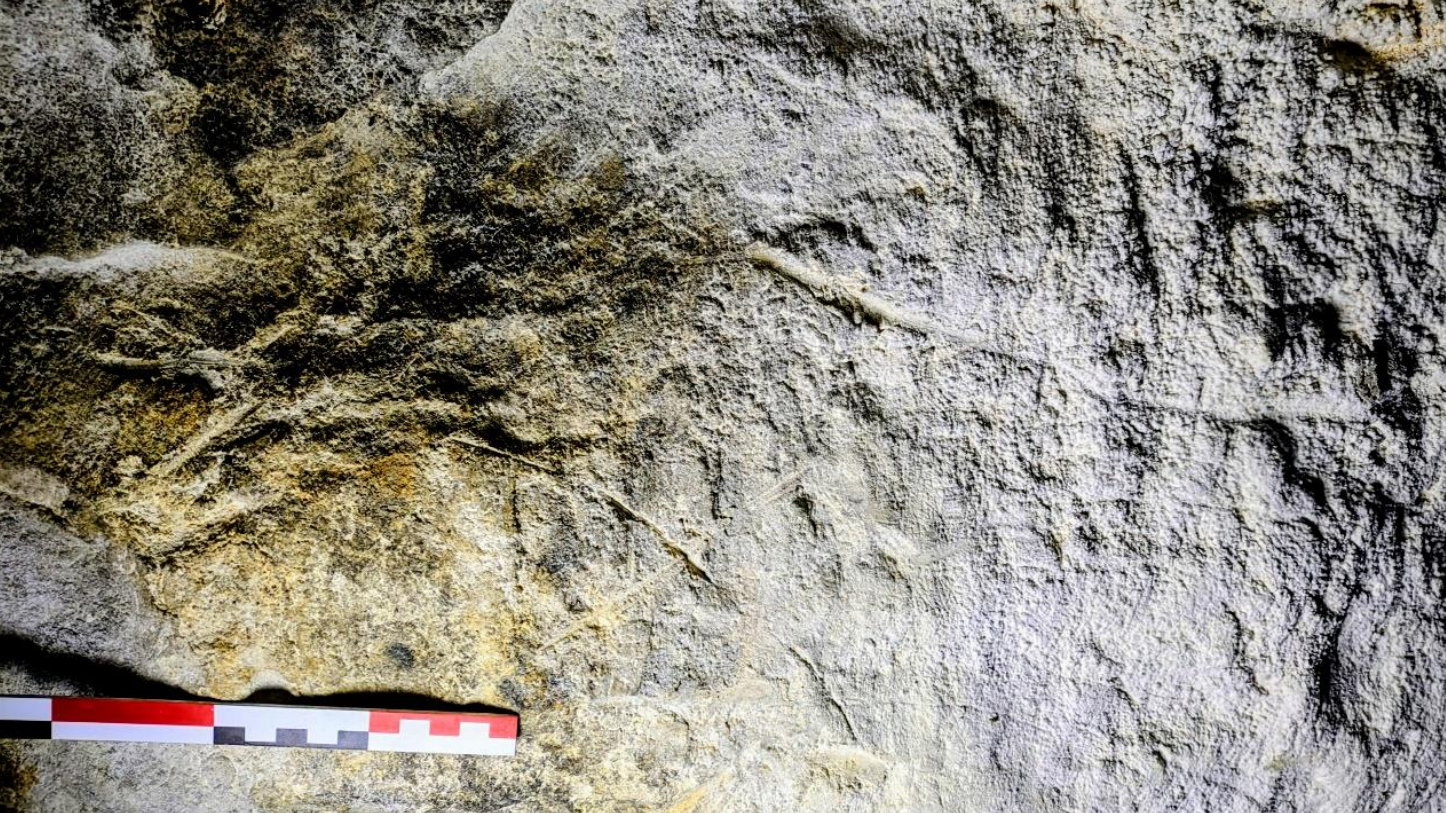
deer/cervid engraving
Rock art from a south-west Ireland cave recorded by the Lost Land Bridge Project. Exact site locations are withheld. Credit: George Nash / Lost Land Bridge Project, via BBC. Source
Read moreThe Cave of Hebron: Tomb of the Patriarchs?

Using characteristics of known cave dwellings in south Wales, the team fed a computer model that returned about 28 candidate caves in south-west Ireland. Investigations found rock art in eight of them: engravings, ochre and charcoal markings, and finger flutings in soft clay or earth. Reported imagery includes the front quarters of a cervid (deer) and what appears to be a mammoth. Exact cave locations remain unpublished to reduce vandalism and looting risk.

Nash and colleagues stress that reliable dating is the next step. If the ages hold, the finds would push back Ireland’s earliest known human presence by several millennia and strengthen the case for Ice Age movement from Wales across a landscape now under the Irish Sea. The team also expects more sites along likely routes through counties such as Wexford, Waterford and Cork.

You may also like

Old Kingdom Tomb of Royal Chamberlain Unearthed at Saqqara

Stone Age burial with 42-tooth necklace found near Żórawina, Poland

Roman private bath found inside palace tower at Vrelo–Šarkamen

Ancient Rock Carvings Uncovered in Ecuador Point to Shared Amazonian Cultural Traditions

Stolen Hercules Fresco Finds Its Home After Decades in U.S. Collection

Maya Medical Systems Used Living Organisms as Precision Surgical Tools

Allthathistory
Written by Allthathistory

Tags: archaeology, cave art, Ice Age, Ireland

Leave a Reply Cancel reply

Your email address will not be published. Required fields are marked *

  • Ireland Ice Age Cave Art May Rewrite the Island’s First Human Story
    Researchers with the Lost Land Bridge Project say they have identified prehistoric rock art in eight caves in south-west Ireland
  • Old Kingdom Tomb of Royal Chamberlain Unearthed at Saqqara
    An Egyptian archaeological mission has uncovered the tomb of Sekhentio-Ptah, a high-ranking official whose titles included Royal Chamberlain, Overseer of
  • Stone Age burial with 42-tooth necklace found near Żórawina, Poland
    Archaeologists digging a Roman-period cemetery near Żórawina in southwestern Poland have uncovered a much older burial: an adult man laid
  • Roman private bath found inside palace tower at Vrelo–Šarkamen
    Archaeologists excavating the fortified imperialRoman private bath found inside palace tower at Vrelo–Šarkamen residence at Vrelo–Šarkamen in eastern Serbia have
  • Ancient Rock Carvings Uncovered in Ecuador Point to Shared Amazonian Cultural Traditions
    Archaeologists have identified a panel containing approximately 30 ancient rock carvings in Santiago de Méndez canton, Morona Santiago province, marking
The Gnostic Gospels
Encounters at the Heart of the World: A History of the Mandan People
Substack Articles

Latest from AllThatHistory Weekly

Is the Shroud of Turin Real, or a Medieval Forgery?

Is the Shroud of Turin Real, or a Medieval Forgery?

Lab tests and believers have been arguing over one linen cloth for almost 40 years.

Read More →
The 1957 Flu Killed 116,000 Americans, and Most People Have Never Heard of It

The 1957 Flu Killed 116,000 Americans, and Most People Have Never Heard of It

A fast vaccine response may be exactly why it disappeared from memory.

Read More →
The Inscription That Reveals How Christianity Closed Down Its Biggest Rival Religion

The Inscription That Reveals How Christianity Closed Down Its Biggest Rival Religion

A newly deciphered Aramaic text found in a Turkish desert fortress documents the exact moment one of Rome’s most popular cults was shut down for good.

Read More →
Was King Arthur a Real Person?

Was King Arthur a Real Person?

Camelot and Excalibur came centuries later. Historians are still arguing over what, if anything, came first.

Read More →
The Women Pharaohs History Keeps Forgetting

The Women Pharaohs History Keeps Forgetting

Everyone knows Hatshepsut and Cleopatra. But Egypt had other female pharaohs that history keeps glossing over including possibly the very first ruler of unified Egypt, a woman whose tomb was larger than the first pharaoh’s. The pattern of female rule appearing in succession crises, followed by deliberate erasure, runs through 3,000 years of Egyptian history.

Read More →
Three Different Human Species Were Living Side by Side, and Nobody Told the Textbooks

Three Different Human Species Were Living Side by Side, and Nobody Told the Textbooks

A small-brained cousin, early Homo sapiens, and a genetic ghost population may have shared the same landscape for tens of thousands of years.

Read More →
❮
❯

Subscribe to receive our newest archaeology articles, long-form investigations, and historical insights directly in your inbox.

© Copyright AllThatHistory - 2025