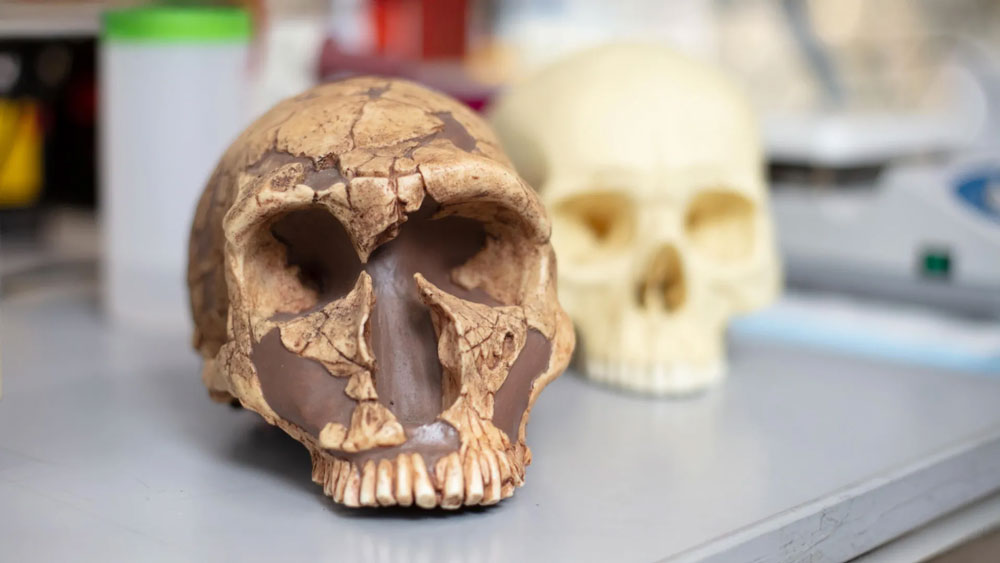
Ancient humans and their extinct relatives were exposed to toxic lead for nearly two million years, and this environmental stressor may have shaped the evolution of language and brain development in ways that gave modern humans a decisive advantage. A new study published October 15, 2025, in Science Advances reveals that a single genetic mutation protected Homo sapiens from lead’s neurotoxic effects while Neanderthals remained vulnerable. An international research team led by Alysson Muotri from the University of California San Diego and colleagues analyzed 51 fossilized teeth from modern humans, Neanderthals, extinct human ancestors like Australopithecus africanus, and ancient great apes including Gigantopithecus blacki. The specimens, spanning 100,000 to 1.8 million years ago, came from sites across Africa, Asia, and Europe. Using high-precision laser ablation geochemistry, scientists detected lead in 73 percent of the samples, including 71 percent of modern and archaic human teeth. The findings overturn assumptions that harmful lead exposure began only with Roman plumbing or industrial pollution. Tooth enamel records environmental exposure in growth layers similar to tree rings, capturing episodes of contact with the metal during childhood development. Surprisingly, prehistoric teeth showed lead exposure patterns comparable to individuals born between the 1940s and 1970s, when leaded gasoline and paint contaminated modern environments. Unlike industrial contamination, prehistoric lead came from natural sources. Volcanic dust, mineral-rich groundwater in caves, and soil containing lead deposits exposed ancient populations episodically throughout their lives. The research team hypothesizes that caves played a central role in this exposure. “One possibility is that they were looking for caves with running water inside,” said Muotri, professor of pediatrics and cellular and molecular medicine at UC San Diego School of Medicine. “Caves contain lead, so they were all contaminated. Based on the tooth enamel studies, it started very early in infancy.” Gigantopithecus blacki fossils dating back 1.8 million years showed the most frequent acute lead exposure among all specimens examined. This giant extinct ape sought shelter and water in cave systems where mineralized rocks leached lead into water sources. The banded patterns in tooth enamel reveal that exposure was episodic rather than continuous, reflecting seasonal searches for water and migrations through geologically diverse terrain. Lead severely impairs developing brains, causing deficits in cognition, emotional regulation, and communication. These effects raise a critical question: how did modern human brains flourish despite chronic lead exposure during evolution while Neanderthals and other relatives disappeared? The answer appears to lie in a gene called NOVA1, which regulates brain development and neural communication. This master regulator of neurodevelopment controls how neural progenitor cells respond to environmental stressors. Most modern humans carry a variant of NOVA1 that differs by just one DNA base pair from the ancestral version present in Neanderthals and Denisovans. Previous work by Muotri’s team showed that replacing the human NOVA1 variant with the archaic version in laboratory-grown brain organoids caused significant changes to neural architecture and synaptic connectivity. The archaic variant accelerated early brain maturation but resulted in less network complexity over time. “If all humans have this newer mutation in all corners of the world, very strong genetic pressure must have selected for it in our species,” Muotri explained. To test whether lead exposure influenced this selection, researchers created brain organoids with both human and archaic NOVA1 variants and exposed them to lead. They compared the development of cortical and thalamic neurons in both groups. The results proved striking. Lead exposure altered NOVA1 expression in both variants, affecting genes linked to neurodevelopmental disorders including autism and epilepsy. However, only the archaic NOVA1 variant disrupted expression of FOXP2, a gene essential for speech and language development. People with certain FOXP2 mutations cannot produce sophisticated language. “These type of neurons related to complex language are susceptible to death in the archaic version of NOVA1,” Muotri noted. “The FOXP2 gene is identical between us and the Neanderthals, but it’s how the gene is regulated by NOVA1 that likely contributes to language differences.” Organoids carrying the modern human NOVA1 variant maintained healthy brain cell growth under lead exposure, while those with the archaic variant experienced developmental disruptions. This genetic advantage may have allowed language and complex communication to flourish in Homo sapiens despite environmental contamination. The timing matters. Early Maya lunar observations date back to at least 361 CE, meaning populations had accumulated sufficient data within a century to calibrate predictive systems. Similarly, if the NOVA1 mutation emerged early in human evolution, each generation would have benefited from slightly better protection against episodic lead exposure during critical periods of brain development. Enhanced communication likely improved social cohesion, cooperation, and cultural transmission in modern human populations. These advantages helped Homo sapiens survive environmental stress and spread globally while Neanderthal populations declined. “Language is such an important advantage, it’s transformational, it is our superpower,” said Muotri. “Because we have language, we are able to organize society and exchange ideas, allowing us to coordinate large movements. There is no evidence that Neanderthals could do that. They might have had abstract thinking, but they could not translate that to each other.” Archaeological evidence shows Neanderthals possessed sophisticated tool-making skills, used pigments, and engaged in potential symbolic behavior. The new hypothesis shifts focus from cognitive capacity to neural network resilience under real environmental pressures. If modern humans possessed regulatory protection against lead, even slight differences in communication efficiency could have become crucial during social competition, territorial expansion, and knowledge exchange across greater distances. Muotri speculates that lead exposure may have contributed to Neanderthal extinction approximately 40,000 years ago, though he emphasizes the hypothesis requires further testing. The study relies on experimental evidence from organoids and chemical analysis of fossils rather than actual ancient DNA, which rarely preserves well enough for detailed genetic analysis. The research has implications beyond evolutionary history. Understanding how NOVA1 variants modulate sensitivity to environmental toxins could inform preventive strategies in communities where lead persists in aging infrastructure. The findings also illuminate neurological conditions related to language development, including speech apraxia and autism spectrum disorders. The convergence of tooth enamel analysis
Early Humans Remained Prey to Leopards Longer Than Scientists Believed
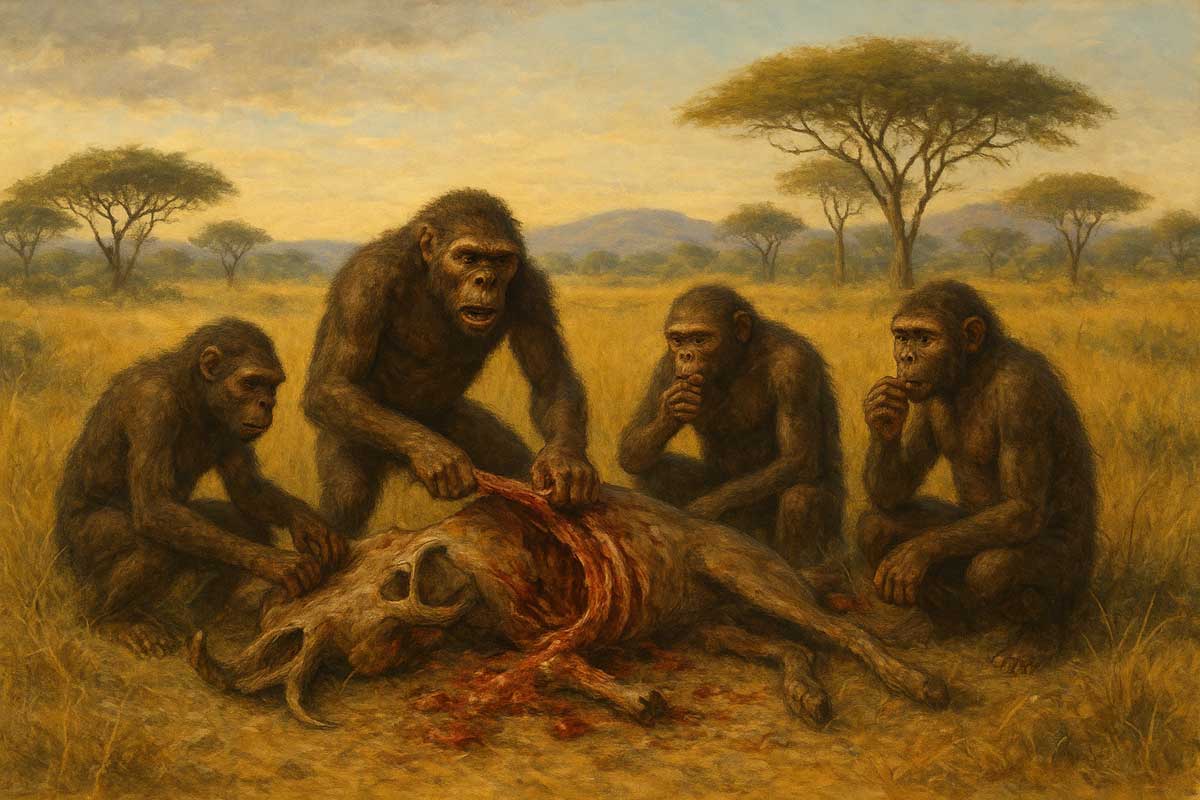
Scientists have long believed that early humans conquered the food chain approximately 2 million years ago in East Africa. New evidence suggests this evolutionary milestone may have occurred much later than previously thought. Fresh analysis of fossilized remains challenges the established narrative about Homo habilis, revealing that these ancient hominins likely fell victim to leopard attacks rather than dominating as apex predators. The discovery fundamentally reshapes our understanding of when humans first gained the upper hand against dangerous carnivores. Homo habilis earned recognition as potentially the first true human species among anthropologists. These hominins crafted the earliest known stone implements, called the Oldowan Toolkit, within Tanzania’s famous Olduvai Gorge. Archaeological evidence from the same location indicates prehistoric humans began processing animal carcasses left behind by large predators like big cats. This butchery evidence previously supported theories that H. habilis possessed sufficient defensive capabilities to ward off carnivores while simultaneously stealing their kills. Earlier hominin species including Paranthropus and various Australopithecines definitely served as prey for leopards, lions, and similar large felids throughout this period. Researchers conducted detailed reexamination of two H. habilis specimens recovered from Olduvai Gorge. Both fossils display clear evidence of animal bite damage, including the 1.85-million-year-old holotype specimen that serves as the defining example for the entire species’ physical characteristics. Earlier interpretations attributed these markings to hyena scavenging behavior on already deceased hominin bodies. Advanced artificial intelligence analysis now contradicts this explanation. The technology identified leopard tooth patterns with greater than 90 percent accuracy, indicating active predation rather than post-mortem scavenging. Manuel Domínguez-Rodrigo, the study’s lead author, describes how scientific perceptions have shifted dramatically. Previous research depicted H. habilis as “the first conqueror of the trophic pyramid” and successful “scavenger-hunter” capable of defending against carnivorous threats. The new findings paint a starkly different picture. Both analyzed specimens suffered leopard predation identical to patterns observed in earlier Australopithecine remains. These results effectively challenge H. habilis‘s elevated status within early human evolution. If both individuals represent typical examples from the broader H. habilis population at Olduvai, their shared predation experience reveals this species’ fundamental inability to handle threats from medium-sized carnivores like leopards. The implications extend far beyond individual cases. “The implications of this are major, since it shows that H. habilis was still more of a prey than a predator,” the research team concluded. This revelation essentially demotes the species from its previously assumed position as humanity’s first apex predator. The study raises critical questions about which human ancestor actually achieved dominance over dangerous carnivores. Homo erectus emerges as the most likely candidate for this evolutionary breakthrough. This species coexisted with H. habilis but demonstrated superior terrestrial adaptations compared to their more arboreal relatives. H. erectus populations spent significantly more time on open ground rather than seeking safety in trees. Their enhanced terrestrial lifestyle may have provided better opportunities to develop effective anti-predator strategies and successful competition for carnivore kills. Domínguez-Rodrigo emphasizes the dramatic reassessment required by these findings. Rather than representing humanity’s first step toward food chain dominance, H. habilis appears to have remained vulnerable to the same predatory pressures that threatened earlier hominin species. The research appears in the Annals of the New York Academy of Sciences, contributing crucial data to ongoing debates about early human survival strategies. These results suggest the transition from prey to predator occurred later in human evolution than previously assumed. Featured image: Leopard tooth marks were found on this Homo habilis jawbone. Image credit: Vegara-Riquelme et al., Annals of the New York Academy of Sciences (2025)
Century-Old Swiss Lung Unlocks Spanish Flu Virus’s Secrets
In a dusty archive at the University of Zürich, a Swiss teenage victim’s preserved lung dating back to the 1918 Spanish Flu has spilled genetic secrets on one of history’s deadliest diseases. Swiss researchers (spearheaded by paleogeneticist Verena Schünemann at the University of Basel) managed to sequence the full genome of the 1918 flu virus using a clever new RNA recovery technique. This research in turn has expanded our understanding on how viruses evolve, and how we could prepare for future pandemic challenges—connecting a century-old tragedy to the challenges we face today. A Flashback into the “Spanish Flu” Virus Horror Though the 1918-1920 influenza pandemic has been known throughout history as the “Spanish Flu”, the naming is rather inaccurate since the virus may not even have started in Spain. Nonetheless, the pandemic was a world-spanning catastrophe. This virus has taken the lives of 20 to 100 million people; more so than World War I—which was happening at the same time. Unlike today’s flu which often hits the elderly hardest, the Spanish Flu claimed the lives of healthy young adults in just a matter of days. The pandemic’s origins are still a bit of a mystery. Some historians theorized it started in the USA, with the first recorded case taking place in Kansas. Meanwhile, other historians speculate that the virus has its genesis in Asia, carried over to the USA or in France by Vietnamese or Chinese laborers. Wherever its origins are, the result was an impactful tragedy that wrecked many diverse communities on an epic scale. The Spanish Flu’s first wave struck Switzerland during July 1918. During this timeframe, the pandemic killed thousands of lives in the country. Among the victims includes an 18-year-old from Zürich whose lung tissue would later become a scientific breakthrough in the present day. Tucked away in a formalin-filled jar at the University of Zürich’s Institute of Evolutionary Medicine, the teenager’s lung sample held a snapshot of the virus at the pandemic’s start. Schünemann’s team (an ensemble crew of researchers from Basel and Zürich) painstakingly pulled out the virus’s genetic material. This marks the first time anyone’s sequenced a 1918 flu virus genome from a Swiss sample; showing us how the virus tweaked itself to wreak havoc in Europe. By comparing it to samples from Germany and North America, they pieced together how this bug became so efficient at infecting humans. Here’s the most creepy part: the infection process back then is similar to what we’ve seen in modern pandemics. What Made the 1918 Spanish Flu Virus So Deadly? The 1918 virus was a master of destruction thanks to a few genetic tricks up its sleeves. The Swiss team spotted three notable mutations in the Zürich sample that turned it from a run-of-the-mill flu into a human-adapted nightmare. Two of these changes helped the virus slip past the body’s immune defenses by specifically dodging interferons—those proteins that act like the body’s first responders against viruses. This lets the virus leap from animals to humans more easily, a trait we’ve seen in later pandemics like the H5N1 bird flu. The third mutation souped up the virus’s hemagglutinin (HA) protein that works like a skeleton key to unlock human cells. This tweak made the virus stickier and more infectious in the respiratory tract. Here’s the kicker: these mutations were already in play by July 1918 during the pandemic’s first wave, and they stuck around through its deadlier second and third waves. If so, this means that the virus was already pre-wired for humans early on. Corresponding with earlier studies of North American samples (Taubenberger et al., 2005). By cross-checking the Swiss genome with sequences from victims in Berlin and Alaska, the team confirmed these mutations were indeed widespread. It’s no wonder the 1918 flu spread like a raging wildfire. So much so that the virus was able to overwhelm hospitals and morgues across continents. Ancient RNA’s Secrets “Ancient RNA is only preserved over long periods under very specific conditions. That’s why we developed a new method to improve our ability to recover ancient RNA fragments from such specimens.“ — Christian Urban, the first author of this study from the University of Zürich. Pulling genetic material from a 100-year-old sample is no mere cakewalk. Influenza viruses use RNA, which is notorious for being fragile compared to DNA…and falls apart quickly. Formalin preservation is great for keeping tissue intact, but the downside is that it often breaks RNA into tiny unreadable bits. The Swiss team, however—including first author Christian Urban from the University of Zürich—came up with a nifty new method to salvage and verify these RNA scraps. This lets them rebuild the virus’s full genome with impressive accuracy. Past efforts, such as sequencing the 1918 virus from frozen Alaskan bodies (Reid et al., 2000), needed near-perfect samples. This time, however, the Swiss team’s technique opens the door to studying RNA viruses in more common formalin-fixed specimens; which are sitting in medical archives all over the world. Working together with the Berlin Museum of Medical History at Charité gave the team access to more samples which makes their findings even richer. Prepping for Future Pandemics “Medical collections are an invaluable archive for reconstructing ancient RNA virus genomes.” — Frank Rühli, head of the University of Zürich’s Institute of Evolutionary Medicine, and co-author of this study. The 1918 flu exposed how unprepared the world was for a viral onslaught. Back then there were no preparations for vaccines nor antivirals. Just hope and makeshift hospitals. Today—with viruses like SARS-CoV-2 and H5N1 looming—understanding how past pathogens evolved is more important than ever. This Swiss study gives us a playbook for tracking viral mutations, and showing how a few genetic tweaks can turn a mild bug into a global menace. By combining genetic data together with historical records, the Swiss team is building tools to predict future pandemics. Their blend of paleogenetics, epidemiology and history offers a clearer structure for forecasting how viruses (especially of the RNA type) might evolve or mutate
A Time When Giant Monkeys Haunted Our Early Ancestors
In Earth’s grand evolutionary tale, some creatures influenced the lives of our ancestors by sharing their environments, rather than contributing to their direct lineage. On top of that, these creatures may have posed immense hazards to our primeval ancestors. Among them is Dinopithecus, the “terrible baboon.” This extinct supersized primate once roamed the landscapes of prehistoric Africa, living nearby early hominins and leaving behind traces of its existence through fossil records. A Colossus Amongst Primates Dinopithecus ingens thrived from the late Pliocene into the early Pleistocene—roughly between 2.6 and 1.5 million years ago. Its fossils, found in South African sites like Sterkfontein and Swartkrans, reveal an impressive creature. Male Dinopithecus likely weighed between 77 to 100 kilograms (170–220 lbs), standing up to 1.5 meters (5 feet) tal., making them far larger than modern baboons. Female Dinopithecus meanwhile reached about 4 feet (approx. 1.22 meters) tall and averaging at about 64 lbs (29 kg). Their robust skulls and powerful jaws suggest an omnivorous diet consisting of fruits, seeds, tubers… and occasionally other animals. While no complete skeleton has been unearthed as of June 2025, scientists have inferred much about Dinopithecus through skull fragments and isotopic analyses of its teeth, which highlight its dietary preferences and ecological adaptability. Life and Habitat Dinopithecus once thrived in mosaic habitats such as woodland savannas and river valleys—rich environments teeming with life but also dangerous inhabitants. It coexisted with other carnivores such as sabre-toothed cats and giant hyenas as well as large crocodiles, all of which could have been a significant threat despite the baboon’s extra large size. Similar to modern baboons, Dinopithecus may have lived in large groups, relying on vigilance and cooperation for survival. However, direct evidence of its social structure remains unknown as of June 2025. Interactions with Early Hominins It is known that Dinopithecus shared a prehistoric environment with early hominins such as Australopithecus and Paranthropus. Fossils from both groups have been found in close proximity, indicating overlapping ecological niches. While Dinopithecus may have competed with hominins for resources like shelter and food, claims of predatory behavior still remain speculative and unsupported by fossil evidence as of June 2025. Modern baboons, however, are known to be opportunistic hunters and would prey on antelope and even other primates when given a chance. Under duress or food scarcity, what’s to stop a prehistoric ginormous baboon from exhibiting similar behaviors? Furthermore, the babies or the injured of our ancestors would be easy pickings for a starving Dinopithecus. As a result, present-day baboons provide useful comparisons for understanding the prehistoric African landscape and primate behavior. In addition, the colossal baboon’s formidable presence may reflect evolutionary pressures influencing both hominins and other primates. Lessons from Evolution Dinopithecus was not an ancestor of Homo but shared traits that highlight survival strategies common to many primates. Its dietary flexibility, predator awareness, and physical prowess exemplify adaptations to changing ecosystems. Its extinction likely resulted from competition with smaller, more adaptable primates. This reinforces a recurring theme in evolution: adaptability often outweighs sheer strength in determining survival. Final Reflections Dinopithecus was an incredible primate—a towering beast of its time period. While it left no living descendants, its fossils continue to shed light on prehistoric ecosystems and the challenges faced by early humans. The story of this prehistoric mega baboon remains a powerful reminder of nature’s balance, where survival is dictated not only by power, but by the ability to adapt. Header Image: Mouth of a mandrill – the modern world’s largest monkey. By Belgianchocolate. Source: CC BY 4.0
Rewriting Human Evolution: Not One Lineage of Man, but Two?
A new study from a team of researchers at the University of Cambridge has upended centuries of theory as to the origins and evolution of… us. We are not who we thought we were, it seems. Previously the longstanding scientific consensus was that Homo sapiens was one of a family of human and near-human species who evolved together in a series of branching parallels. However all the other human species died out in prehistory, leaving us as the sole survivor of a larger family. Scientists were also pretty sure that we originally evolved in Africa, maybe 300,000 years ago, before spreading across the globe: up into Europe and Asia, then eastwards into south east Asia and Australasia before crossing the frozen wastes of the Bering Sea and, finally, colonizing America. But this part of the story appears to be wrong. Or, at least, incomplete. The new study, published in Nature Genetics, totally changes the picture of this earliest point in our shared history. According to the study, we do not descend from a single lineage in Africa, but from at least two distinct populations which had been separated genetically for more than a million years. A million years is a long time (nothing but the facts from All That History!) and unique species have evolved in much shorter time periods: ourselves for example, given we have only really been around as a recognizable species for a small fraction of that time. Does this mean we come from a co-mingling of two distinct species which evolved in isolation? The answer is “kind of” mixed with a touch of “we already knew that” which at first seems unhelpful. We have existing evidence that we are a mix of species from known earlier interactions, interbreeding and genetic mingling with other species, cousins to humans. This mixing, most notably with the Neanderthals of Europe and the Denisovans of Asia, occurred some 50,000 years ago. But this new study talks of another, much wider intermingling of genes way before any of this, some 300,000 years ago. Nor is it a mere smattering of genetic traits (neanderthal DNA tops out at around 2% of modern genetic makeup in any individual): this errant population which joined with ancient proto-humans contributed as much as a fifth of modern genes. The team adopted a top-down approach to their study, using modern DNA analysis to infer ancient populations which otherwise have been completely lost without a trace. Data from a large and wide-ranging sample of human DNA was assessed using a computational algorithm known as “cobraa” and the results give us our clearest ever view of our most ancient history. According to the results, the human population split millions of years ago, the two populations dividing and becoming geographically remote from each other. One of the populations then suffered some sort of catastrophe of unknown origin, which almost wiped them out. This devastated population was a long time coming back from this, growing slowly over the next million years. It was these people, with their genetic bottleneck, who are the 80% ancestors of Homo sapiens, as well as the forefathers of the Neanderthals and Denisovans. The other population may only have contributed a smaller portion of our modern genes, but their contributions are among the most important genetic traits we have and are essential to what makes us, conceptually, human. The genes related to neural functions and the processing of information, literally how we think, came from this smaller population. So, who were these mysterious other humans, who gave us the power to think for ourselves? Well, we have a fair few candidates from around the time, proto humans who could be this unknown second population. But they could just as easily have been lost forever, all evidence gone except this new reconstruction. All we can say for now is that evolution, and in this case human evolution, is one of interbreeding, mingling of genetic traits, and that we came from a melting pot, not some elevated lineage. We are not special, we are everyone. Header Image: We are not one, but many. New research shows an 80/20 split in our genes from two distinct proto-human lineages, millions of years ago. Source: Sérgio Valle Duarte / CC BY 3.0.
New Evidence Shows We Lived in Ancient Rainforests 150,000 Years Ago
For much of human history rainforests have been the poster child for untouched, virgin wilderness. We only had to look at the vast trees and hidden world beneath the canopy to instantly tell that what we were looking at was wild, untouched by man. In more recent years we have come to realize that this is not true in the slightest. As our understanding of rainforest biomes grew we found that, far from being pristine, they were in fact largely influenced by nomadic tribes who crisscrossed their interiors for millennia. However rainforests, typically difficult to traverse and packed with things that bite, sting or scratch, are still largely considered barriers to the spread of early man, so long as you go far enough back into the past. There was a point, at some time, when these were too much for humans to handle, right? Well, a new study published in Nature has pushed that timeline back as far as 150,000 years, way earlier than anyone had thought. The study, of the rainforests of what is now Côte d’Ivoire, has found evidence of groups of humans cohabiting in clearings amidst the dense undergrowth at this time. This is extremely early, dating to the Middle Pleistocene before even the Stone Age. Humans only appeared in Africa some 300,000 years ago, and this relatively quick inhabitation of the rainforest suggests they were not really a barrier at all. Our previous dating for the earliest rainforest inhabitation was only 18,000 years ago in Africa, although examples which may be as old as 73,000 years are known in Asia. There was some inconclusive evidence which suggested an ancient rainforest inhabitation in Kenya, some 77,000 years old, which had been hitherto dismissed: this will clearly need to be revisited in the light of the new evidence. But this new discovery is more than just a simple reshuffling of what early man was doing back in the day. The fact that our ancient ancestors found it apparently easy and convenient to inhabit forested areas reshapes our understanding of how we hunted our prey, how we fed our communities, and how our hunter gatherer society evolved on a fundamental level. Man is evolved for long distance running, preferring to persistently chase its prey until exhaustion. But if, all these millennia ago, we were trying our luck in forests, perhaps this interpretation of who we really are, how we came to be what we are today, is wrong. Header Image: An ancestors may have been much happier living in rainforests than we thought. Source: Goodfon / Public Domain.