Vulci Tomb of the Stone Chamber: Monumental Etruscan Tomb Survives Looters
The Vulci Tomb of the Stone Chamber, a three-chamber Etruscan tomb of the late 7th century BC, held weapons, chariot parts, gold and a rare woman's shoe.

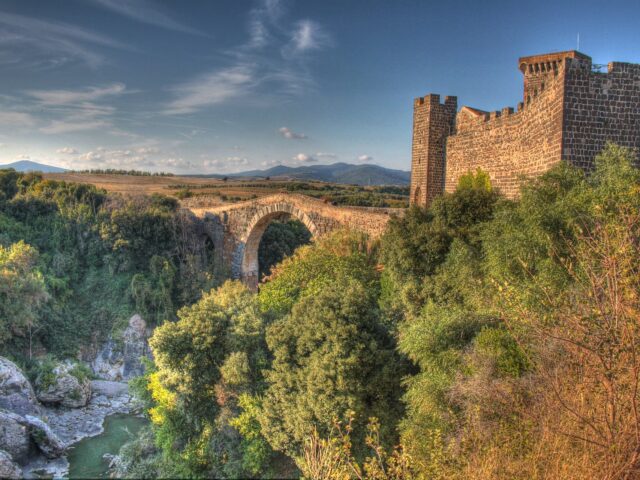
In the Polledrara necropolis of ancient Vulci, north of Rome, archaeologists have opened a monumental Etruscan tomb that repeated 20th-century looting failed to empty. The Vulci Tomb of the Stone Chamber—in Italian, the Tomba della Camera di pietra—was announced in September 2026 by the regional Soprintendenza for Viterbo and Southern Etruria. It holds three burial chambers and a rich assemblage of weapons, chariot parts, gold and bronze sheets, a banquet service, and a rare piece of women’s footwear. One of the excavators describes it as a tomb “of the very highest rank.”
The official outline comes from the Soprintendenza Archeologia, Belle Arti e Paesaggio (SABAP) statement, with English coverage from Live Science, Archaeology News Online Magazine, and Finestre sull’Arte. The work belongs to Ritorno a Vulci (“Return to Vulci”), an international project launched in 2023 under a Ministry of Culture concession and directed by Laura Maria Michetti, Alessandro Conti, and Christian Mazet. Partners include the École française de Rome, Sapienza University of Rome, the British Museum, Italian heritage bodies, and the Fondazione Vulci.
Finishing an excavation begun in 1889
The new tomb sits inside the so-called Gsell Tumulus, named for the French archaeologist Stéphane Gsell, who worked here for the École française de Rome in 1889. Gsell traced the mound’s circular enclosure but never located the main burial chamber; he halted the dig, according to later accounts, because continuing would have been too difficult and too costly. The 2026 campaign re-identified that enclosure and then uncovered a large monumental tomb within the funerary complex.
Gsell had estimated the tumulus at around 31 metres (102 feet) across and called it a “new Cuccumella,” after Vulci’s giant tumulus of roughly 70 metres. Live Science, citing an interview Mazet gave to Etruscan Times, reports that the team’s initial calculations suggest the mound may have rivalled the Cuccumella in size, or even exceeded it—an early estimate rather than a published measurement. “This is the burial. We are absolutely certain of it,” Mazet, described as a British Museum archaeologist, is quoted as saying.
A stone chamber that outlasted the looters
The Soprintendenza dates the tomb to the end of the seventh century BC—one of Vulci’s most prosperous periods and a time of intense openness to the wider Mediterranean. Live Science frames it as roughly 2,700 years old. Although the tomb suffered repeated clandestine digging during the 20th century, the internal architecture proved remarkably well preserved. The retaining walls of the main chamber are built of blocks of nenfro, the local volcanic stone, and the complex was cut into natural deposits left by the ancient course of the Fiora River.
All three burial chambers were explored in full. Collapsed roofs and chamber structures had sealed many objects beneath the debris, allowing the team to recover groups of finds and deposits still in their original positions.
Weapons, gold, and a rare woman’s shoe
The assemblage listed by the Soprintendenza is broad: Greek pottery made in Attica and Corinth, finely decorated local impasto vessels and bucchero, weapons, elements of a chariot, obeloi (metal spits for roasting meat), gold and bronze sheets, worked bone and ivory, and numerous ornaments and items of personal dress. Among them is what the statement calls a rare piece of female footwear. Live Science describes it as a rare pair of women’s shoes; the official Italian text refers to a single calzatura femminile.
For Mazet, the combination of weapons, chariot parts, gold objects, and high-quality ceramics leaves “no doubt that this is a tomb of the very highest rank,” as he told Etruscan Times. The sources do not yet identify who was buried in the chambers.
A banquet laid out in the side chambers
Some of the most striking material survived intact in the side chambers. There, a bronze tripod lay together with a lamp of alabastrine gypsum that the Soprintendenza says probably came from the area of Naucratis, in Egypt, or Rhodes. Beside it was what officials call an exceptional banquet service in the rare local class known as Polledrara Ware: phialai, olpai, hydriai, and dinoi with polychrome decoration, some still standing where they were placed. Bucchero vessels, a grater used in preparing wine, and a rare large polychrome bowl in the Ionian “Wild Goat Style” completed the set.
A new key to the Tomb of Isis
Researchers also see the find as a chance to reread older discoveries now scattered in museums. Chief among them is the famous Tomb of Isis in the British Museum, found by the Bonaparte couple in 1839 in an area near the Gsell Tumulus. According to the Soprintendenza, close chronological and cultural parallels between the two complexes should shed light on funerary ritual, artistic production, and exchange among Vulci’s elites. Study of seized and recovered objects at the Archaeological Museum of Vulci continued alongside the dig.
For now, the tomb and the tumulus enclosure have been covered over again to protect them. A new excavation campaign is planned for 2027, to be followed by study, publication, and public presentation of the results.
Sources and further reading: SABAP Viterbo and Southern Etruria (Italian); Live Science; Archaeology News Online Magazine; Finestre sull’Arte; Etruscan Times (2025 season background, Italian).