Troy’s Earliest Agora: Settlers Returned Within a Century
Archaeologists working at Hisarlık in northwestern Türkiye say a Troy agora discovery has clarified how the legendary city became later Ilion — not after centuries of…

Archaeologists working at Hisarlık in northwestern Türkiye say a Troy agora discovery has clarified how the legendary city became later Ilion — not after centuries of silence, but within a few generations of Late Bronze Age abandonment.
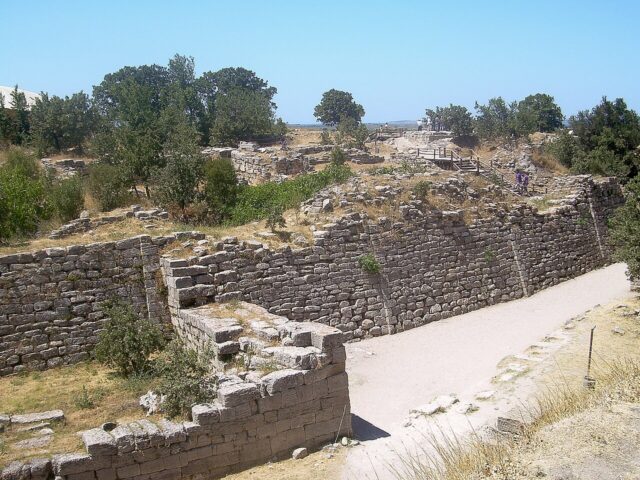
According to the Troy excavation team, the city’s earliest known agora — a public marketplace and gathering space dating to roughly 2,800 years ago, in the Early Iron Age — is coming to light in front of the southern gate of Troy VI, the citadel phase often linked in scholarship and legend to Homeric Troy. The work is authorized by Türkiye’s Ministry of Culture and Tourism and coordinated with Çanakkale Onsekiz Mart University (ÇOMÜ).
“We believe there was a marketplace, an agora, here in the Late Bronze Age,” said Prof. Reyhan Körpe, deputy head of the Troy excavations and a ÇOMÜ historian, in remarks carried by Turkish and international outlets. “This agora was revived by settlers who came here about 80 to 90 years after Bronze Age Troy was abandoned, so we can say that the place we are excavating is Troy’s oldest agora.”
That framing matters. A long-standing narrative held that the mound stood largely empty for centuries after the collapse of Late Bronze Age Troy — known in Hittite-related scholarship as Wilusa — until Aeolian Greek settlers of the Archaic world reshaped the site as Ilion. The current dig, Körpe argues, shortens that gap dramatically: newcomers appear to have returned within about 80 to 90 years, building houses over sections of the Troy VI walls and keeping the older square in use as a communal agora.
What the trench is showing
Since 2014, the team has focused on the southern-gate sector to map continuity between Bronze Age Troy and the Archaic–Classical city of Ilion. Excavators report a paved road running from the lower city toward the southern gate, an associated entrance, and architectural remains tied to the agora itself. Amphorae and other pottery fragments from the area are dated to the Early Iron Age — material culture that anchors the ~2,800-year reading of the marketplace phase now under discussion.
In Körpe’s account, some stretches of Troy VI masonry were not simply abandoned ruins but active building stock: Early Archaic houses rose on top of older wall lines, while the former marketplace continued to function for the new community. “In a sense, they ensured that Troy continued to live on as Ilion,” he said, describing settlers who knew the place once called Wilusa and named their town Ilios or Ilion.
Prof. Rüstem Aslan, head of the Troy Excavations Committee, directs the broader program. Troy has been on the UNESCO World Heritage List since 1998; the site’s deep sequence — millennia of rebuilding after fires, earthquakes, and conflict — remains one of Anatolia’s most scrutinized archaeological laboratories.
Reading “war” and abandonment carefully
Headline writers often fold the find into Homer’s Trojan War. The excavation team’s own language is more careful: Late Bronze Age Troy collapsed and was abandoned; a new population returned within roughly a human lifetime of that break. Troy VI is the horizon most often associated with the epic tradition, but the agora evidence does not, by itself, prove a Homeric siege. What it does challenge is the idea of a centuries-long empty mound before Greek Ilion.
Earlier campaigns, especially those begun by Heinrich Schliemann in the nineteenth century, damaged or removed layers that modern excavators would prefer to read in place. The post-2014 approach — smaller trenches, finer resolution — is meant to recover transitions that older, broader cuts often erased. Körpe has said work in the agora sector will continue in coming seasons so the team can better define how the public space changed from the Late Bronze Age into the Early Iron Age.
Reporting on the find circulated in mid-September 2026 through Turkish agency coverage and digests in outlets including Daily Sabah, Archaeology Magazine, and Euronews. Corroborating wire summaries, such as Xinhua, likewise stress the shortened abandonment gap and the reuse of Troy’s older public square.
For now, the picture from Hisarlık is incremental but vivid: a paved approach, Early Iron Age pottery, houses perched on Bronze Age walls, and a marketplace the excavators call Troy’s earliest agora — a hinge between Wilusa and Ilion measured in decades, not silent centuries.