Ancient Paris Wall Find May Point to Gallic Lutetia on Île de la Cité
A stretch of stone-and-wood fortification under one of Paris’s oldest hospital courtyards is forcing a fresh look at where the city’s Gallic story begins. French culture…

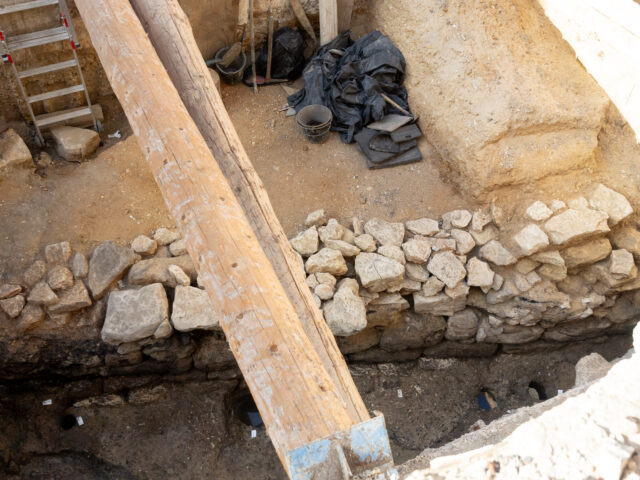
A stretch of stone-and-wood fortification under one of Paris’s oldest hospital courtyards is forcing a fresh look at where the city’s Gallic story begins. French culture officials this week described the find as a potential “major breakthrough” for understanding Lutetia—the Iron Age settlement later overwritten by Roman and medieval Paris—while stressing that key questions remain open.
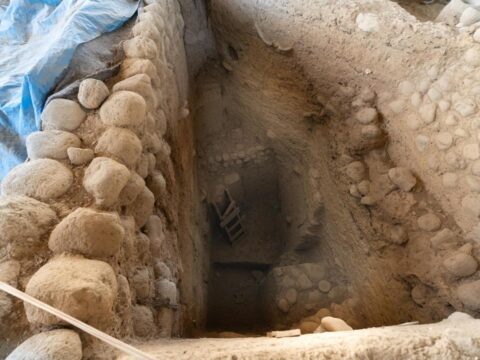
Preventive excavations in the courtyards of the Hôtel-Dieu on the Île de la Cité, a short walk from Notre-Dame, have uncovered roughly 20 meters of wall. Digs led by the City of Paris archaeology service with the national preventive archaeology institute Inrap have been underway since February, ahead of hospital rebuilding work by AP-HP. Teams say the construction technique matches late Iron Age Gallic fortifications—timber and stone rather than later Roman masonry alone.
That fabric is why researchers are treating the structure as a candidate fragment of the rampart of Parisii Lutetia. Culture Minister Catherine Pégard, in a ministry statement carried by wire services, said archaeologists “may be looking at one of the most important remains ever discovered for understanding Gallic Lutetia,” while adding that “scientific caution still requires that we verify its function and its chronology.” The ministry framed the discovery as an “avancée majeure” for the city’s origins—if the hypothesis holds.
Julius Caesar’s Gallic Wars places Lutetia on an island in the Seine, linked by bridges, and records fighting there in 52 BCE, when Gauls are said to have burned their own installations before Roman forces under Titus Labienus. The Hôtel-Dieu wall bears fire traces, and carbon dating of charred material falls in a late Iron Age window that overlaps that era. City of Paris reporting cites a range of about 200–30 BCE; the Culture Ministry communiqué, as relayed by franceinfo and The Guardian, gives about 200–10 BCE. Either way, officials caution that the science is compatible with a late Iron Age occupation and a fire episode but does not yet date the burning precisely to 52 BCE.
The geography debate is equally unfinished. The island has long been the traditional heart of early Paris, yet a serious rival theory places significant Parisii settlement at Nanterre, west of the capital. Archaeological proof of a substantial Gallic occupation on the Île de la Cité has been scarce; that is why the Paris Lutetia Gallic wall matters—and why it does not, by itself, retire the Nanterre case. Further work will test whether this stretch truly functioned as an oppidum rampart and how it relates to an artificial sand-and-gravel platform reported behind the wall.
According to the Ville de Paris, dig lead David Couturier and colleagues also recovered burned wood-building remains and carbonized seeds suggestive of storage—snapshots of a lived landscape frozen by fire. France’s territorial archaeological commission rated the discovery of exceptional importance in mid-September, freeing DRAC Île-de-France to expand resources. Wire reports add that a mold of the fragile wall is planned, with a reconstituted section—possibly including original facing stones—eyed for eventual museum display in Paris. Amphora sherds and a spearhead have also turned up as work continues.
For now, the careful reading is the honest one: a rare Gallic-style fortification under Hôtel-Dieu strengthens the island narrative for early Lutetia, sits inside a Caesar-era dating window, and shows fire damage that may echo the literary burning—yet function, precise chronology, and the Nanterre alternative all await harder proof. Paris’s origins story just got a new stone chapter; the footnotes are still being written.