Oued Beht Defensive Ditch Rewrites Morocco’s Bronze Age Map
Newly published fieldwork at Oued Beht in Khémisset Province, northwestern Morocco, has dated a multiphase Oued Beht defensive ditch, earthen embankment, and stone wall along the…

Newly published fieldwork at Oued Beht in Khémisset Province, northwestern Morocco, has dated a multiphase Oued Beht defensive ditch, earthen embankment, and stone wall along the ridge tip long known as Wall B1. Co-directors Giulio Lucarini (CNR / ISMEO), Cyprian Broodbank (University of Cambridge), and Youssef Bokbot (INSAP) report the Oued Beht Archaeological Project’s 2023 season in open-access Libyan Studies (doi:10.1017/lis.2026.10037). Coverage in Archaeology Magazine frames the complex as among the earliest known defensive systems in North Africa outside the Nile Valley.
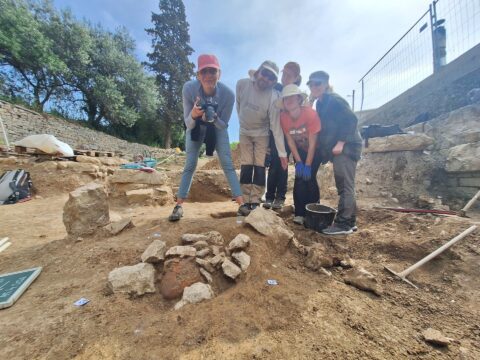
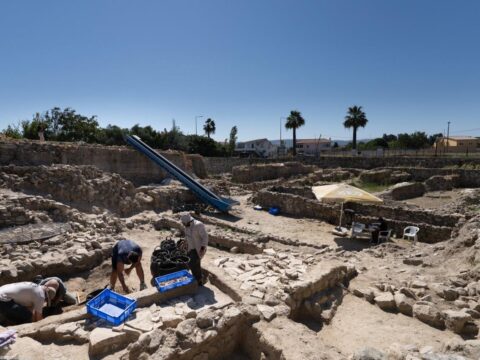
Excavation of Trench 3 separated the standing stonework from an earlier prehistoric embankment and a parallel ditch to the north, showing construction, repair, and destruction before later medieval reuse of the same alignment. Radiocarbon samples place the major prehistoric ditch–embankment–wall activity in the early to mid-second millennium BC—roughly 4,000–3,500 years ago. The authors call these the earliest such constructions confirmed in the region, while stressing that a defensive reading is plausible but not exclusive: enclosure or landscape division for other reasons cannot be ruled out.
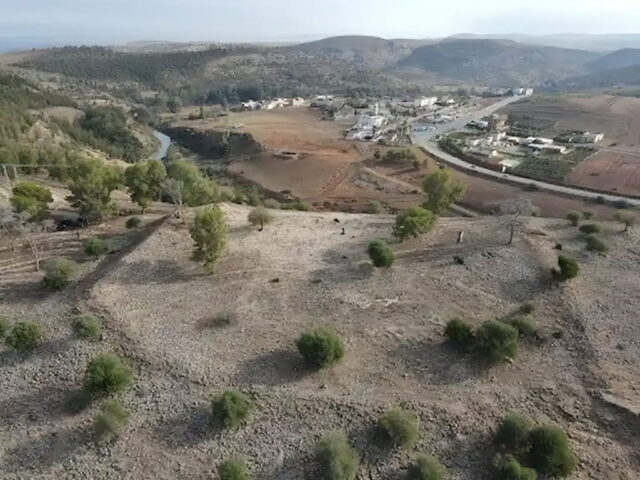
The works close off the more constricted southern tip of the ridge above the Oued Beht river, using barred-spur topography noted since 1930s surveys. Second-millennium activity concentrated toward this defendable south, distinct from the site’s better-known Final Neolithic settlement farther north—a farming horizon that remains background to this Bronze Age fortification story.
The Moroccan–Italian–UK collaboration (INSAP, CNR, ISMEO, and Cambridge) thus anchors a poorly evidenced Maghreb Bronze Age with hard dates and a clear architectural sequence, without pinning a single founding year.