3,600-Year-Old Elite Warrior Burial Unearthed at Keshikchidagh, Azerbaijan
A rare diorite mace head has emerged from a stone-covered kurgan in western Azerbaijan, pointing to a Middle Bronze Age burial dated to about 3,600 years…

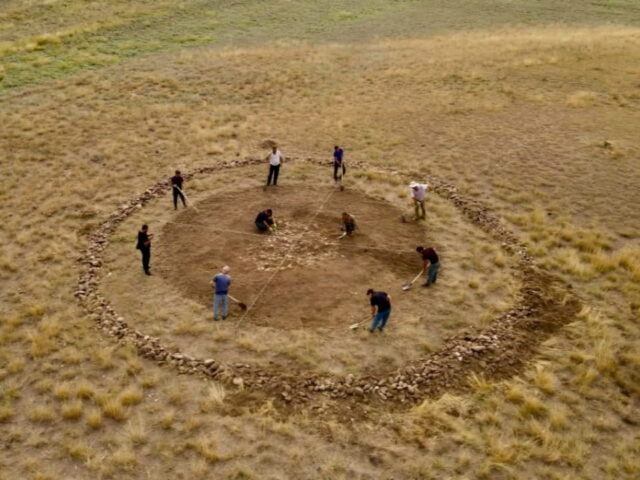
A rare diorite mace head has emerged from a stone-covered kurgan in western Azerbaijan, pointing to a Middle Bronze Age burial dated to about 3,600 years ago. The find comes from Kurgan No. 4 in the Sariyokhush area of the Keshikchidagh State Historical and Cultural Reserve, Agstafa district. Coverage from Archaeology News Online Magazine and Archaeology Wiki places the grave in the 17th–16th centuries BCE.
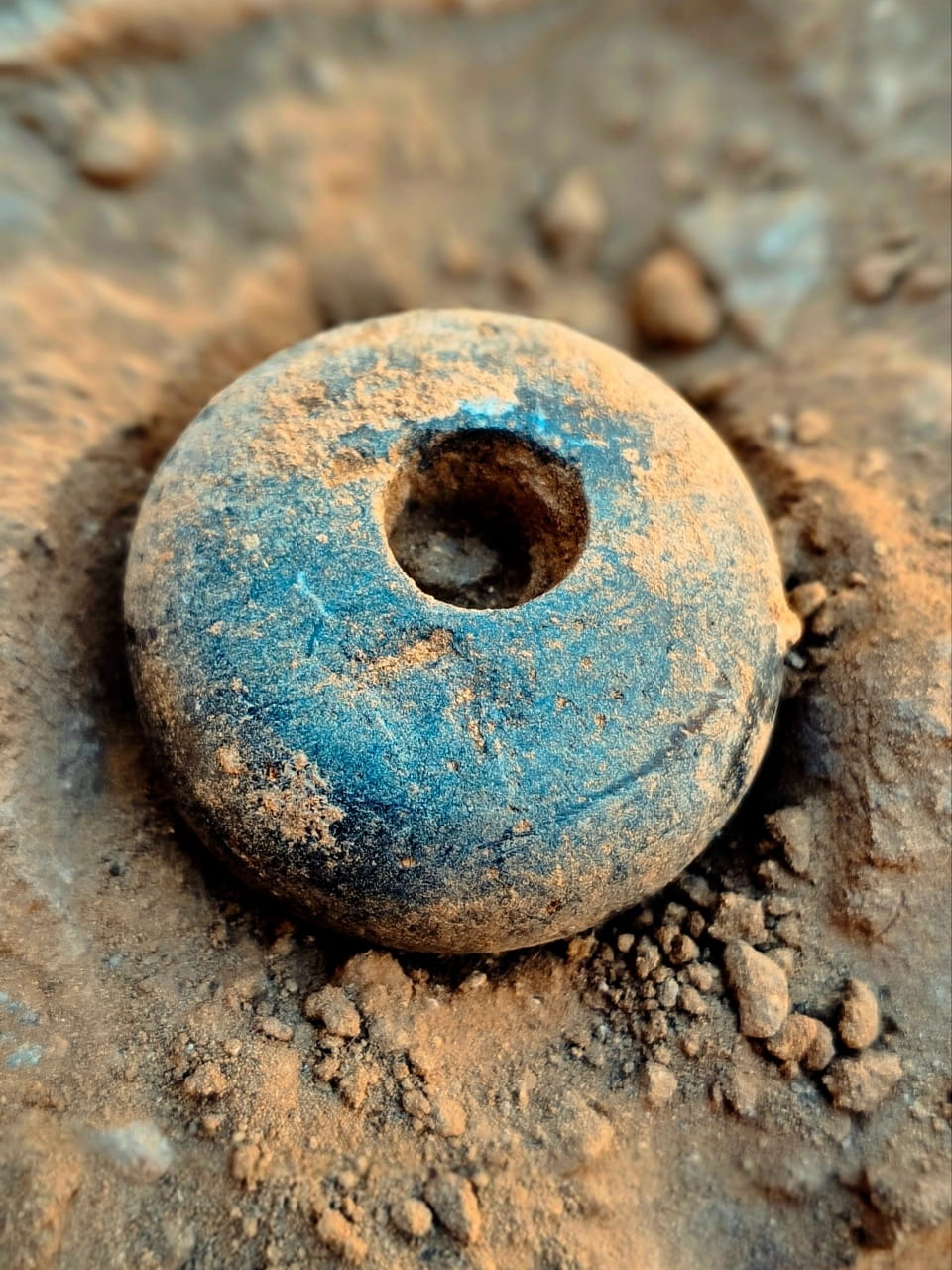
Excavation lead Vagif Asadov of the ANAS Institute of Archaeology and Anthropology directed the work under the Scientific Archaeological Excavations and Summer School 6 program at the reserve. The mound measures about 12 meters across and roughly 80 centimeters above the surrounding ground, with a burial chamber about 1–1.2 meters deep under a stone cover.
Alongside the mace (sometimes called a sceptre head), the chamber yielded a bronze dagger and an archery set of two black obsidian and nine flint arrowheads—some of them rare winged Middle Bronze Age forms. Popular Archaeology, drawing on the reserve’s own account, frames the assemblage as a symbol of military elite authority.
“Warrior” here is an archaeological reading from the equipment, not a named or osteologically confirmed identity.
The mace’s smooth, symmetrical finish speaks to skilled South Caucasus stoneworking, while the obsidian points to regional volcanic-glass sources and raw-material exchange. Together, weapons and authority symbols in a curated burial suggest ranked military-social structure among Middle Bronze Age communities in the region.
Ceramics and other finds are under preliminary conservation at the reserve before accession. Absolute chronology is still pending: radiocarbon samples are slated for labs in Japan (University of Tokyo Museum Center), Türkiye (TİKA), and the United States (Woods laboratories at the University of Miami), so the 17th–16th century BCE range may yet tighten. For now, Kurgan No. 4 adds a clear elite signal to the growing kurgan archive of Bronze Age Azerbaijan.