Pregnant Warriors: The Power of Viking Women
Explore Viking pregnant warriors in sagas and artifacts like the Aska figurine, revealing the power of women in Viking Age society.


Pregnant women wielding swords and wearing martial helmets, foetuses set to avenge their fathers – and a harsh world where not all newborns were born free or given burial.
These are some of the realities uncovered by the first interdisciplinary study to focus on pregnancy in the Viking age, authored by myself, Kate Olley, Brad Marshall and Emma Tollefsen as part of the Body-Politics project. Despite its central role in human history, pregnancy has often been overlooked in archaeology, largely because it leaves little material trace.
Pregnancy has perhaps been particularly overlooked in periods we mostly associate with warriors, kings and battles – such as the highly romanticised Viking age (the period from AD800 until AD1050).
Topics such as pregnancy and childbirth have conventionally been seen as “women’s issues”, belonging to the “natural” or “private” spheres – yet we argue that questions such as “when does life begin?” are not at all natural or private, but of significant political concern, today as in the past.
In our new study, my co-authors and I puzzle together eclectic strands of evidence in order to understand how pregnancy and the pregnant body were conceptualised at this time. By exploring such “womb politics”, it is possible to add significantly to our knowledge on gender, bodies and sexual politics in the Viking age and beyond.
First, we examined words and stories depicting pregnancy in Old Norse sources. Despite dating to the centuries after the Viking age, sagas and legal texts provide words and stories about childbearing that the Vikings’ immediate descendants used and circulated.
We learned that pregnancy could be described as “bellyful”, “unlight” and “not whole”. And we gleaned an insight into the possible belief in personhood of a foetus: “A woman walking not alone.”
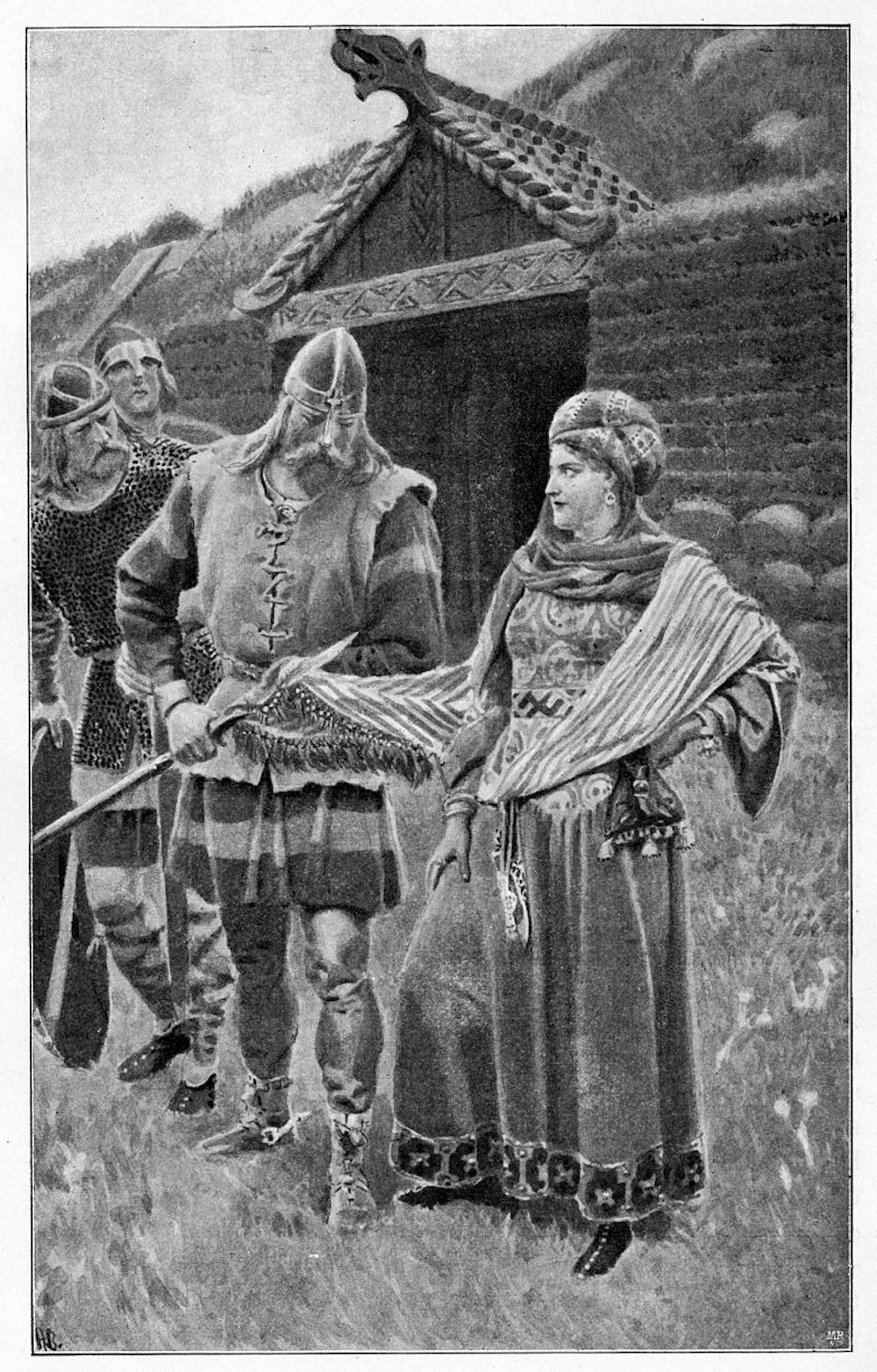
An episode in one of the sagas we looked at supports the idea that unborn children (at least high-status ones) could already be inscribed into complex systems of kinship, allies, feuds and obligations. It tells the story of a tense confrontation between the pregnant Guðrún Ósvífrsdóttir, a protagonist in the Saga of the People of Laxardal and her husband’s killer, Helgi Harðbeinsson.
As a provocation, Helgi wipes his bloody spear on Guđrun’s clothes and over her belly. He declares: “I think that under the corner of that shawl dwells my own death.” Helgi’s prediction comes true, and the foetus grows up to avenge his father.
Another episode, from the Saga of Erik the Red, focuses more on the agency of the mother. The heavily pregnant Freydís Eiríksdóttir is caught up in an attack by the skrælings, the Norse name for the indigenous populations of Greenland and Canada. When she cannot escape due to her pregnancy, Freydís picks up a sword, bares her breast and strikes the sword against it, scaring the assailants away.
While sometimes regarded as an obscure literary episode in scholarship, this story may find a parallel in the second set of evidence we examined for the study: a figurine of a pregnant woman.
This pendant, found in a tenth-century woman’s burial in Aska, Sweden, is the only known convincing depiction of pregnancy from the Viking age. It depicts a figure in female dress with the arms embracing an accentuated belly — perhaps signalling connection with the coming child. What makes this figurine especially interesting is that the pregnant woman is wearing a martial helmet.
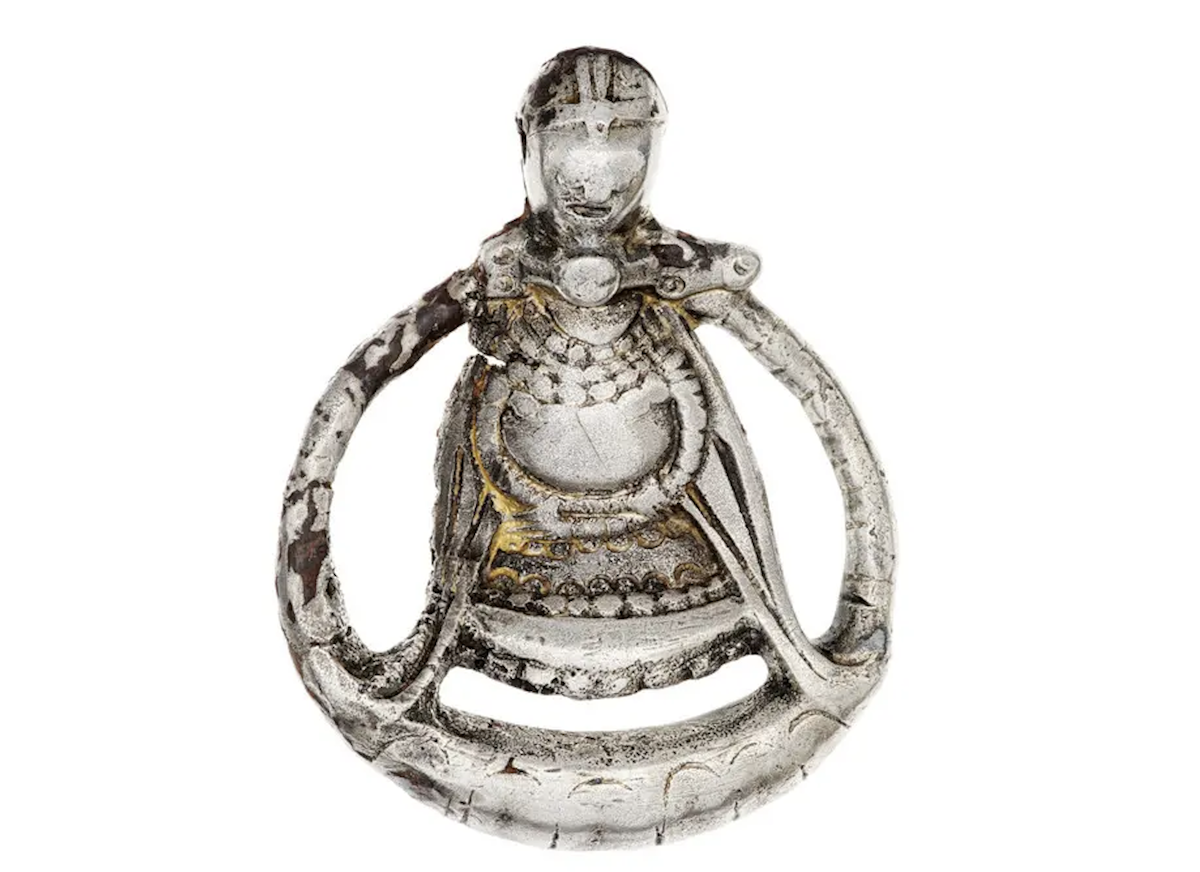
Taken together, these strands of evidence show that pregnant women could, at least in art and stories, be engaged with violence and weapons. These were not passive bodies. Together with recent studies of Viking women buried as warriors, this provokes further thought to how we envisage gender roles in the oft-perceived hyper-masculine Viking societies.
Missing children and pregnancy as a defect
A final strand of investigation was to look for evidence for obstetric deaths in the Viking burial record. Maternal-infant death rates are thought to be very high in most pre-industrial societies. Yet, we found that among thousands of Viking graves, only 14 possible mother-infant burials are reported.
Consequently, we suggest that pregnant women who died weren’t routinely buried with their unborn child and may not have been commemorated as one, symbiotic unity by Viking societies. In fact, we also found newborns buried with adult men and postmenopausal women, assemblages which may be family graves, but they may also be something else altogether.
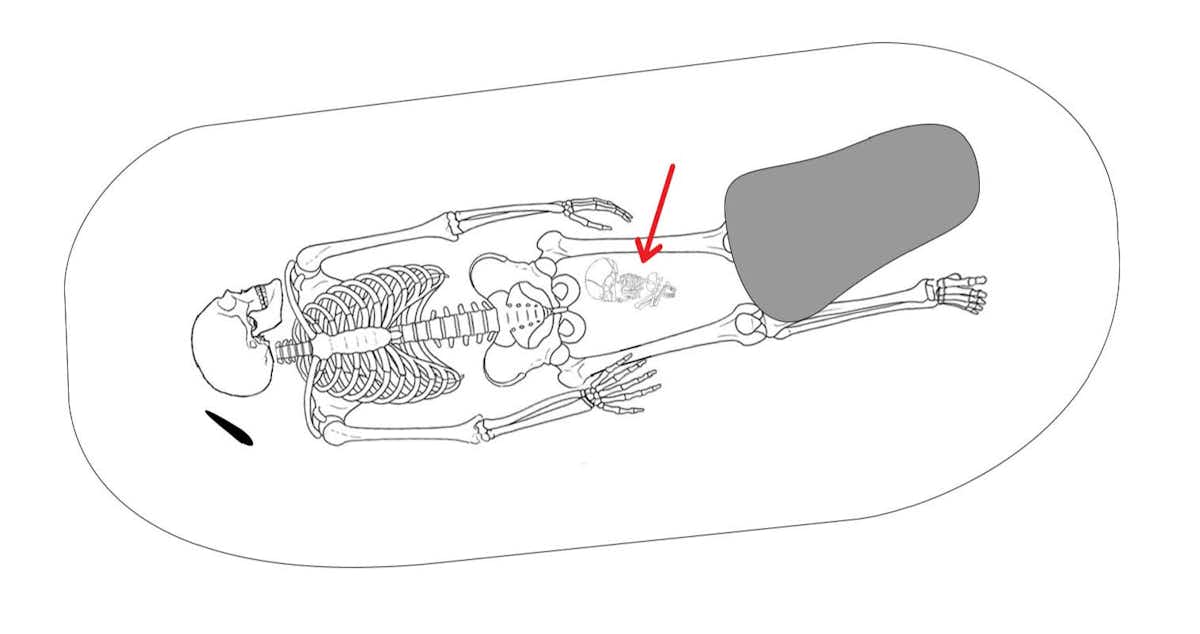
We cannot exclude that infants – underrepresented in the burial record more generally – were disposed of in death elsewhere. When they are found in graves with other bodies, it’s possible they were included as a “grave good” (objects buried with a deceased person) for other people in the grave.
This is a stark reminder that pregnancy and infancy can be vulnerable states of transition. A final piece of evidence speaks to this point like no other. For some, like Guđrun’s little boy, gestation and birth represented a multi-staged process towards becoming a free social person.
For people lower on the social rung, however, this may have looked very different. One of the legal texts we examined dryly informs us that when enslaved women were put up for sale, pregnancy was regarded as a defect of their bodies.
Pregnancy was deeply political and far from uniform in meaning for Viking-age communities. It shaped – and was shaped by – ideas of social status, kinship and personhood. Our study shows that pregnancy was not invisible or private, but crucial to how Viking societies understood life, social identities and power.
This edited article is republished from The Conversation under a Creative Commons license. Read the original article.