Skip to content
  • Home
  • Articles
    • Archaeology & Discoveries
    • Historical Events
    • Artifacts & Treasures
    • Ancient Civilizations
    • Unexplained Phenomena
    • Mythology
  • Subscribe
© Copyright AllThatHistory - 2025
Theme by ThemeinProgress
Proudly powered by WordPress
  • Home
  • Articles
    • Archaeology & Discoveries
    • Historical Events
    • Artifacts & Treasures
    • Ancient Civilizations
    • Unexplained Phenomena
    • Mythology
  • Subscribe
AllThatHistory
  • You are here :
  • Home
  • Archaeology & Discoveries
  • Gigantic Pyramid Unearthed in the Holy Land is 2,200 Years Old
The excavation of an ancient pyramid in the Holy Land has archaeologists all puzzled. The strange artifacts there suggest an unexpected link to Egypt.
Archaeology & Discoveries

Gigantic Pyramid Unearthed in the Holy Land is 2,200 Years Old

Allthathistory March 26, 2025

Something unusual has been dug up in the Judean desert north of the waterway of Nahal Zohar. An ancient pyramid, dating back to the Hellenistic period, is emerging from the arid sandstone which has concealed it for 2,200 years.

Don’t be fooled by the name: this pyramid was not built by Greeks, although they certainly built their own pyramids and may be the earliest pyramid builders of the Mediterranean (check out the Hellinikon, and the controversy surrounding its dating). “Hellenistic” in this context means this one comes from the Ptolemaic period, the last major era in the history of independent ancient Egypt which ended with Caesar taking over and Cleopatra wrapped in a carpet. 

The excavation is part of an enormous archaeological survey of the Judean desert, some eight years in the making and involving thousands of volunteers. So far the survey has produced thousands upon thousands of artifacts, saved from looters and thieves.

  • Carved Stone Age Turtle Reveals Ancient Middle East Religion
  • The Beast of Set, the Unknown Creature at the Heart of Ancient Egypt

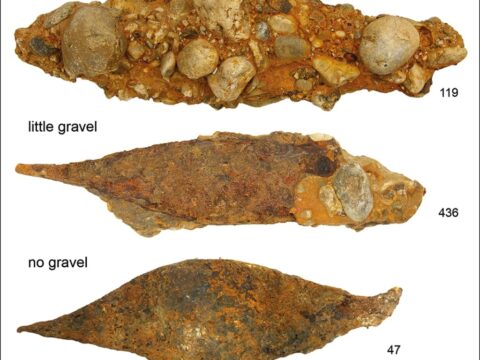
The site of the pyramid itself has produced a myriad of artifacts from the Ptolemaic period, including weaponry, fragile Greek papyrus preserved by the dry conditions, and plenty of coinage which has helped with the dating. The coins feature both Ptolemaic pharaohs and the near contemporary Seleucid ruler Antiochus IV, which shows an open border permitting trade between the ruling Egyptians and the Seleucids to the east.

Does the prominent positioning of the pyramid suggest its function as an ancient guard tower in the desert of the Holy Land? (Emil Aladjem / Israel Antiquities Authority)
Read moreThe Cave of Hebron: Tomb of the Patriarchs?

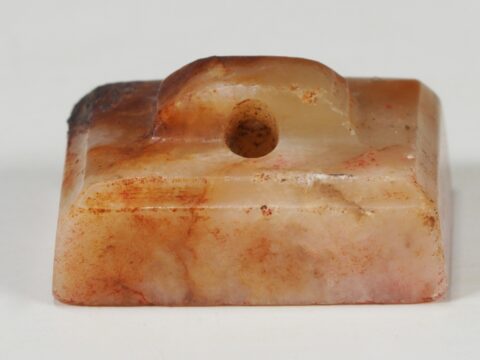
Other, more unusual finds have been brought out of the site. The remains of wooden furniture, bronze bowls and other precious artifacts have all been found around the pyramid.

Archaeologists had previously thought that the pyramid was from the First Temple Period, referring to the Temple built by Solomon with the help of captive demons around 1,000 BC. At least, that is what the Bible and medieval grimoires tell us, but we perhaps shouldn’t believe everything we read.

However these new discoveries, along with other aspects of the excavation, have promoted a rethink of the pyramid’s age and it is now thought to be considerably newer. In truth, as the work continues there are more and more questions about this anomaly in the desert.

Was it part of a necropolis, like the pyramids in Egypt? Was it a temple or some kind of monument, or does its positioning on a prominent escarpment hint at a more practical role? Could it be a military outpost standing watch over an important trade route?

Read more3,000 Year Old Sword of a Pharoah Discovered in Egypt

The answers may well lie under the huge hand-carved blocks which are all that is left of this enormous, mysterious, ancient Judean structure.

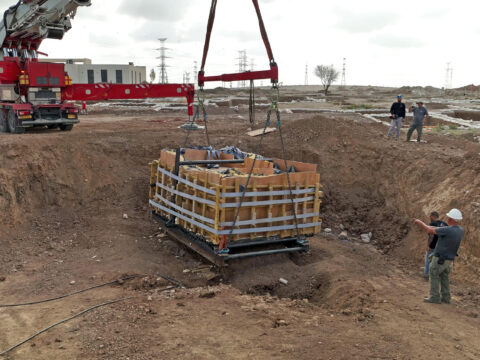
Header Image: It may just look like a pile of rubble (largely because it is) but the finds at the site have rewritten our understanding of this strange pyramid in the middle of the Holy Land. Source: Judean Desert Survey Unit / Israel Antiquities Authority.
You may also like

Ancient Rock Carvings Uncovered in Ecuador Point to Shared Amazonian Cultural Traditions

Stolen Hercules Fresco Finds Its Home After Decades in U.S. Collection

Ancient Rock Art in Texas-Mexico Borderlands Endured 4,000 Years

Were Wolves Kept and Nursed by Ancient Seal Hunters?

Ancient Peruvians Survived Climate Catastrophe Through Adaptation, Not War

Peru’s Mysterious “Band of Holes” May Have Been Ancient Marketplace and Accounting System

Allthathistory
Written by Allthathistory

Tags: artifact, Israel, Palestine, Ptolemaic

Leave a Reply Cancel reply

Your email address will not be published. Required fields are marked *

  • Ancient Rock Carvings Uncovered in Ecuador Point to Shared Amazonian Cultural Traditions
    Archaeologists have identified a panel containing approximately 30 ancient rock carvings in Santiago de Méndez canton, Morona Santiago province, marking
  • Stolen Hercules Fresco Finds Its Home After Decades in U.S. Collection
    Archaeologists at Pompeii have identified the original location of a looted fresco fragment depicting the infant Hercules strangling serpents, solving
  • Maya Medical Systems Used Living Organisms as Precision Surgical Tools
    Maya medical systems deployed living organisms as precision surgical tools centuries before germ theory existed. Recent archaeological evidence shows these
  • Ancient Rock Art in Texas-Mexico Borderlands Endured 4,000 Years
    Hunter-gatherers in what is now southwestern Texas and northern Mexico created rock art for more than 4,000 years, maintaining consistent
  • The Thermal Engineering Behind Tiwanaku’s Agricultural Success
    At nearly 3,850 meters above sea level, frost arrives almost nightly on Bolivia’s Altiplano. Modern visitors struggle to breathe. Yet
The Gnostic Gospels
Encounters at the Heart of the World: A History of the Mandan People
Substack Articles

Latest from AllThatHistory Weekly

What Sank to the Bottom of a Swiss Lake 2,000 Years Ago

What Sank to the Bottom of a Swiss Lake 2,000 Years Ago

In November 2024, the Cantonal Office of Archaeology of Neuchatel was conducting routine aerial monitoring of the lakebed when a photograph revealed something that did not belong there.

Read More →
13,000 Years Ago, Someone Painted a Bison in the Dark. We Just Found Out When.

13,000 Years Ago, Someone Painted a Bison in the Dark. We Just Found Out When.

The Font-de-Gaume cave sits in a limestone hillside near the town of Les Eyzies in the Dordogne region of southwestern France.

Read More →
The War Horn That Made Roman Soldiers Flinch

The War Horn That Made Roman Soldiers Flinch

In the summer of 2025, during a routine archaeological excavation ahead of a housing development in West Norfolk, England, a construction site turned up something unexpected.

Read More →
Britain Wasn’t Always an Island: The Drowned World Beneath the North Sea

Britain Wasn’t Always an Island: The Drowned World Beneath the North Sea

The North Sea was not always there. Before the water arrived, before the English Channel cut Britain off from continental Europe, there was land. Dry, forested, inhabited land.

Read More →
Iran-War: Near Middle East Burning – Ancient History Repeating?

Iran-War: Near Middle East Burning – Ancient History Repeating?

Watching the Iran-war in the Near Middle East region, our news screens project scene after scene of ominous dark smoke billowing from yet another target hit by an airstrike. The first week of April 2026 heralded the announcement that airstrikes on Isfahan in Iran and southern Lebanon has increased.

Read More →
When Spices Were Worth More Than Gold

When Spices Were Worth More Than Gold

In 410 CE, when the Visigoths besieged Rome, they demanded ransom: gold, silver, silk, and 3,000 pounds of pepper.

Read More →
❮
❯

Subscribe to receive our newest archaeology articles, long-form investigations, and historical insights directly in your inbox.

© Copyright AllThatHistory - 2025