
On the crisp autumn day of October 14, 1066, a pivotal war unfolded in southern England. One that forever altered the course of English history, and also language.
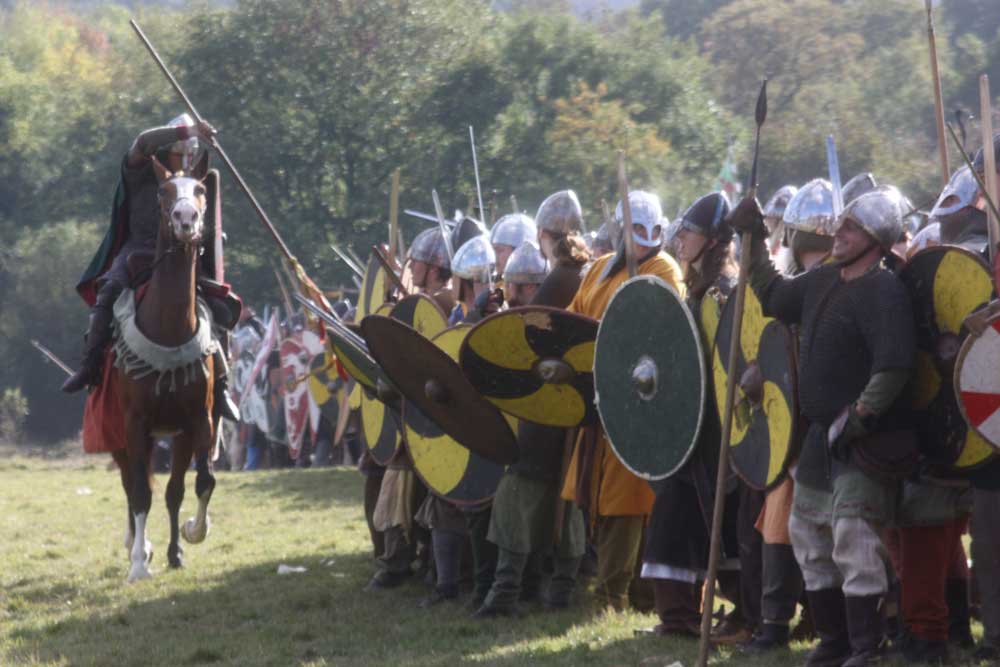
Picture this scene: William the Conqueror, the audacious Duke of Normandy, locking horns with Harold Godwinson, the last Anglo-Saxon king. Their conflict, known as the Battle of Hastings, was about who could claim the throne of England and have dominion over its people.
Both men—certain of their divine right to rule—clashed with unyielding conviction. The outcome? A decisive Norman victory after Harold was killed, likely by an arrow to the eye or a fatal blow from Norman knights. This event toppled the Anglo-Saxon reign and set the stage for a linguistic revolution.
Just who were the Normans, and how did their culture reforge the English language as we know it?
Raiders to Royals to Shapers of English
See, the Normans weren’t just French. They were also descendants of Vikings who had once ravaged France. After much political maneuvering from the French side and securing allegiances, these Vikings settled in French soil for good. They then adopted French customs while also converting from Norse Paganism to Christianity. This blend gave rise to the Normans—a fascinating mix of Norse Viking heritage and French culture.
The Norman tongue was a dialect of Old French, enriched by both Old Norse and Latin influences. This was William’s mother-tongue, which he brought into England with sheer impact. After William’s victory, Norman French became the official language of the government and elite; while Latin remained the language of the church and scholars. However, Old English did not vanish overnight. It continued to live in the common folks’ lips while gradually evolving.
Over time, the continuous blending of languages gave rise to Middle English. Norman French, along with its Latin roots, introduced a wealth of vocabulary, particularly in areas such as governance, art, literature, and cuisine. Words such as “court,” “judge,” “marriage,” “government,” “dinner,” “pork,” and “beef” became part of everyday language.
Meanwhile, Old Norse already flavored Old English with gems such as “sky,” “law,” “cake,” “egg,” “knife,” and “husband.”
The Past and Future of the English Language
The aftermath of the Battle of Hastings created a rich linguistic tapestry, blending Anglo-Saxon roots with Viking vigor, French flair, and Latin influences. This vibrant mix laid the groundwork for Modern English, transforming it into the eclectic language we enjoy today. Just as Old English evolved from a blend of different tongues, Modern English continues to evolve, incorporating words and expressions from a variety of cultures. This ongoing evolution gives rise to unique dialects and sounds, from the hip phrases of urban slang to the hybrid languages of Pidgin.
The Battle of Hastings wasn’t just a historic clash of swords; it was a monumental cultural showdown that sparked a revolution in language. This epic fusion of voices and civilizations created a dynamic, ever-changing mosaic of English that reflects the diverse influences shaping our world today. Whether through memes, trending hashtags, or the latest linguistic trends, English remains a living testament to our global and cultural interconnectedness. For the newer generations, this rich history adds depth to the everyday words and expressions we use. Celebrating a language that’s as manifold and evolving as we are.
Top Image: Painting of “The Battle of Hastings in 1066” by François-Hyppolite Debon, Musee des Beaux-Arts, Caen (France). Source: Public Domain
References
- Walker, Suzette. “How the Battle of Hastings Changed the English Language.” Owlcation, 24 Sept. 2023, updated. www.owlcation.com/humanities/The-Battle-of-Hastings-England-1066-and-its-effect-on-the-English-language.
- Johnson, Alex. “How a Beef Between Two Kings Changed the English Language Forever.” Museum Hack, 20 Nov. 2022, https://museumhack.com/english-language-changed/.
- Ikon London Reporter. “139 Viking Old Norse Words That Invaded The English Language.” Ikon London Magazine, 9 Dec. 2018, https://www.ikonlondonmagazine.com/the-vikings-are-coming-139-old-norse-words-that-invaded-the-english-language/.